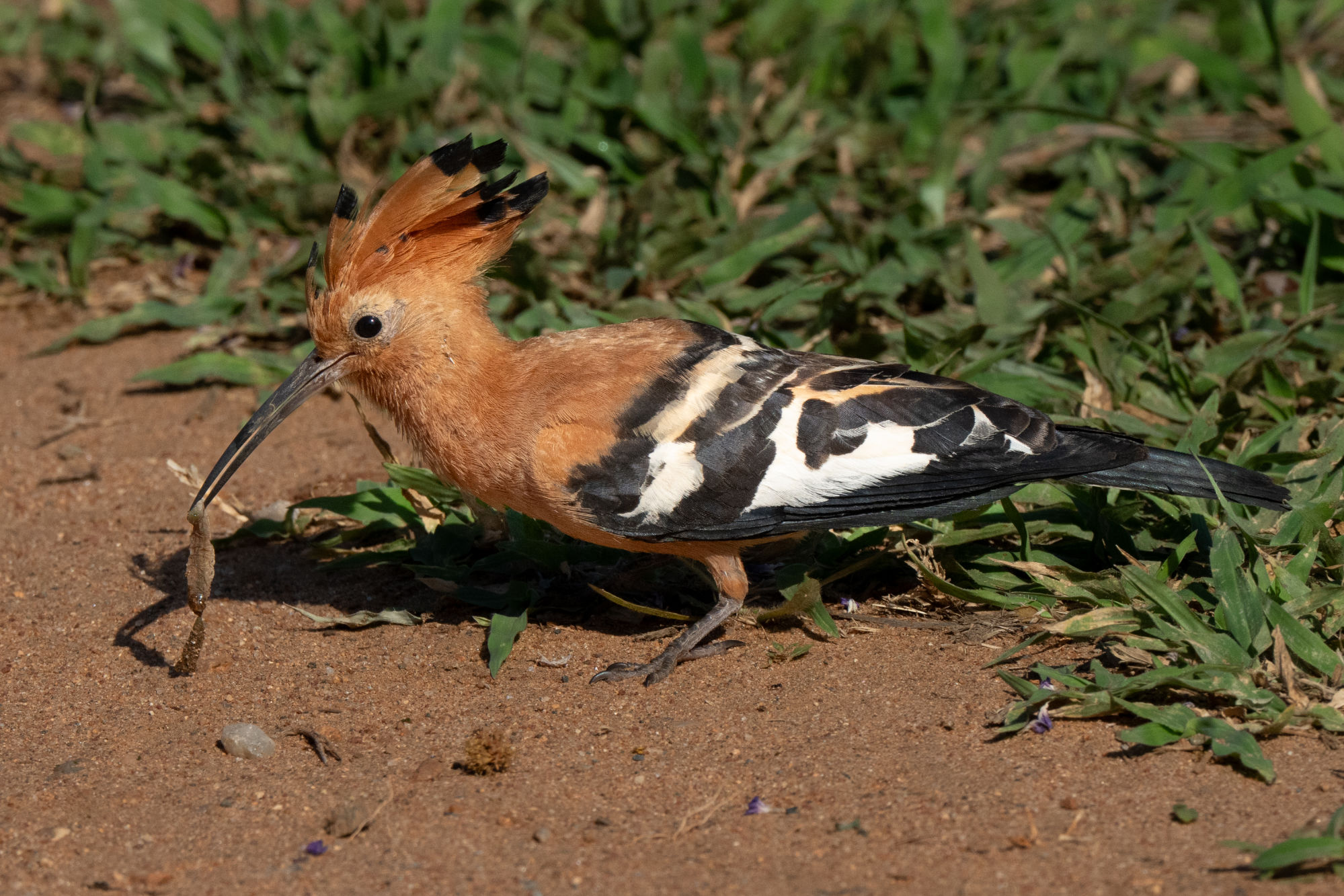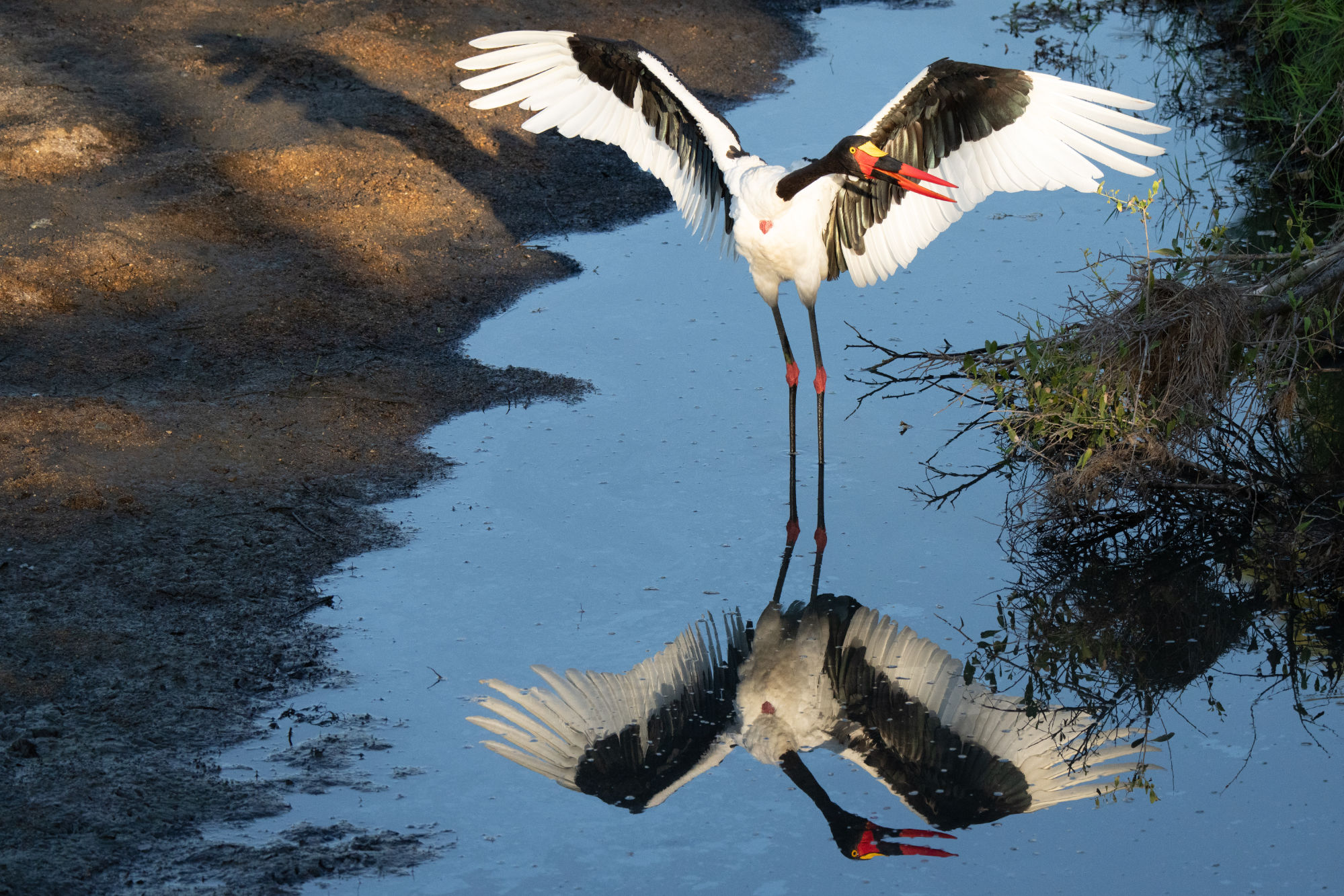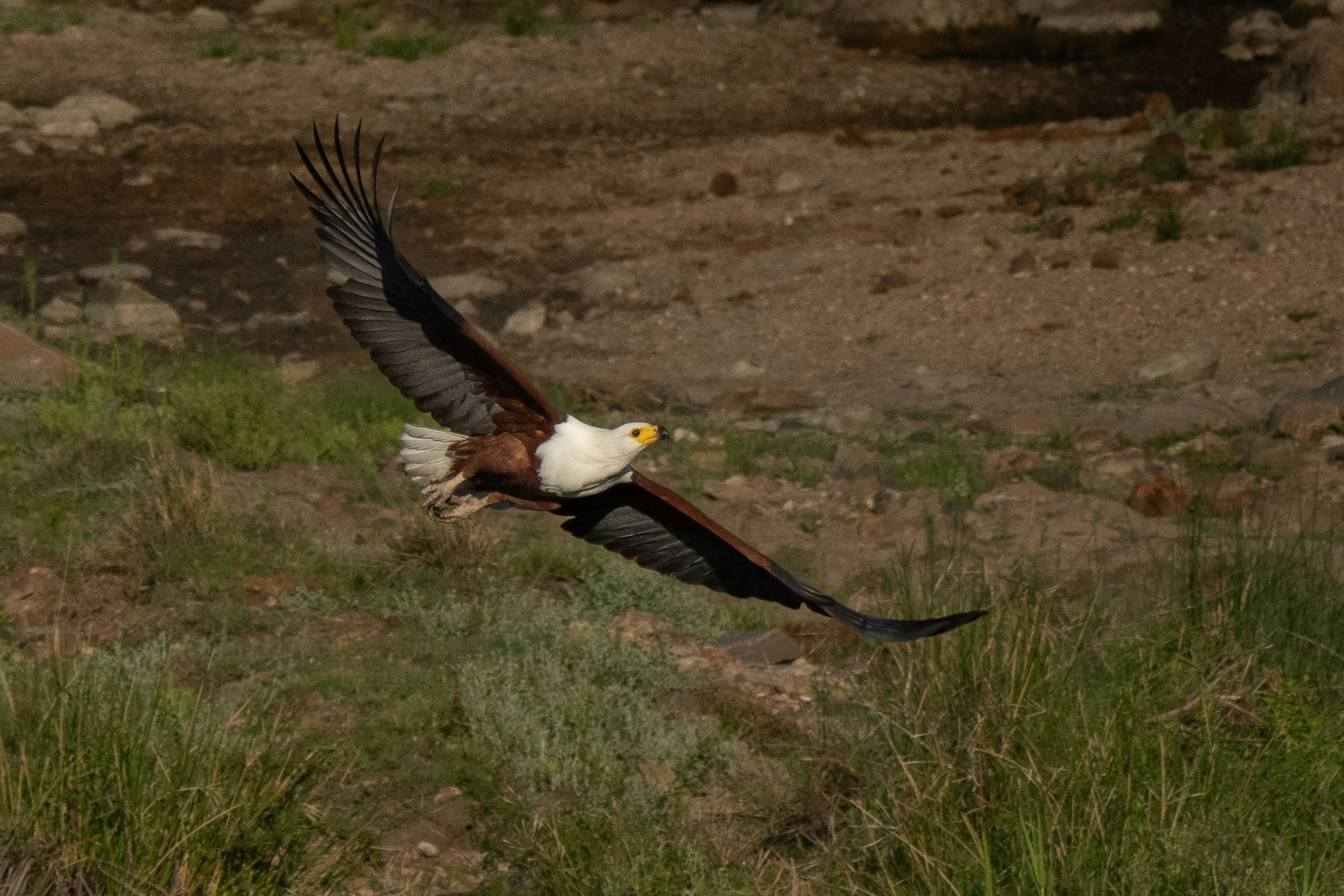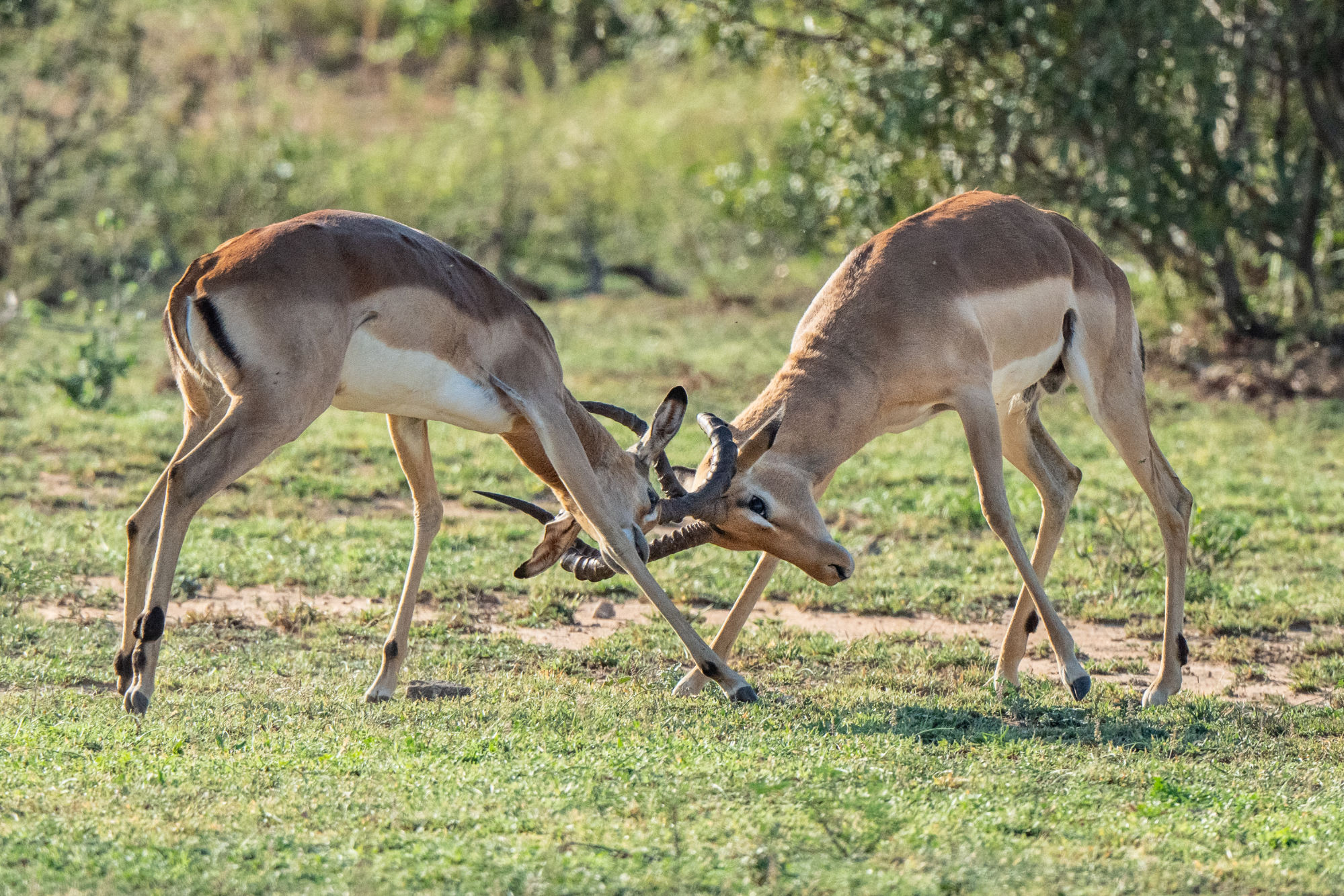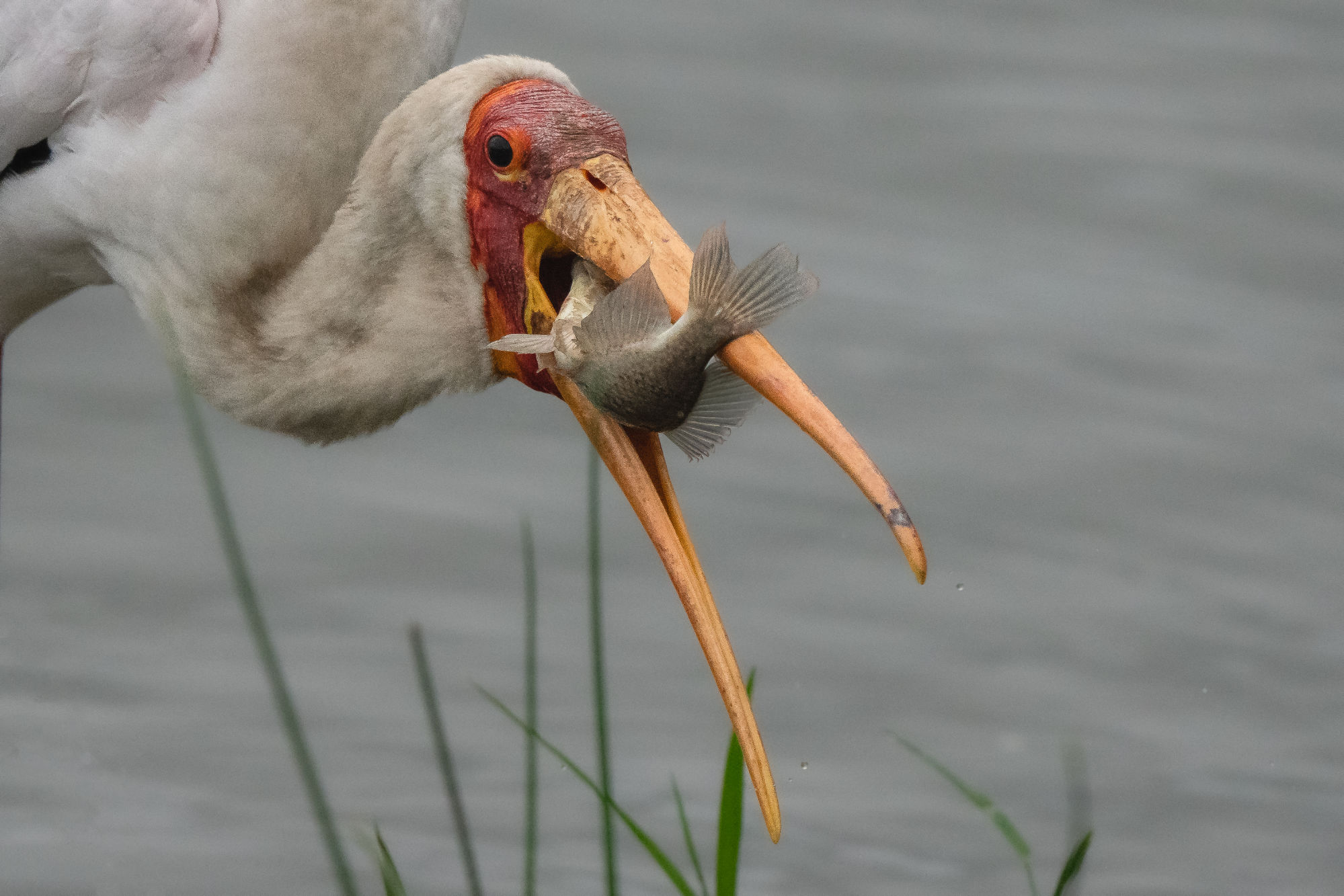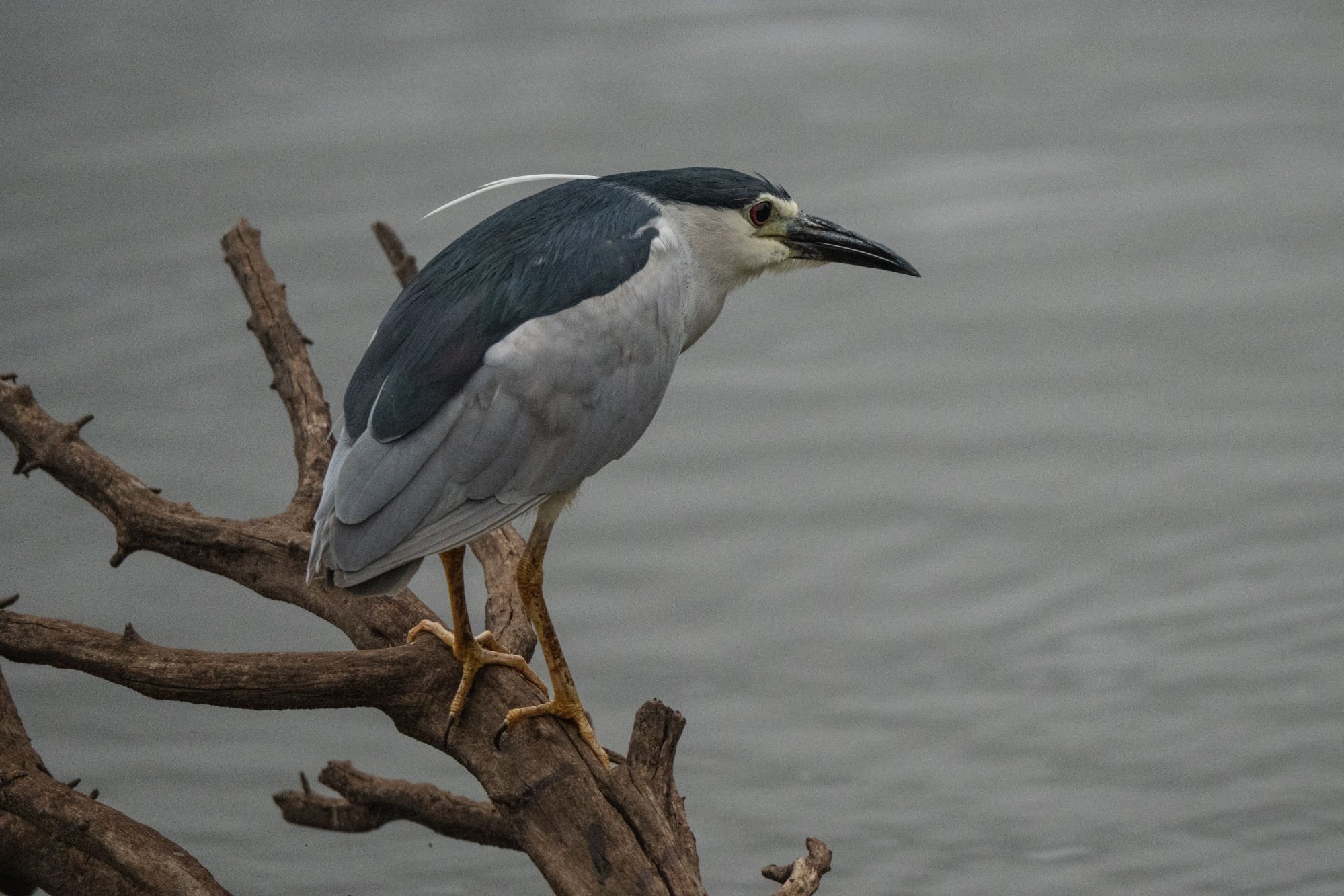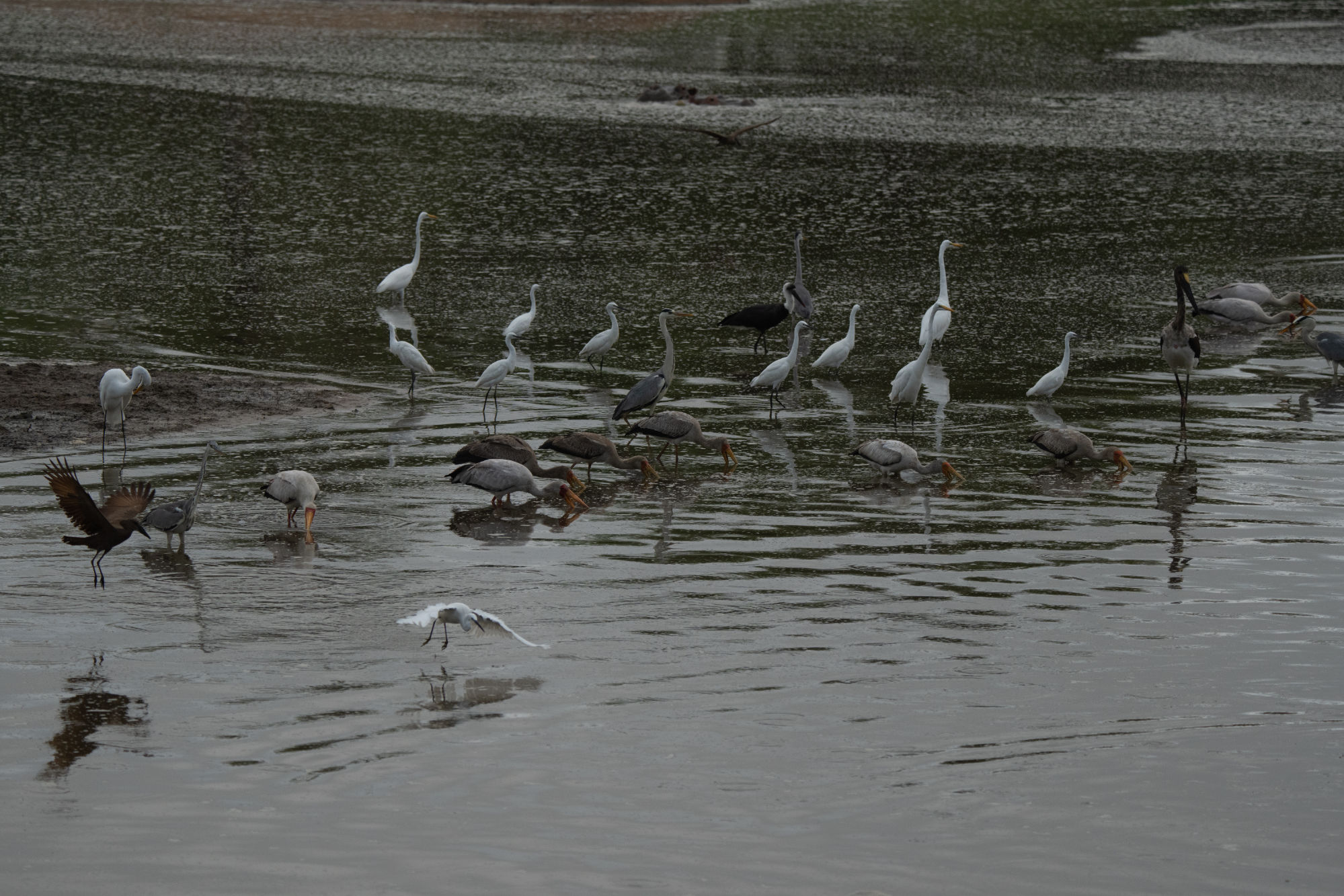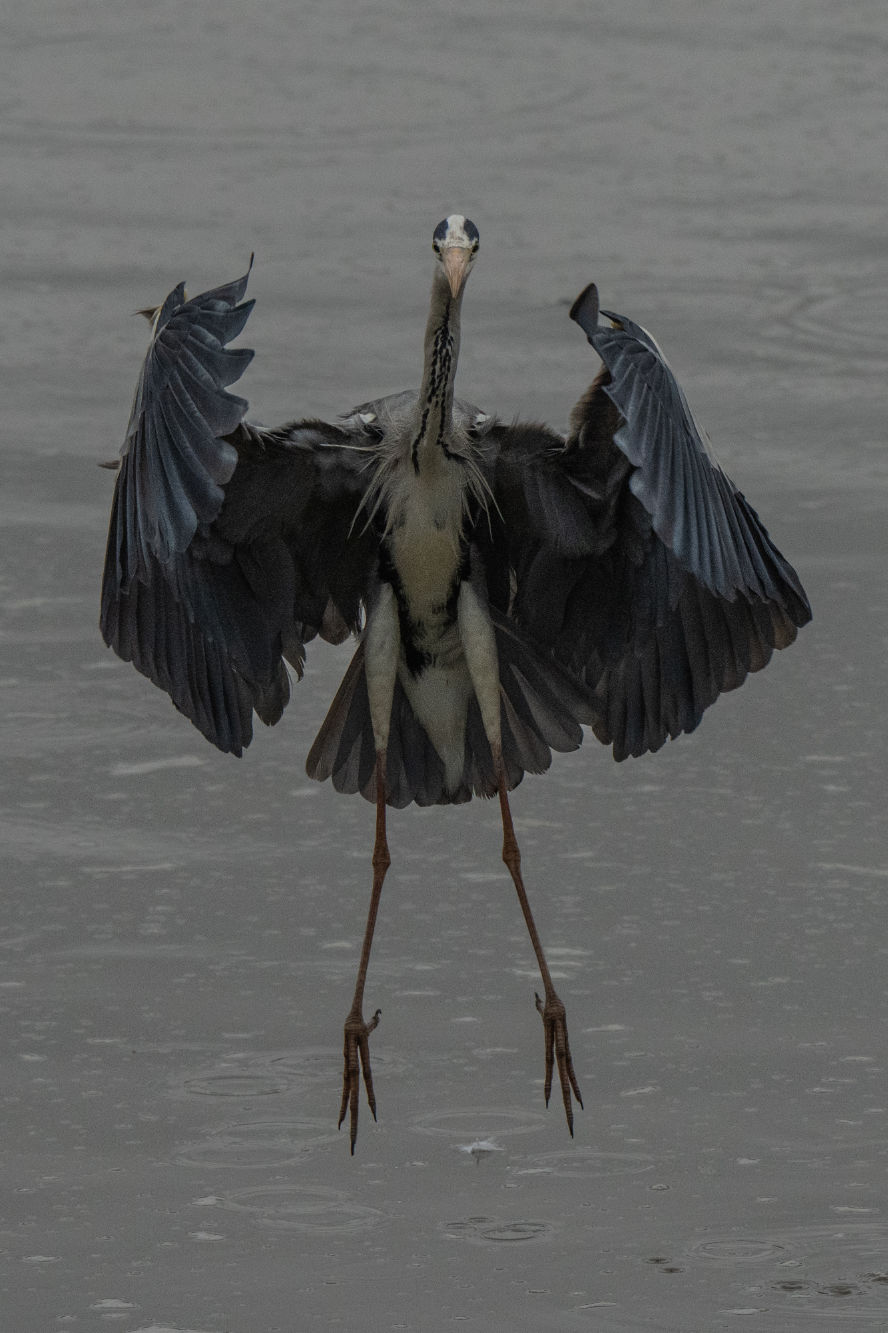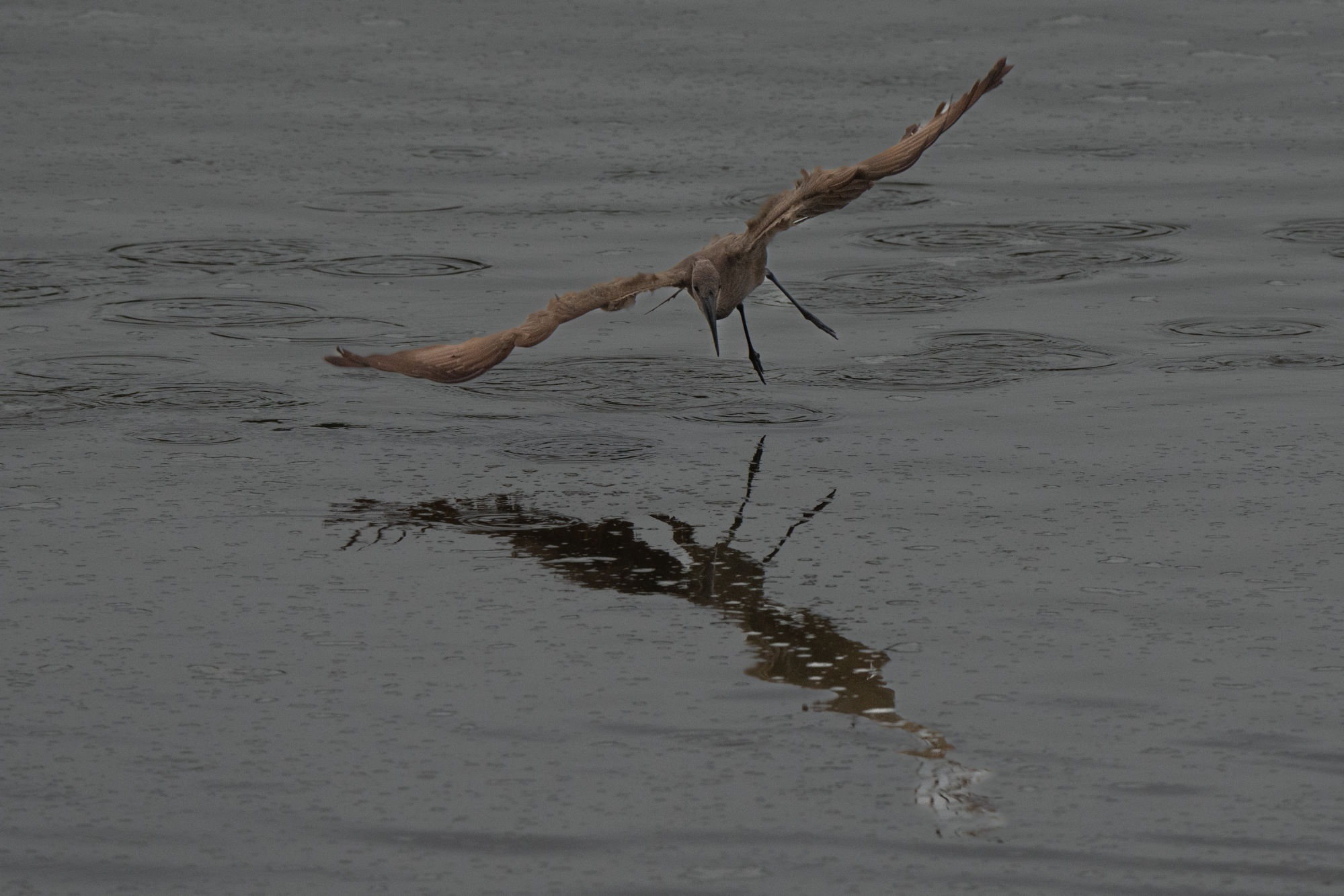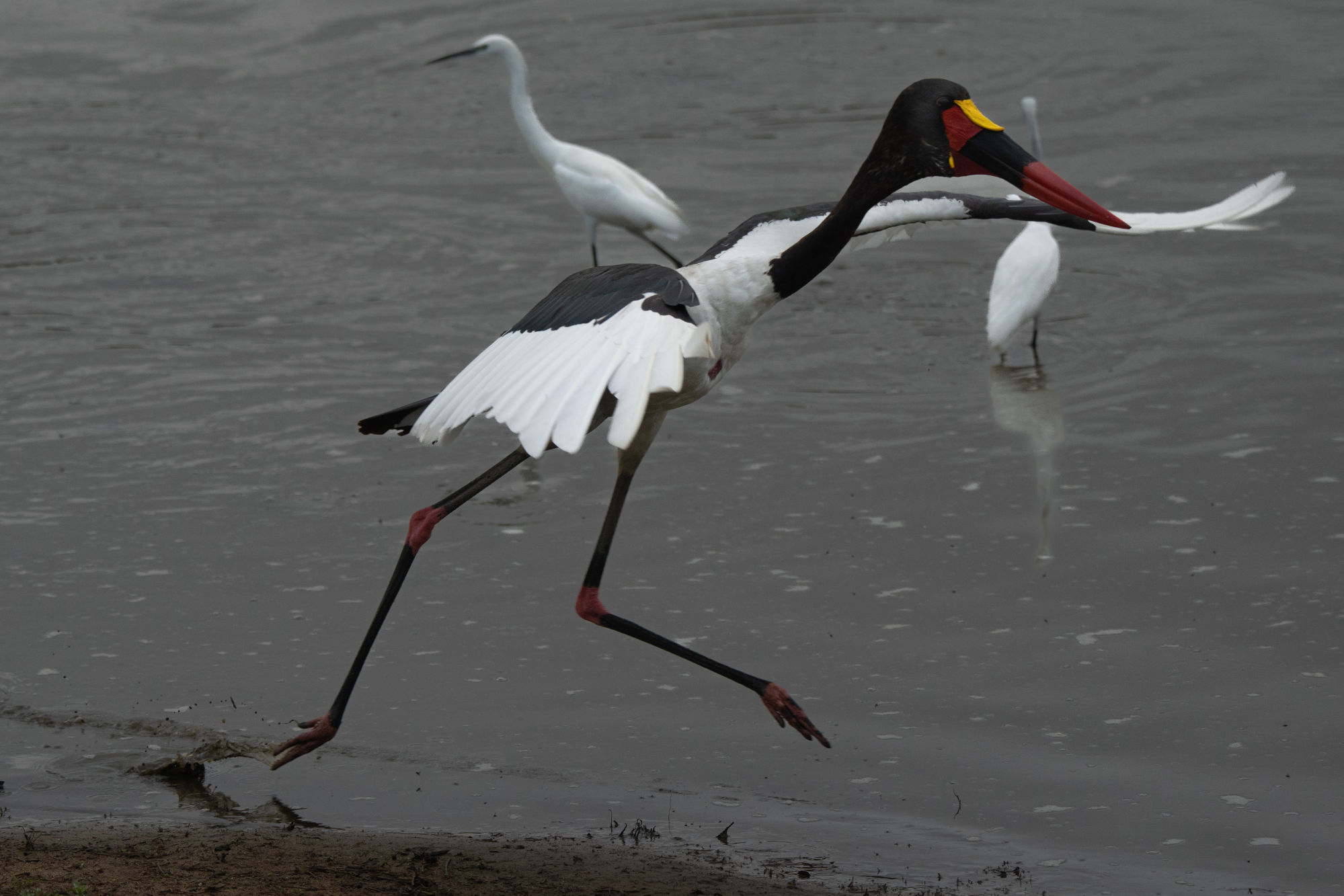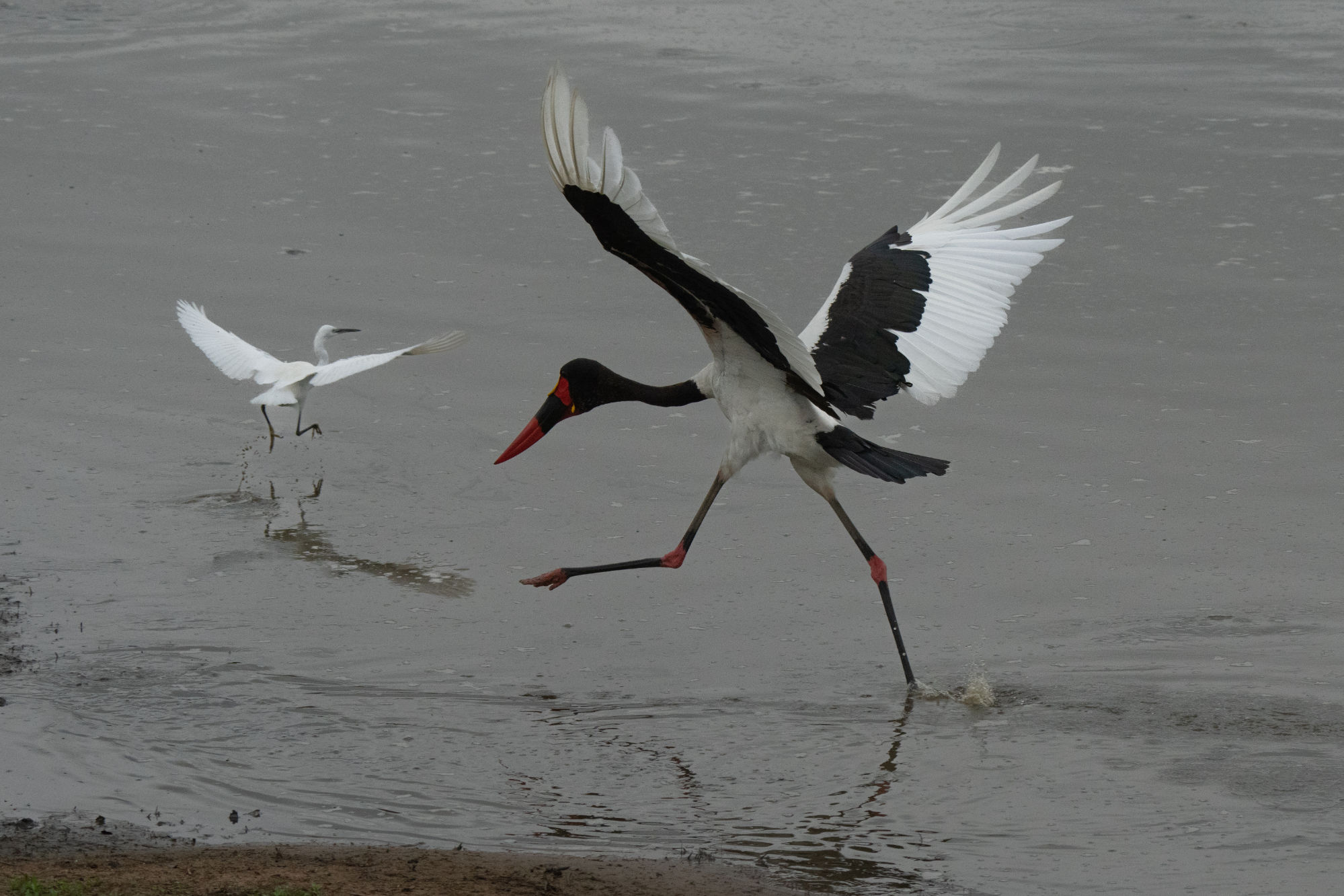
Day 5 started at 6:00, going a few kilometres north from Lower Sabie. We spent time at two dams next to the road, being entertained by numerous birds: various kinds of egrets, herons and storks, Hamerkop, Weavers, Kingfisher and an African Fish Eagle.Â
The Saddle Billed Stork did not like the others encroaching on his fishing spot and kept chasing them away.
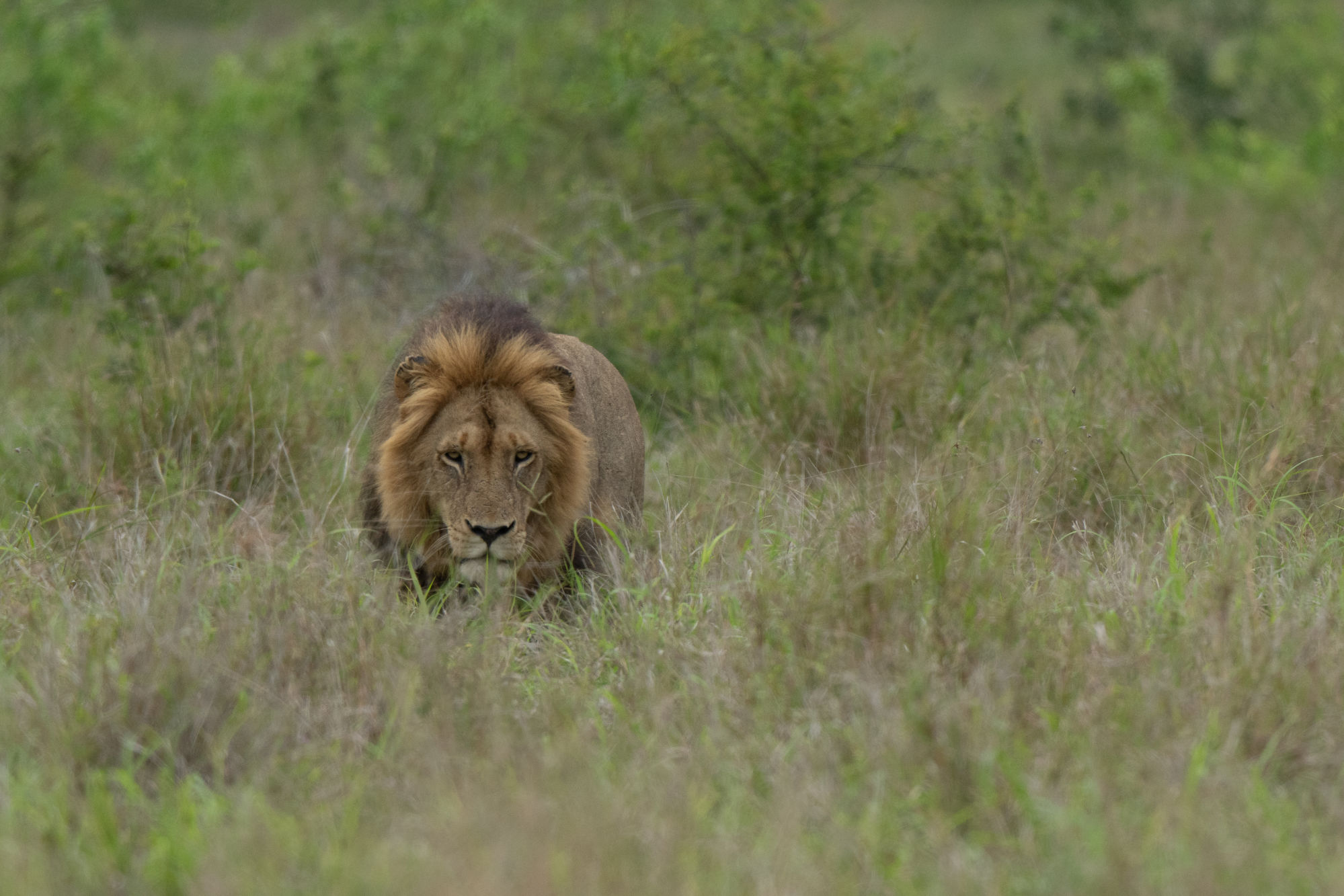
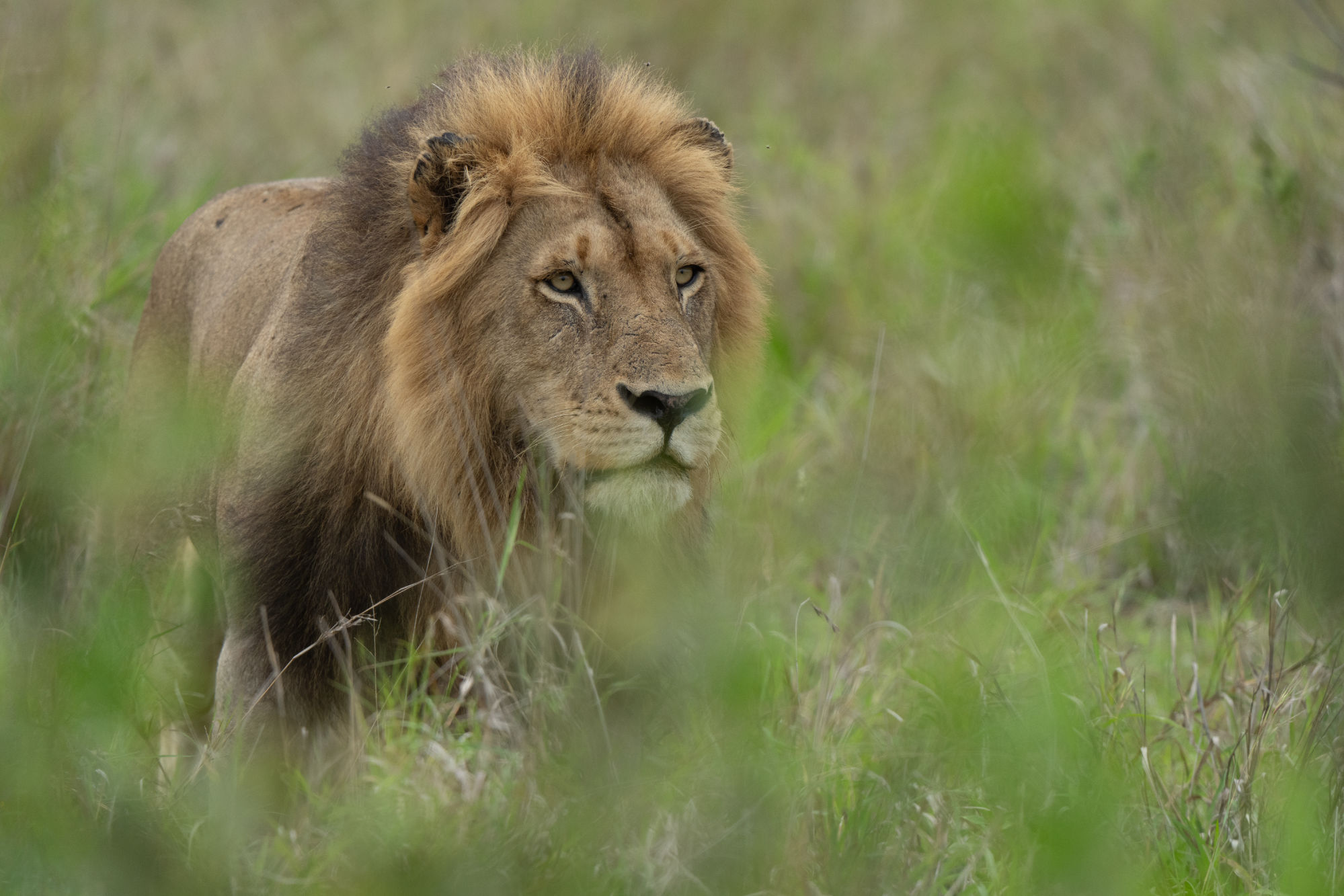
A brief return to camp for coffee was followed by a drive to the south. We encountered a male lion in hot pursuit of a lioness, who appeared to be doing her best to ignore him.
Further south we also saw a cheetah in the distance, not interested in coming closer, so the best I could do was a landscape shot with a cheetah as part of the landscape.
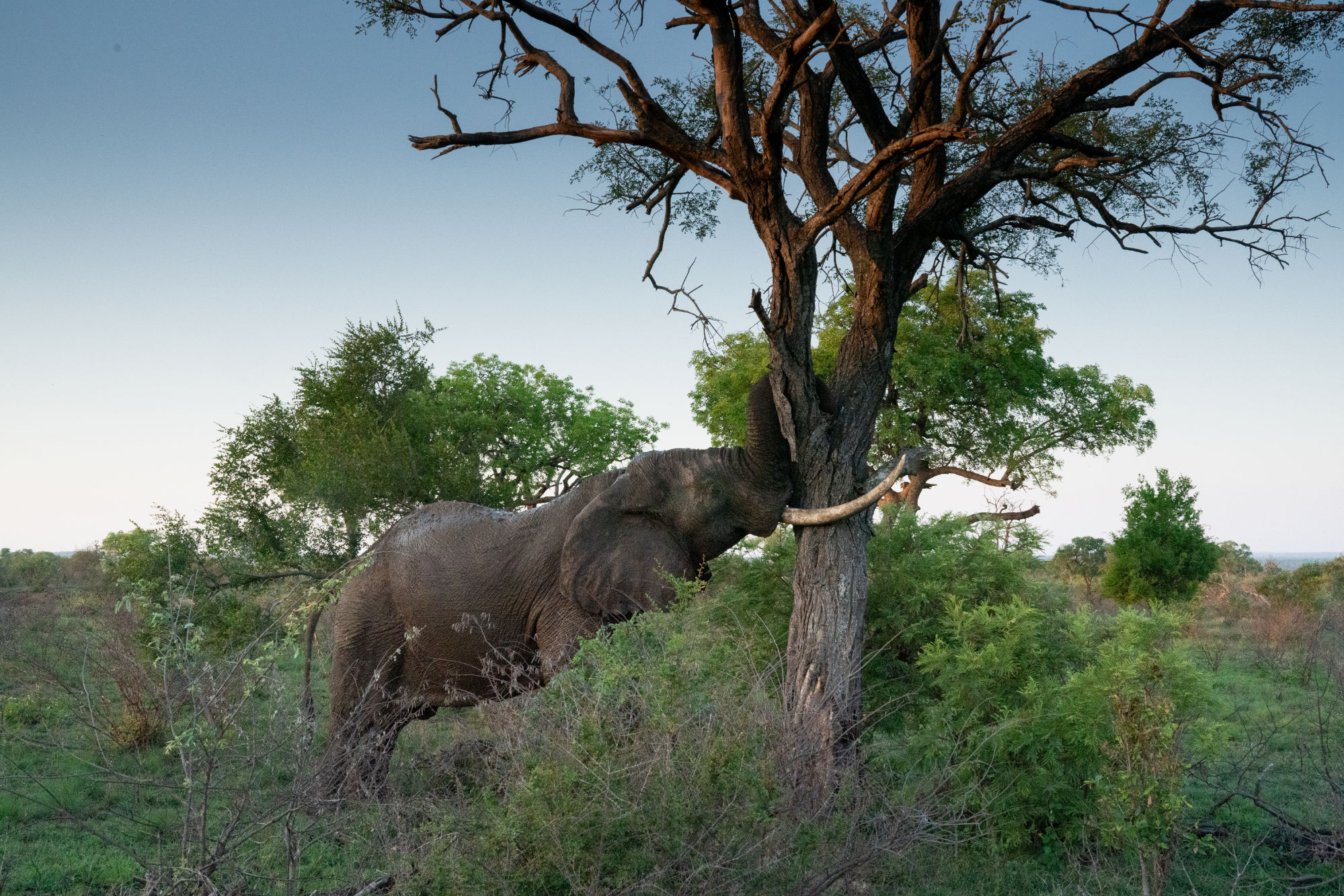
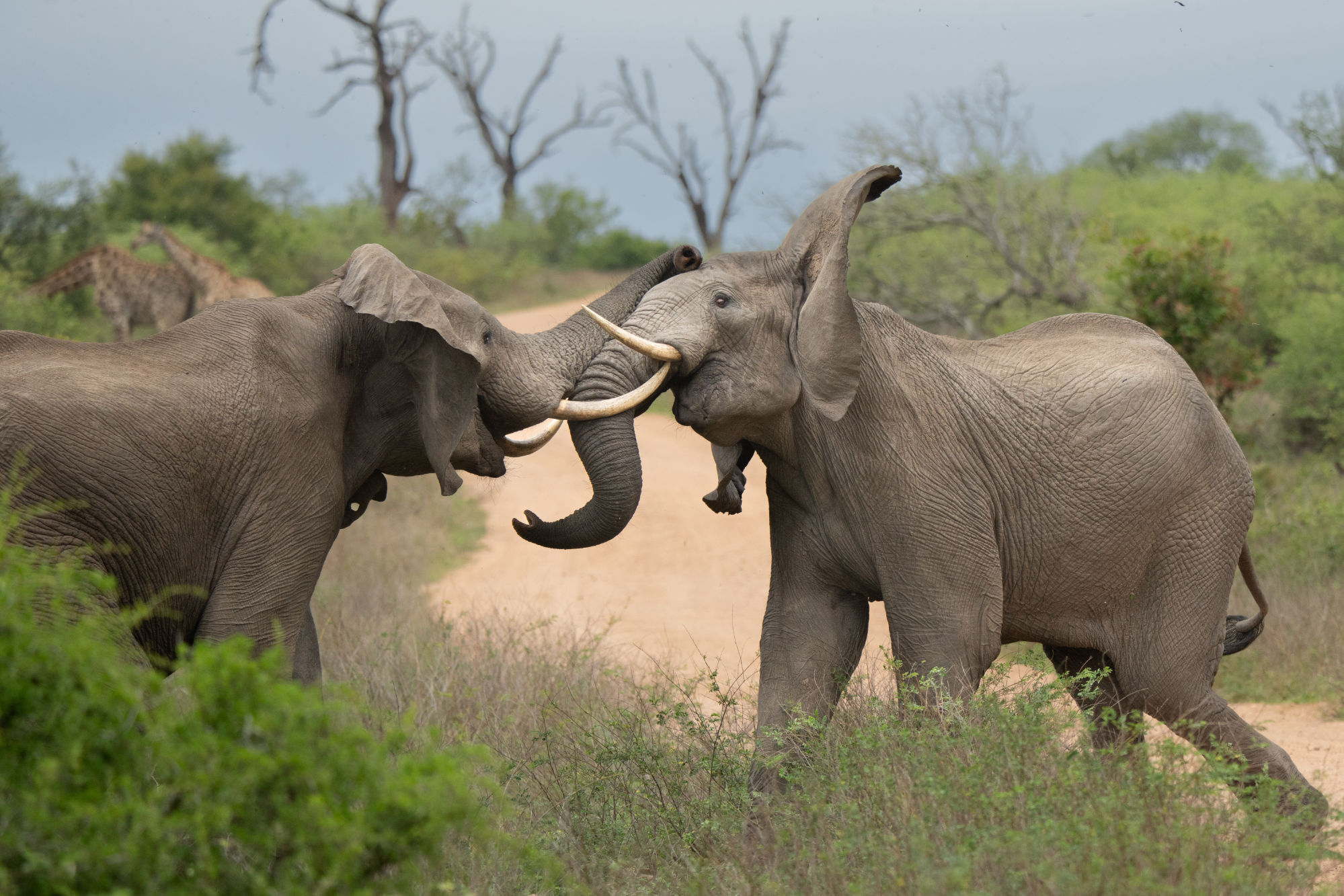
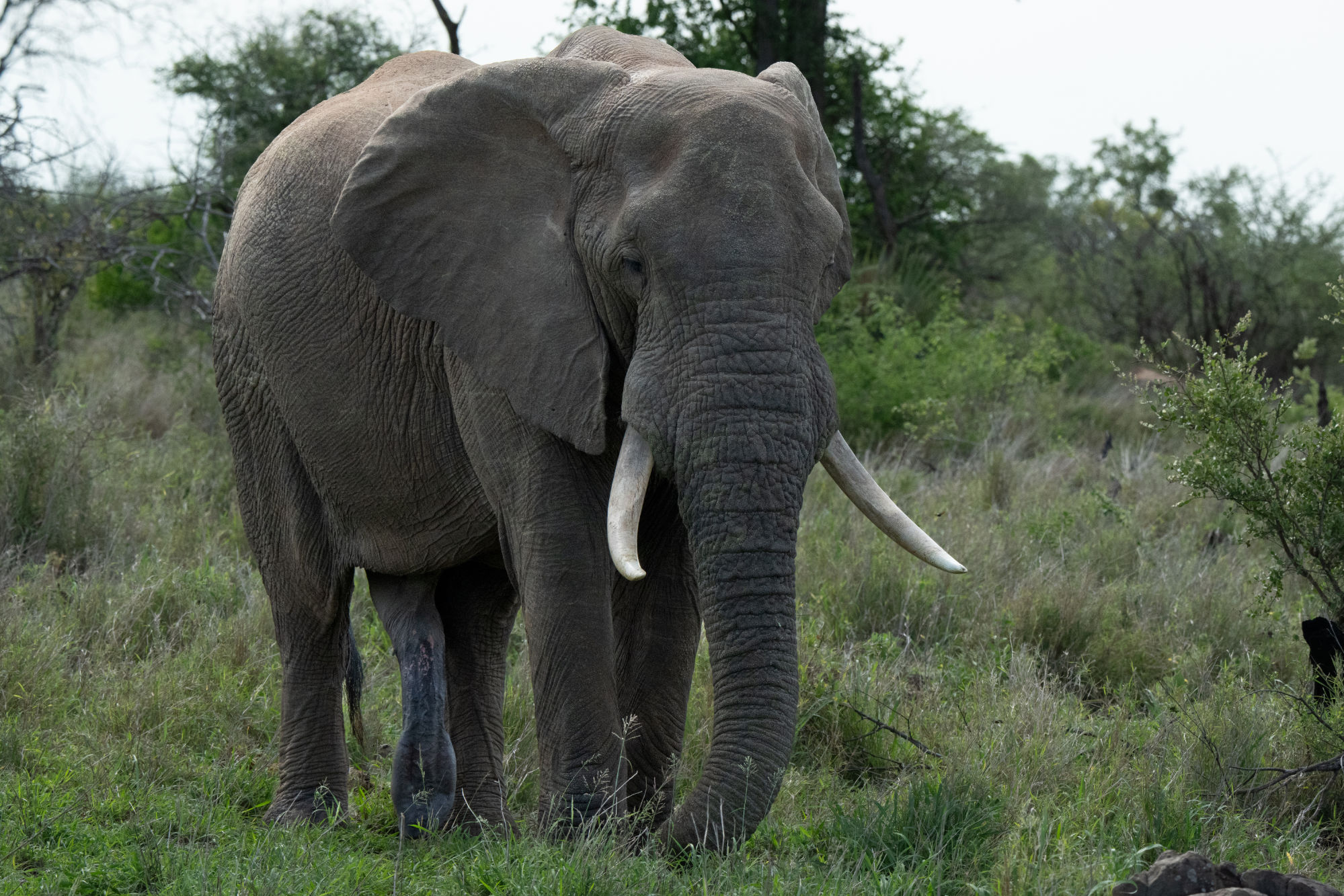
We saw another Fish Eagle and a Tawny Eagle along the way, as well as many elephants.
We returned to camp for lunch and to download photos, of which I had about 1500 from the morning, in order to clean our cameras’ memory cards for the afternoon session.
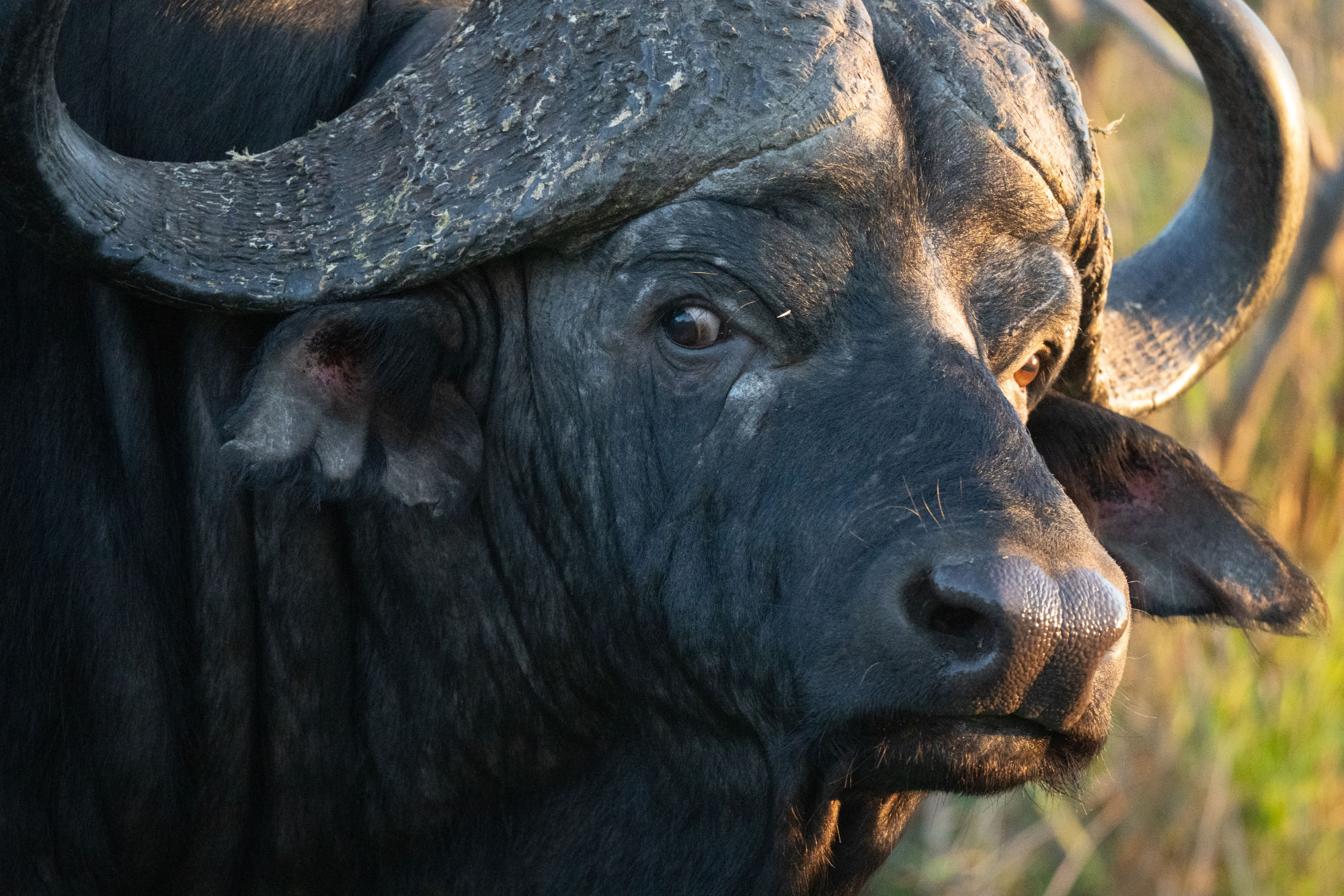
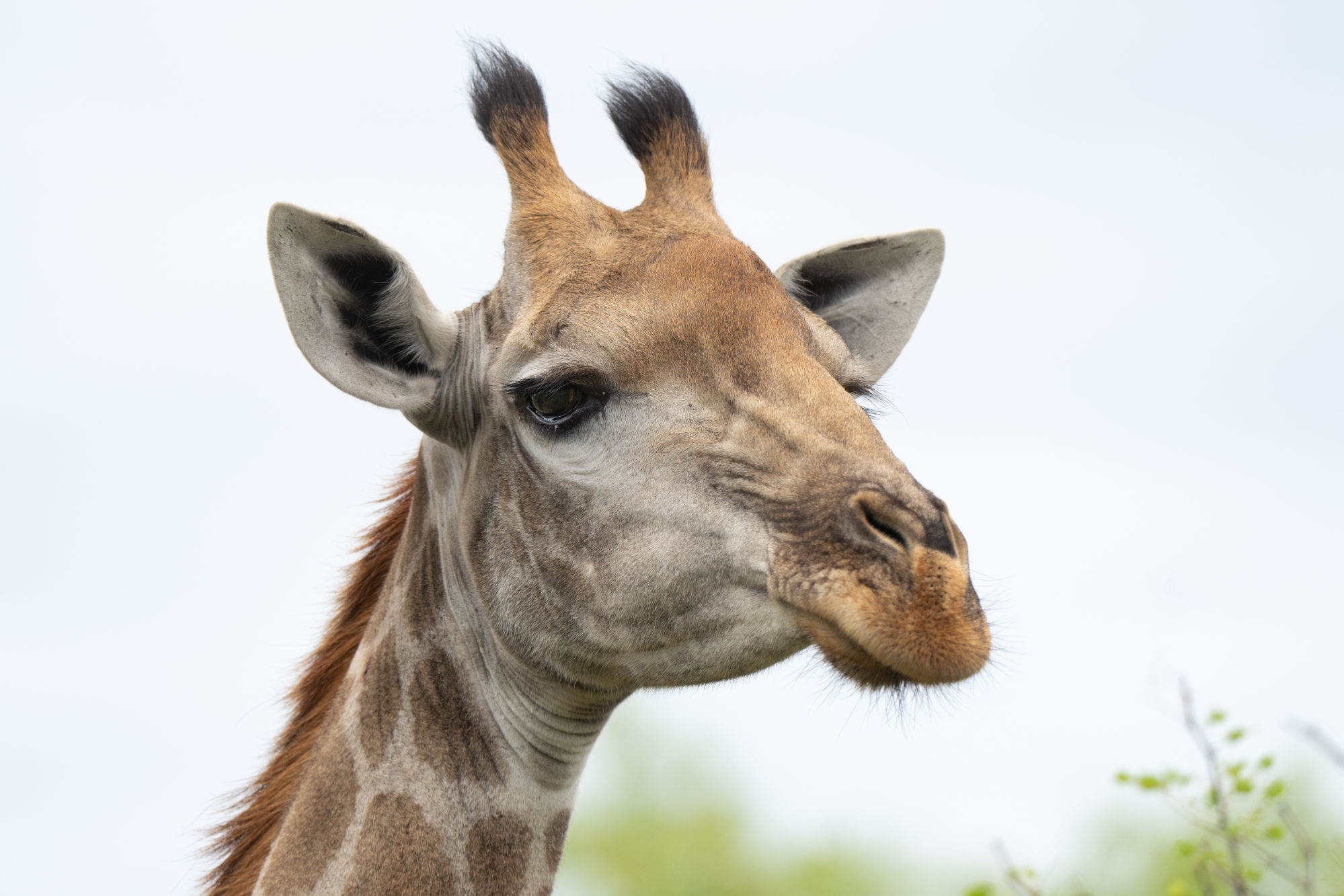
In the afternoon we went north again, seeing birds, giraffe, buffalo
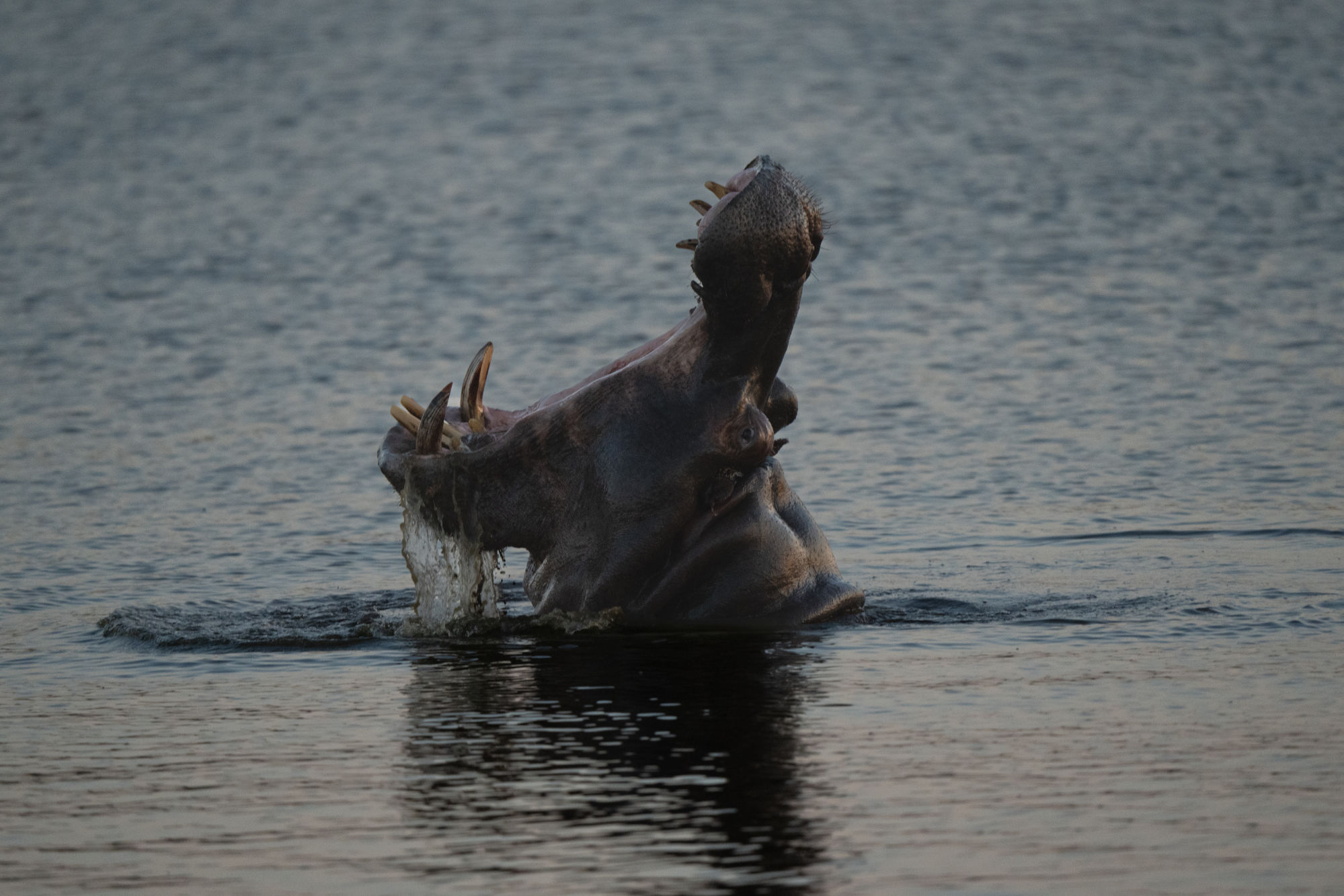
and eventually ending the afternoon with a big yawn or two.
This was a transit day between Satara and Lower Sabie, taking the scenic route, which meant that we were on the road for 8 hours.
Birds, elephants, landscapes and a few antelope made up the photography of the day.
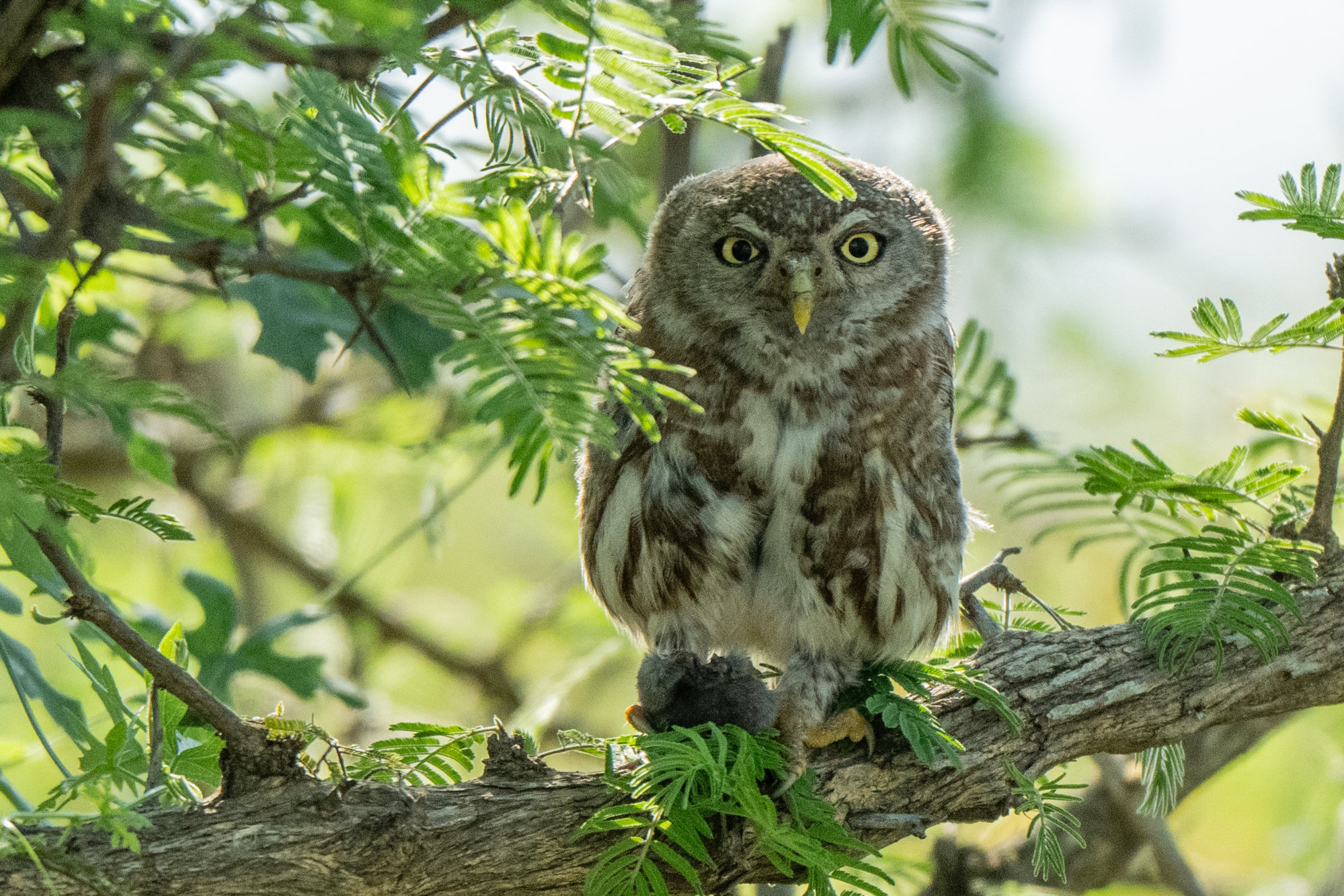
A Scops owl, very well hidden in a tree and pointed out to us by the SanParks staff member at the picnic site:
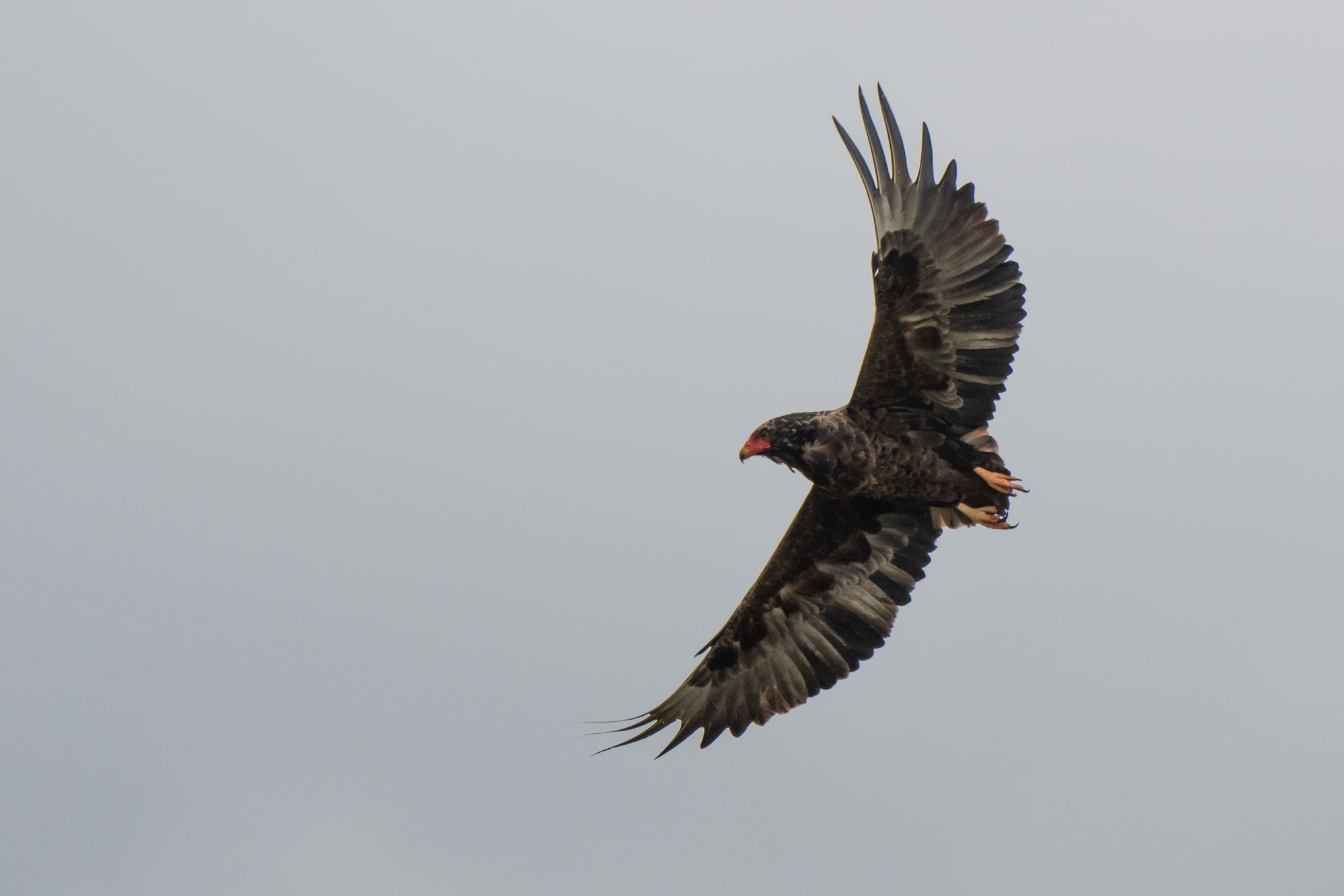
A few more attempts at photographing birds in flight, again with limited success, included a Bateleur and Wahlberg’s eagle.
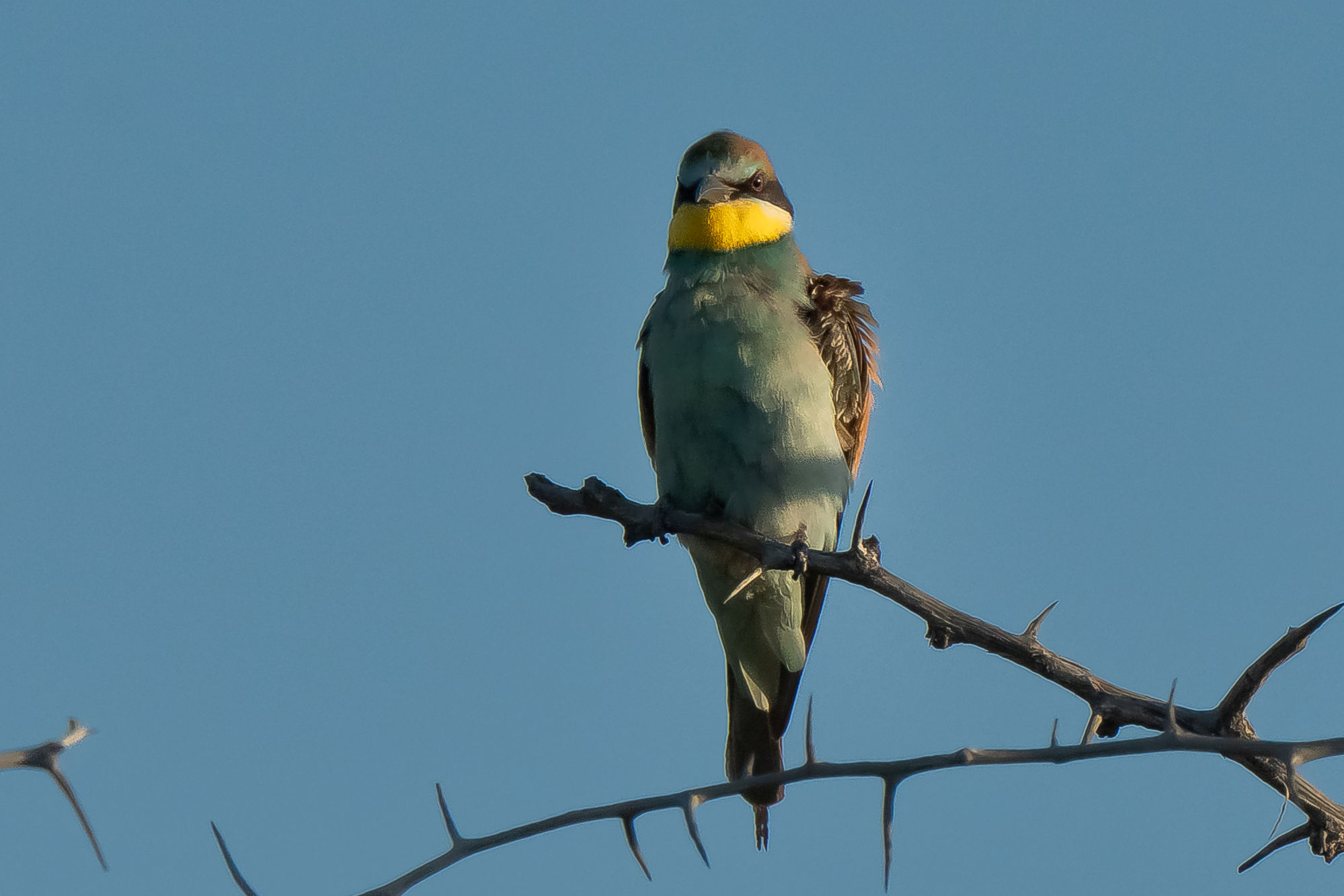
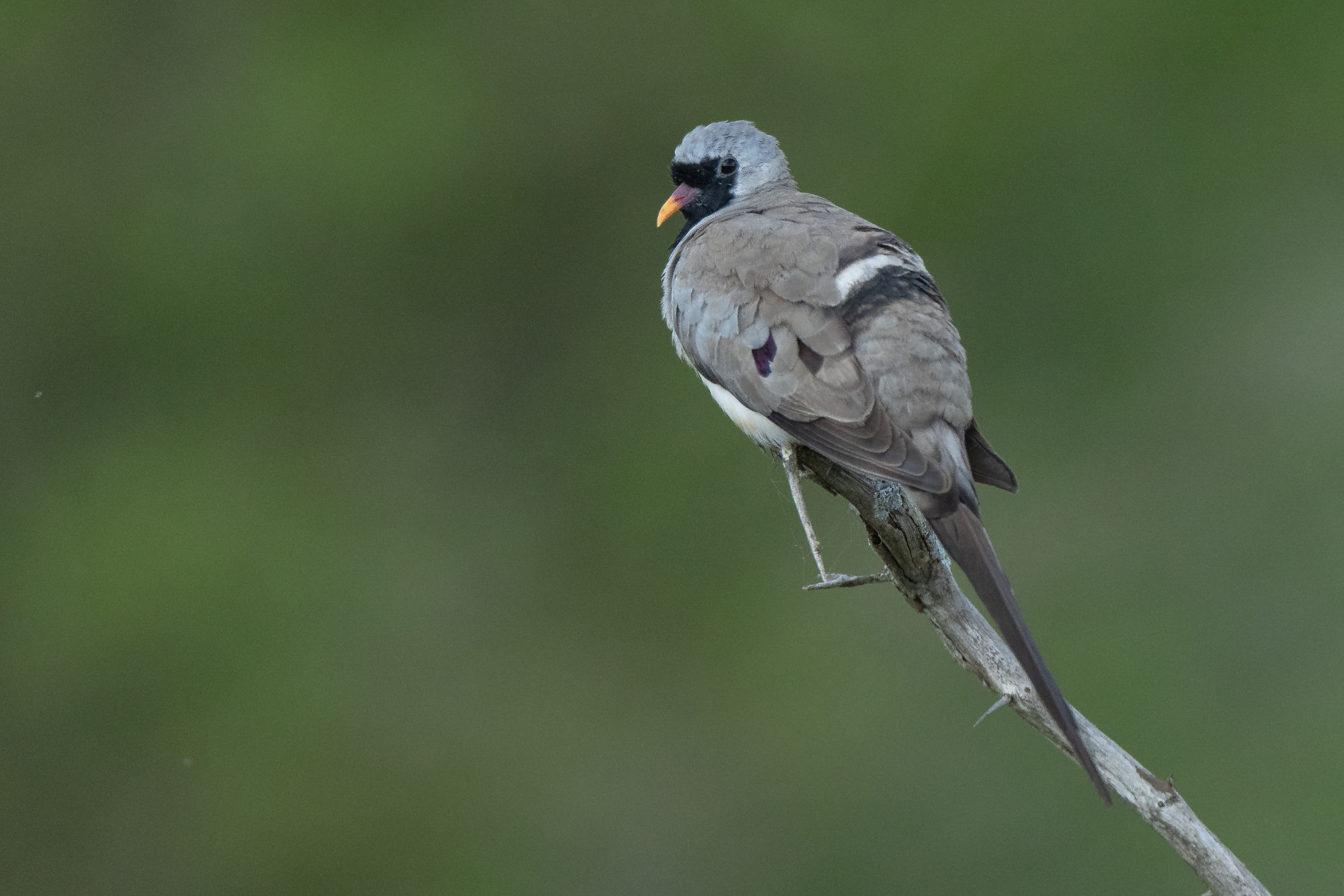
Other bird sightings included a Namaqua Dove, Red Billed Oxpecker and Crested Barbet
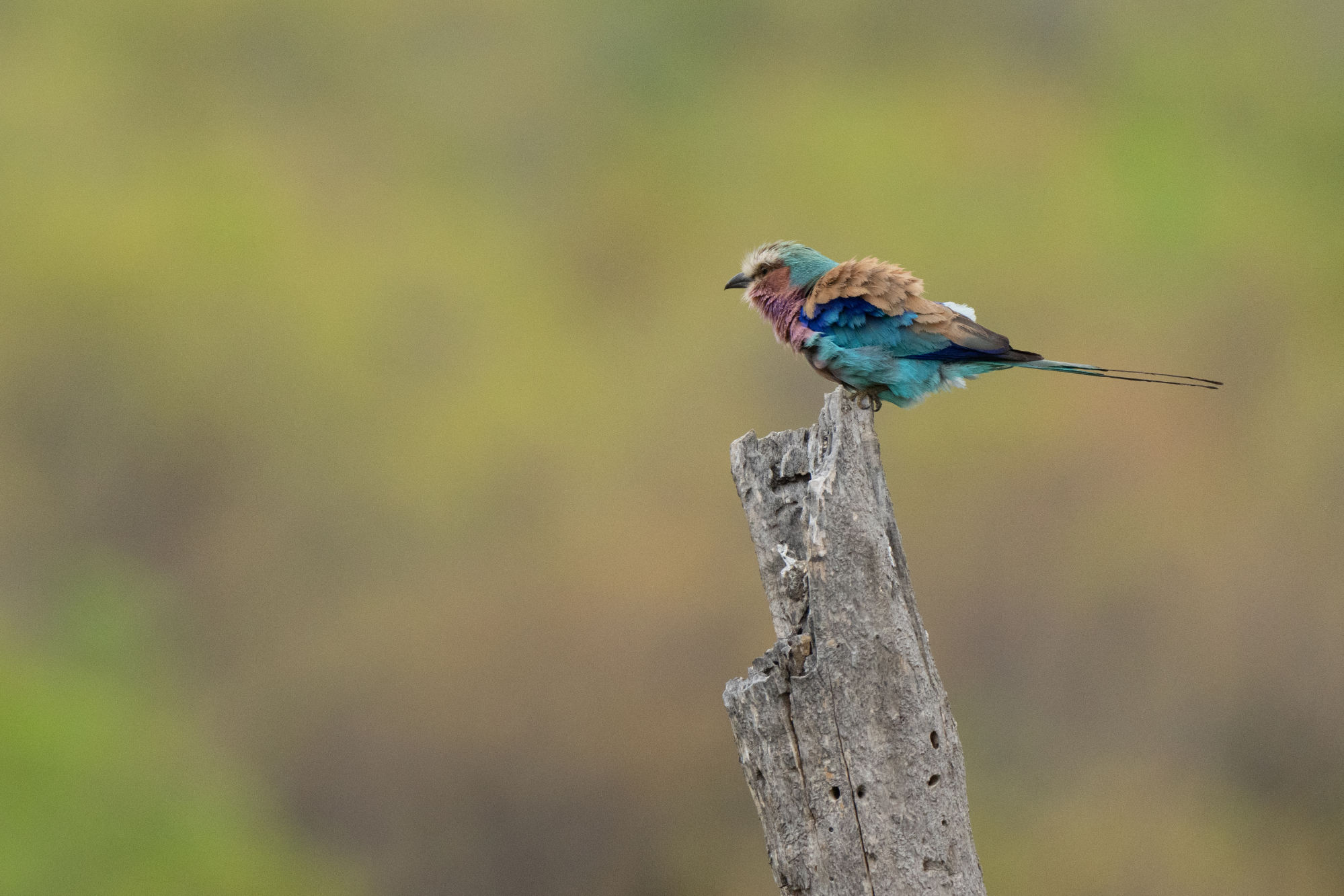
An amazing sight, was that of a Lilac Breasted Roller busy anting, a behaviour I have never seen before or even heard of.
The scenery along the way was truly beautiful.
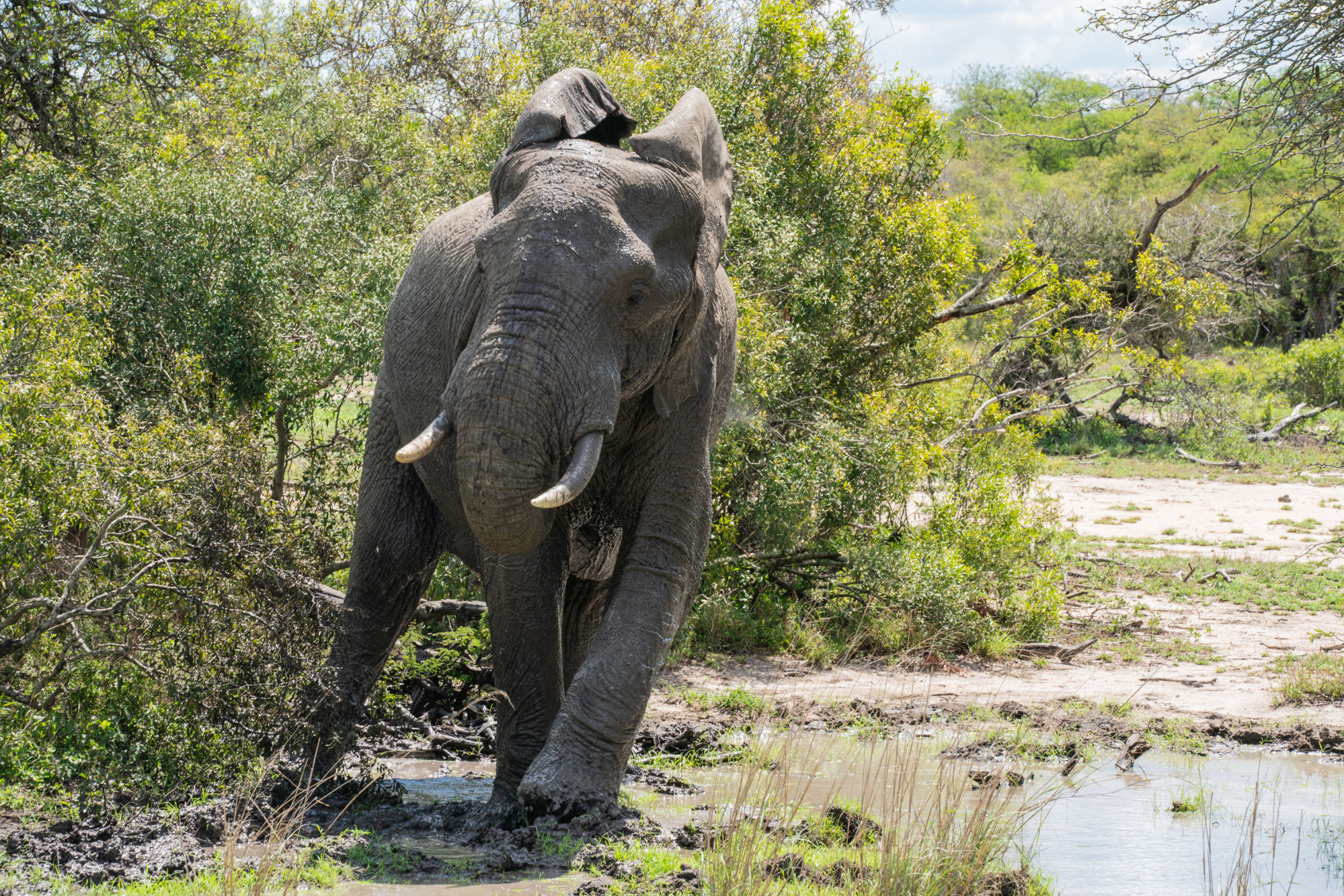
The number of elephants was amazing, especially the number of little ones. We even saw one that must have been no more than a few hours old, still very unsteady on its feet and with blood still visible on the mother’s hind legs (my photos unfortunately not really worth posting, but Liana’s video to follow and will be linked here). And where there are elephants, there must be dung beetles.
Day 3 was an early start, queuing at the camp gate at 5:30 to be on the road at sunrise, exploring the area north of Satara, towards Olifants camp.
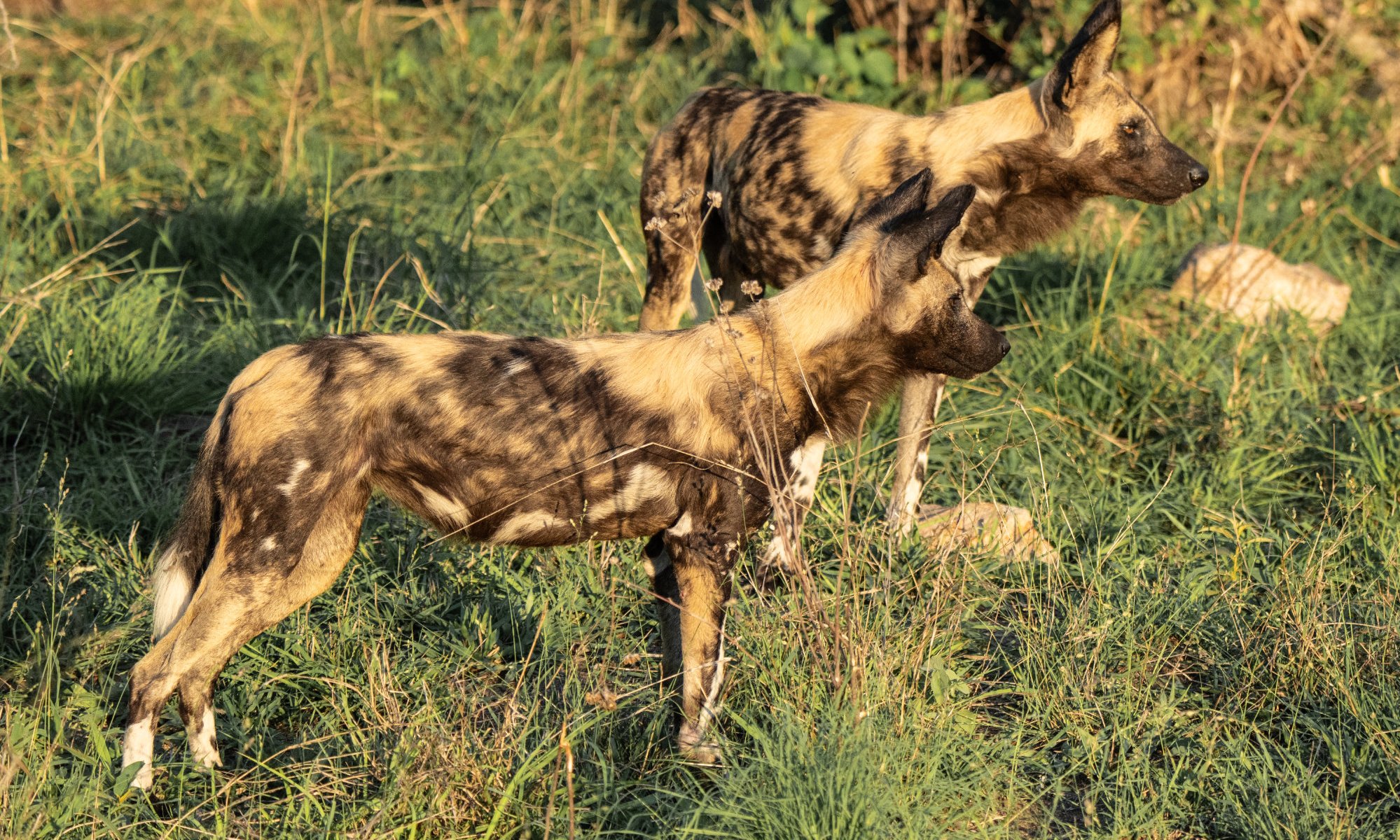
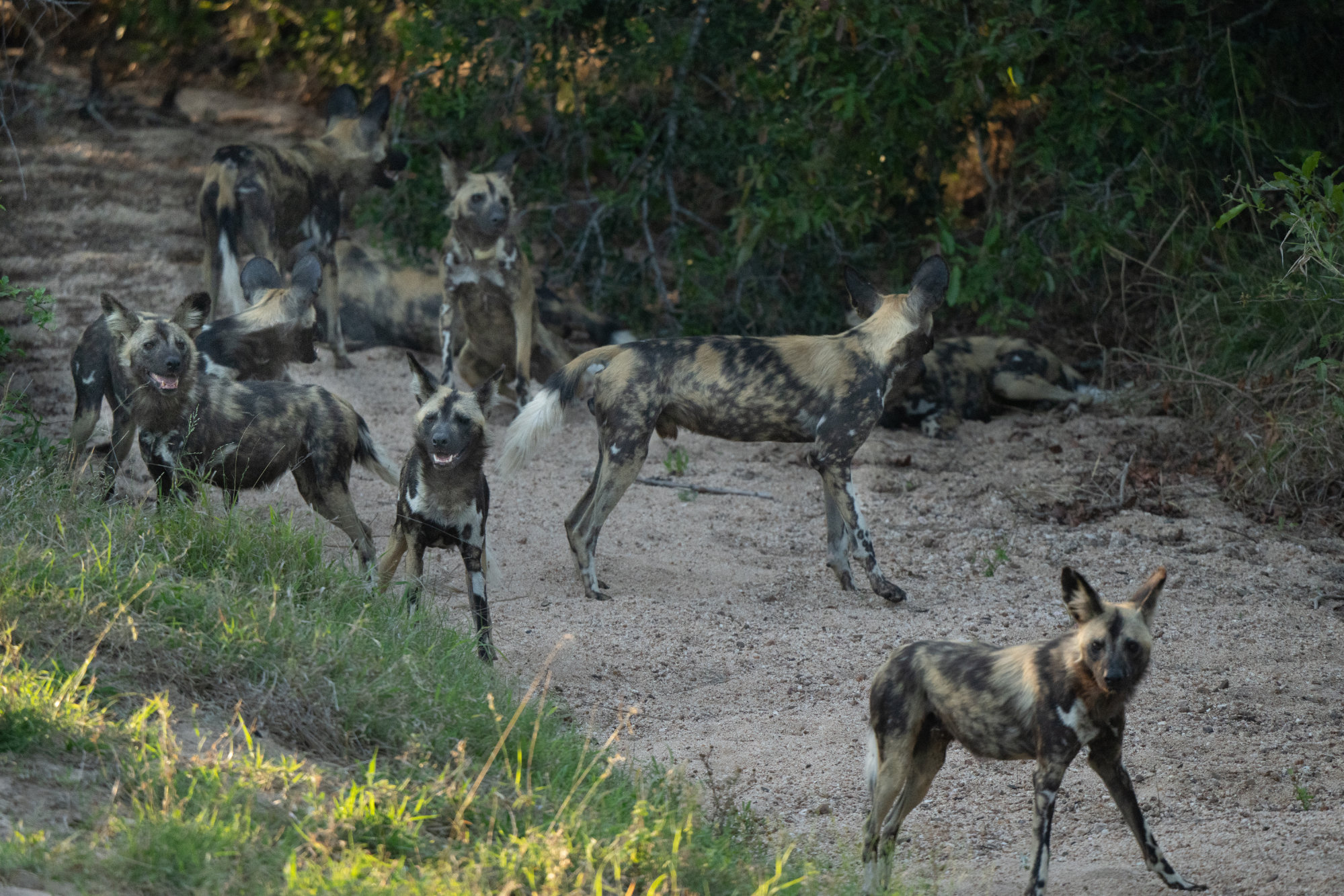
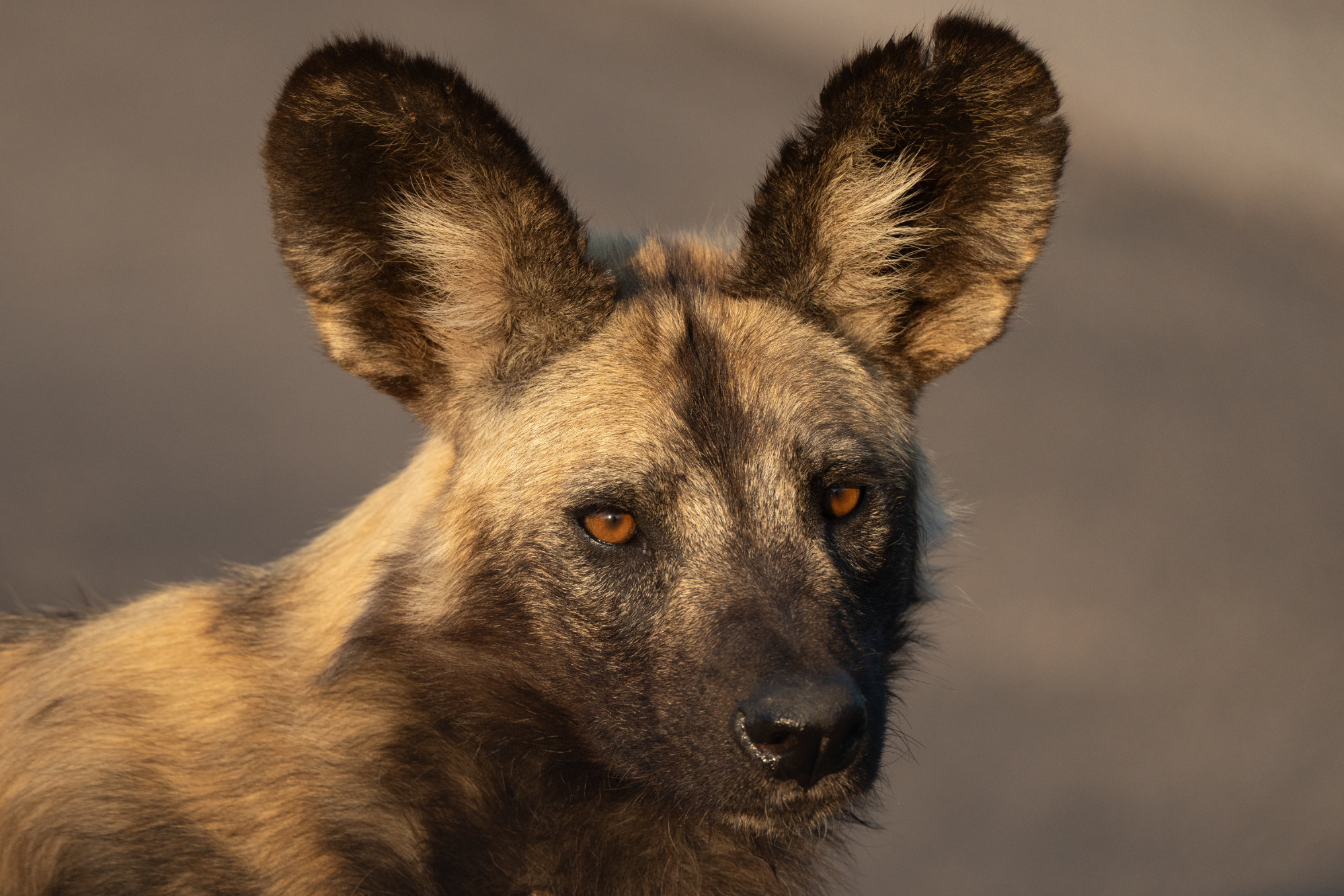
This turned out to be the day on which we found Wild dogs, after a long search, despite having been informed of their exact location. We eventually found them late morning, resting in deep shade among the trees, very hard to spot. As a result this was not an ideal photographic opportunity, but managed to take a few pics, just to document that we had seen them.
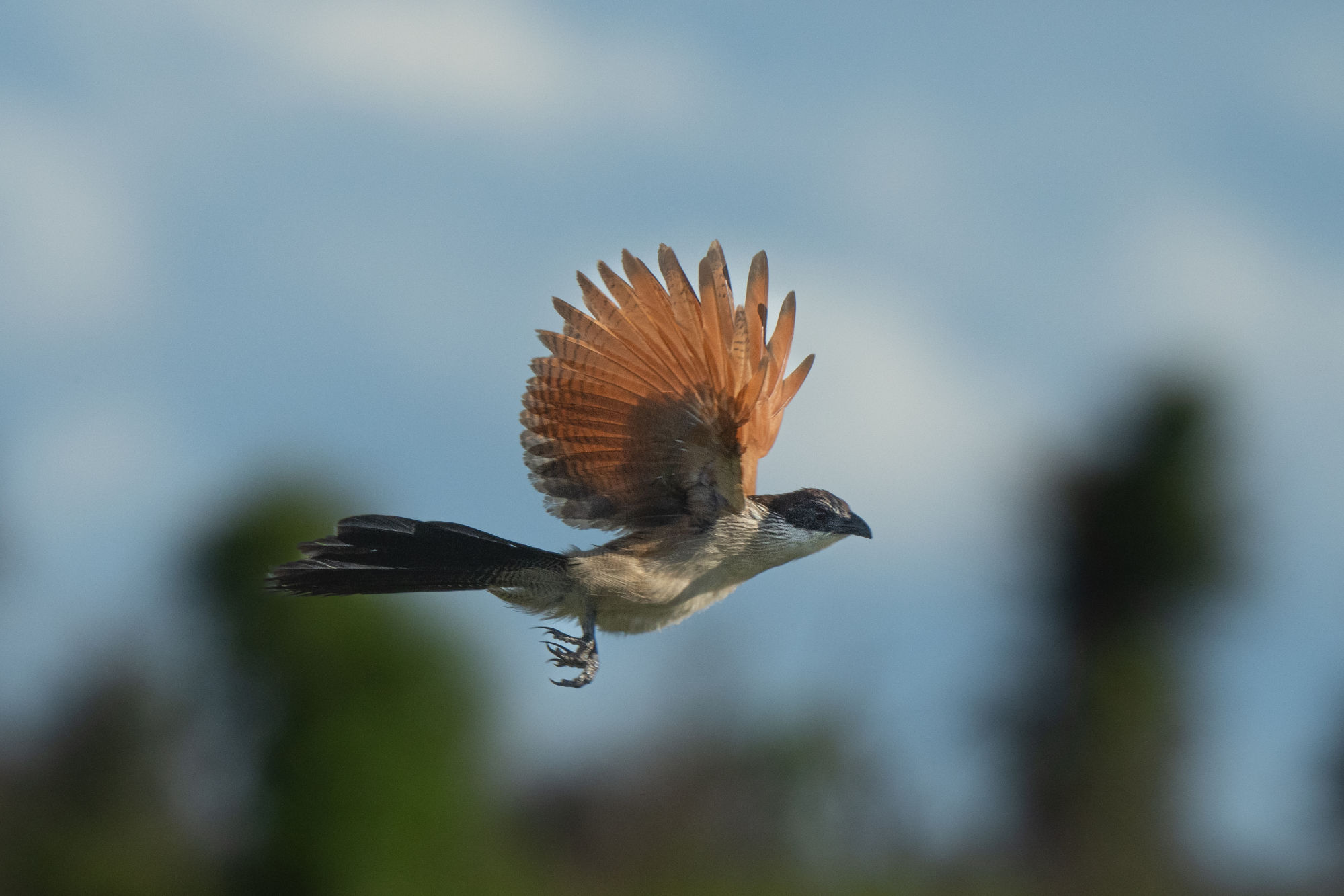
Much of the morning and later also the late afternoon was spent trying to photograph birds in flight, with limited success.
First, a pair of Fish Eagles at the viewing site at Olifants rest camp
Several attempts at Lilac Breasted Rollers (Troupant)
White-browed Coucal (Vleiloerie)
Southern Ground Hornbill
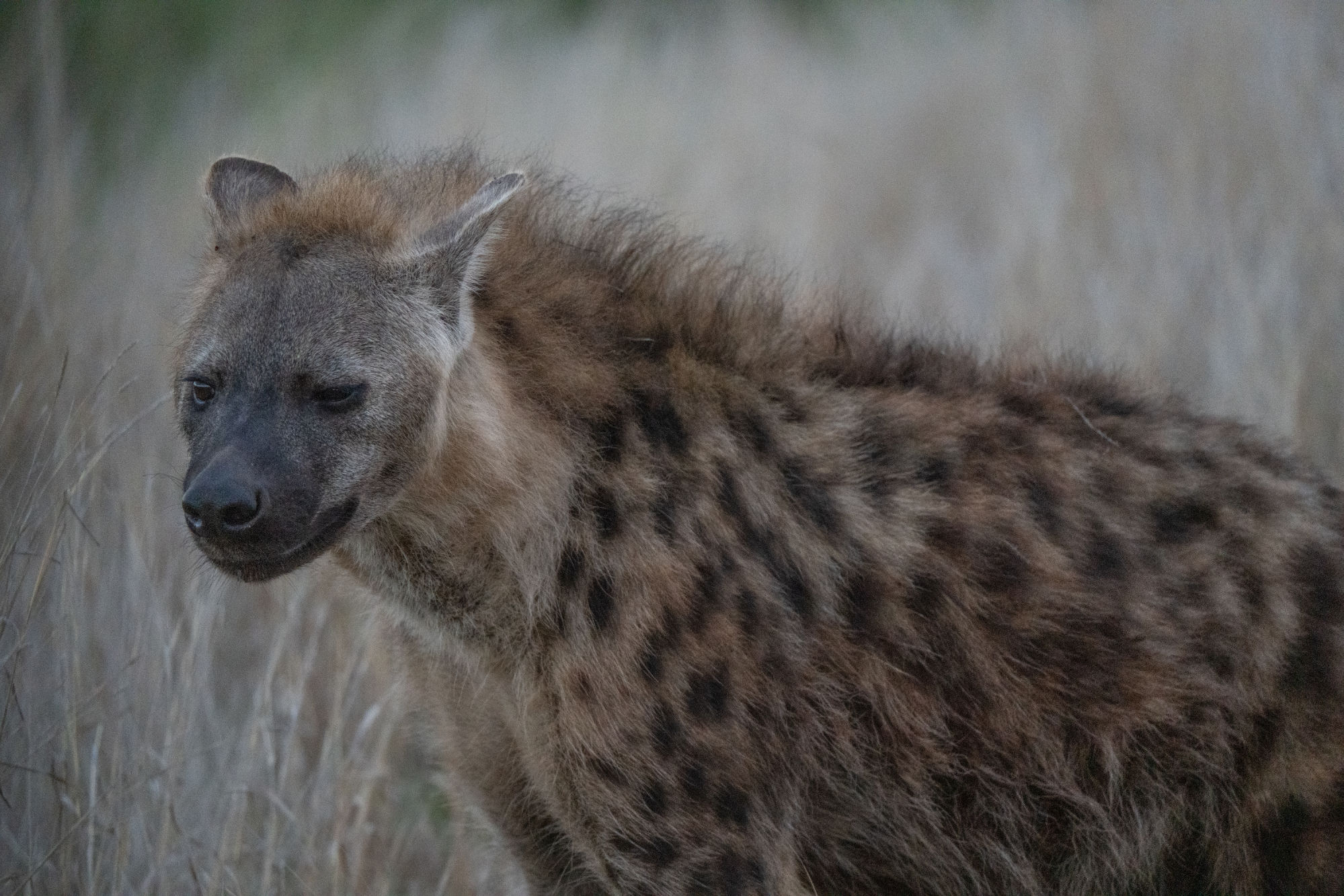
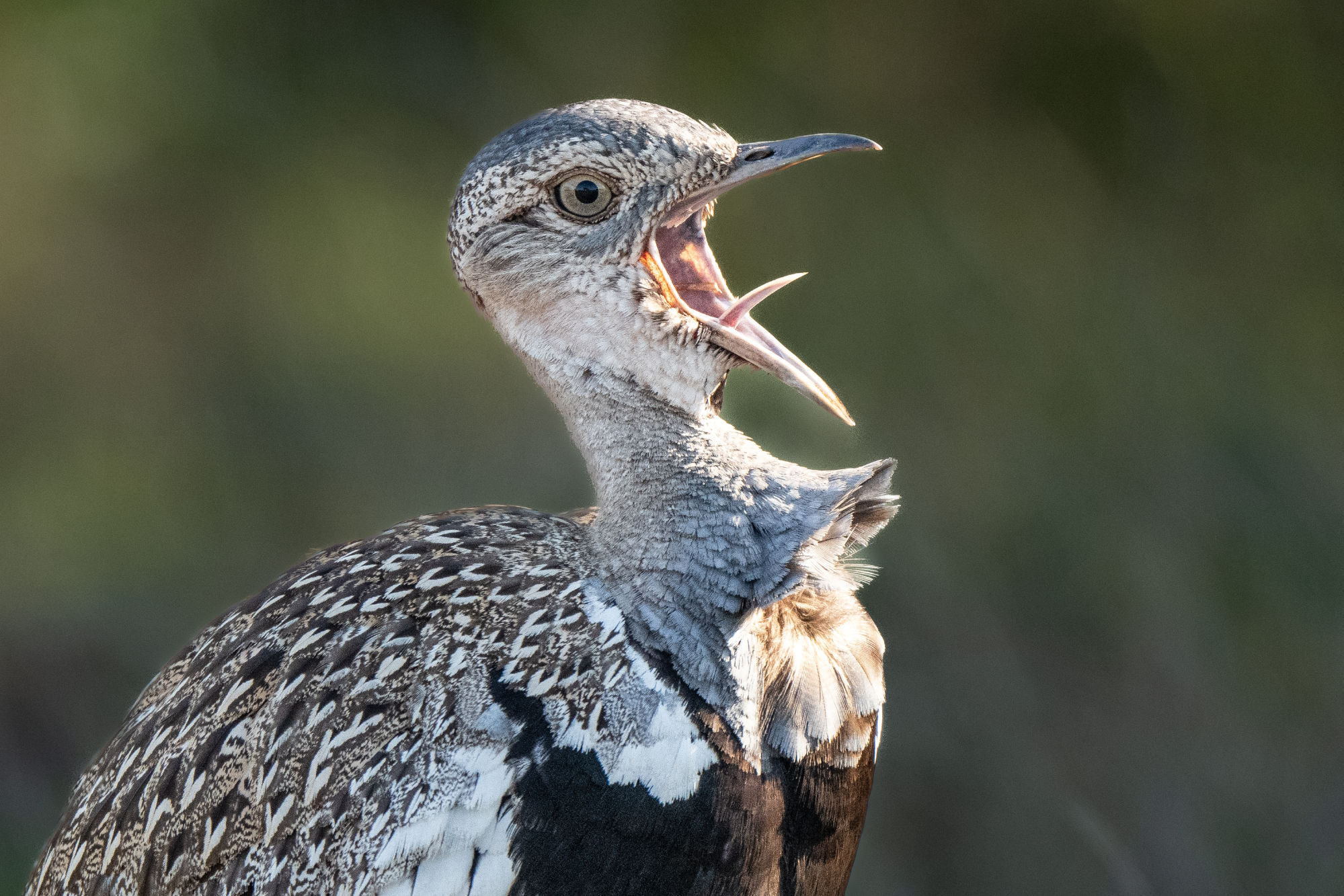
During the course of the day, we also saw quit a few elephants, a hyena, Kori Bustard, Red crested korhaan, Waterbuck, kudu
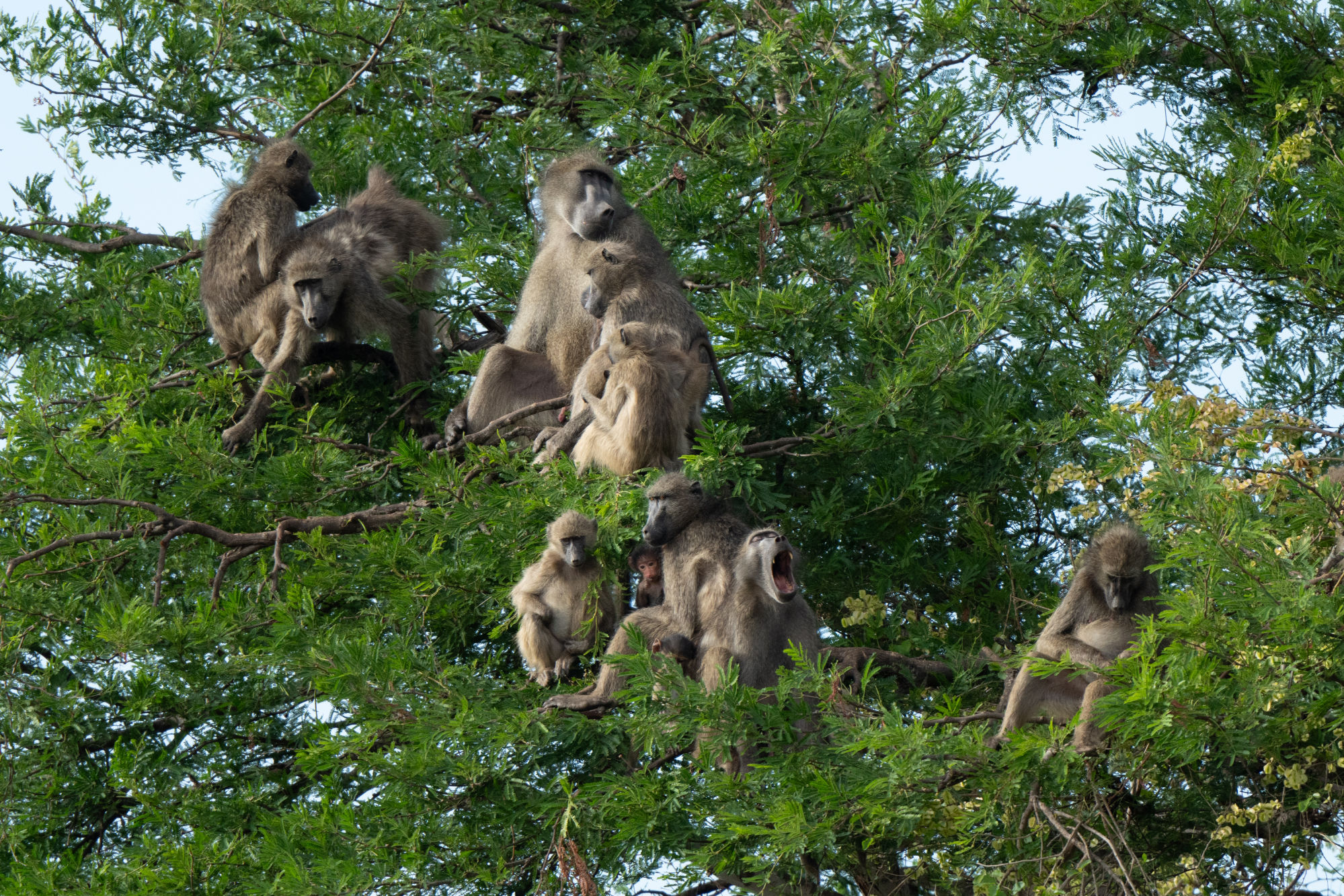
and a bit frustratingly, given my dislike of baboons, probably my best photo of the day, a troupe of baboons in a tree at Olifants bridge.
We also managed to get a family portrait of some lions in the grass,
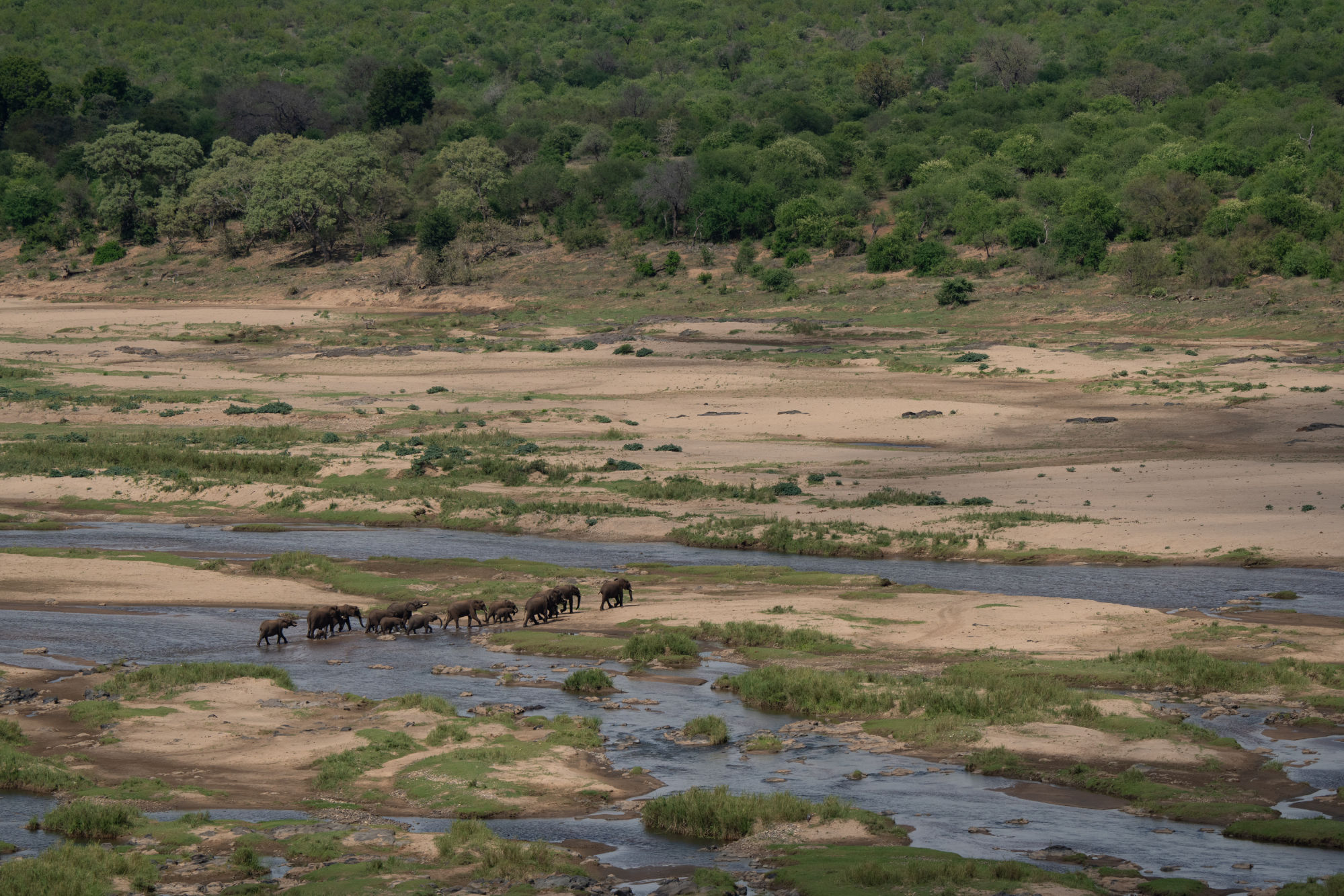
saw some elephants crossing the Olifants river
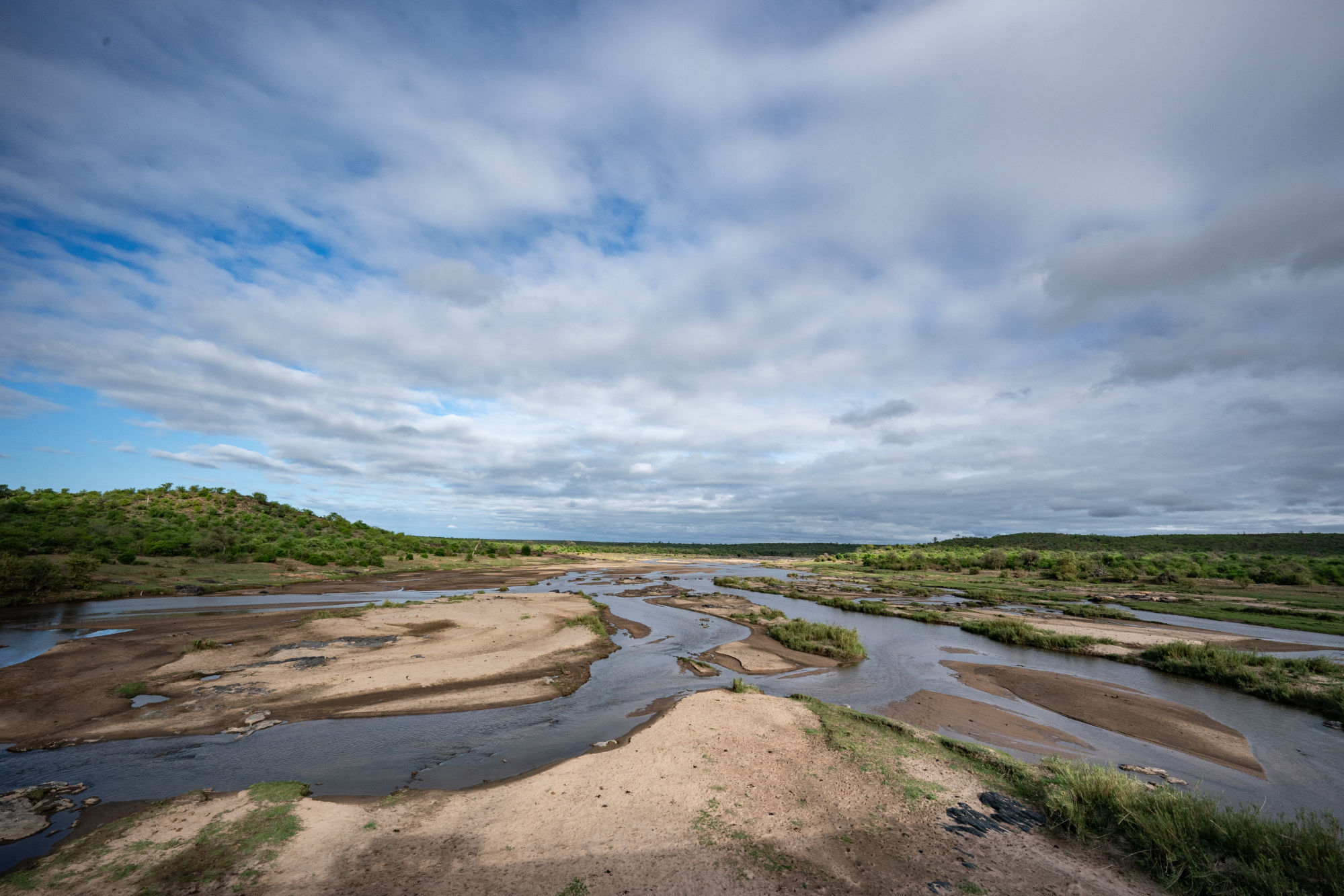
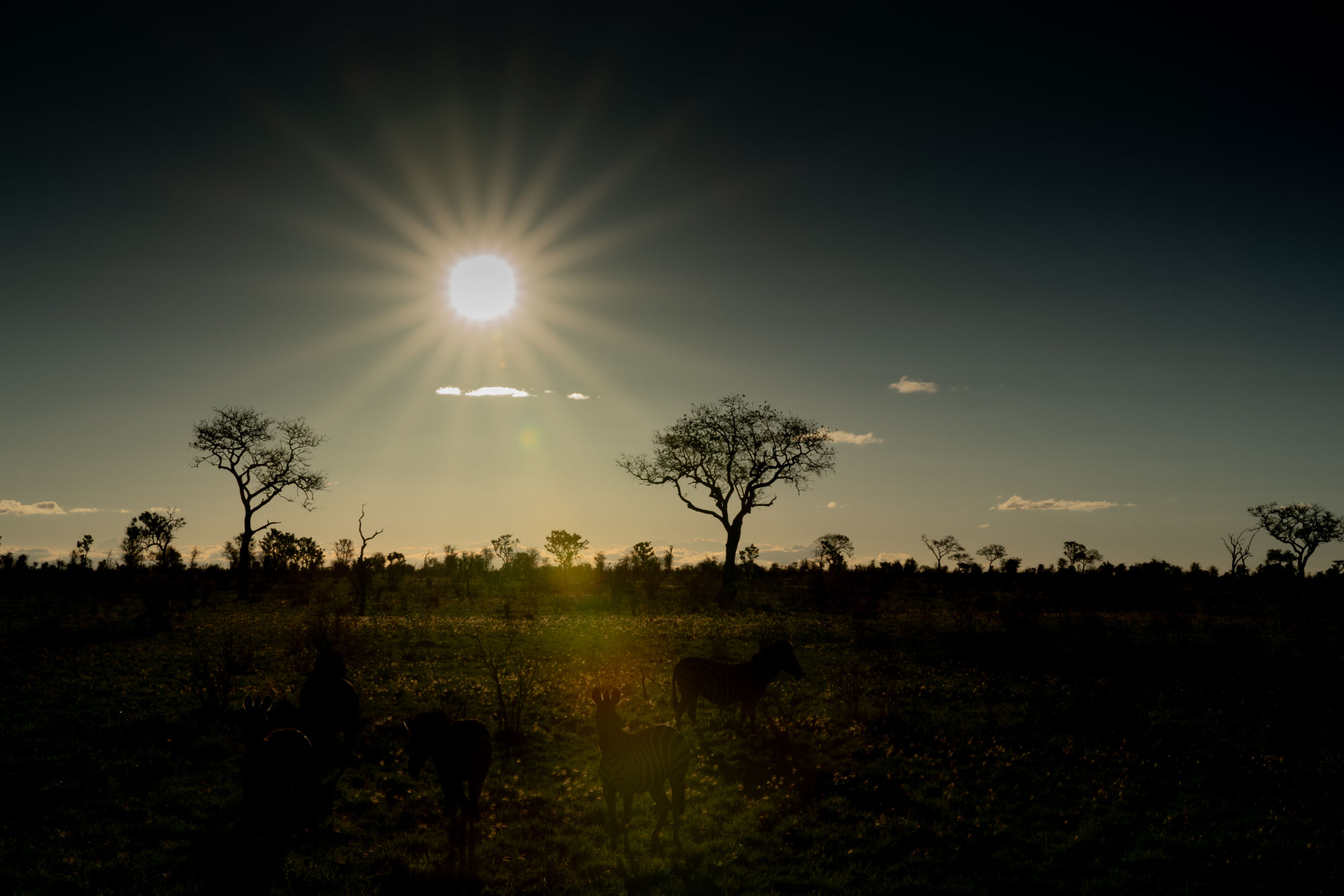
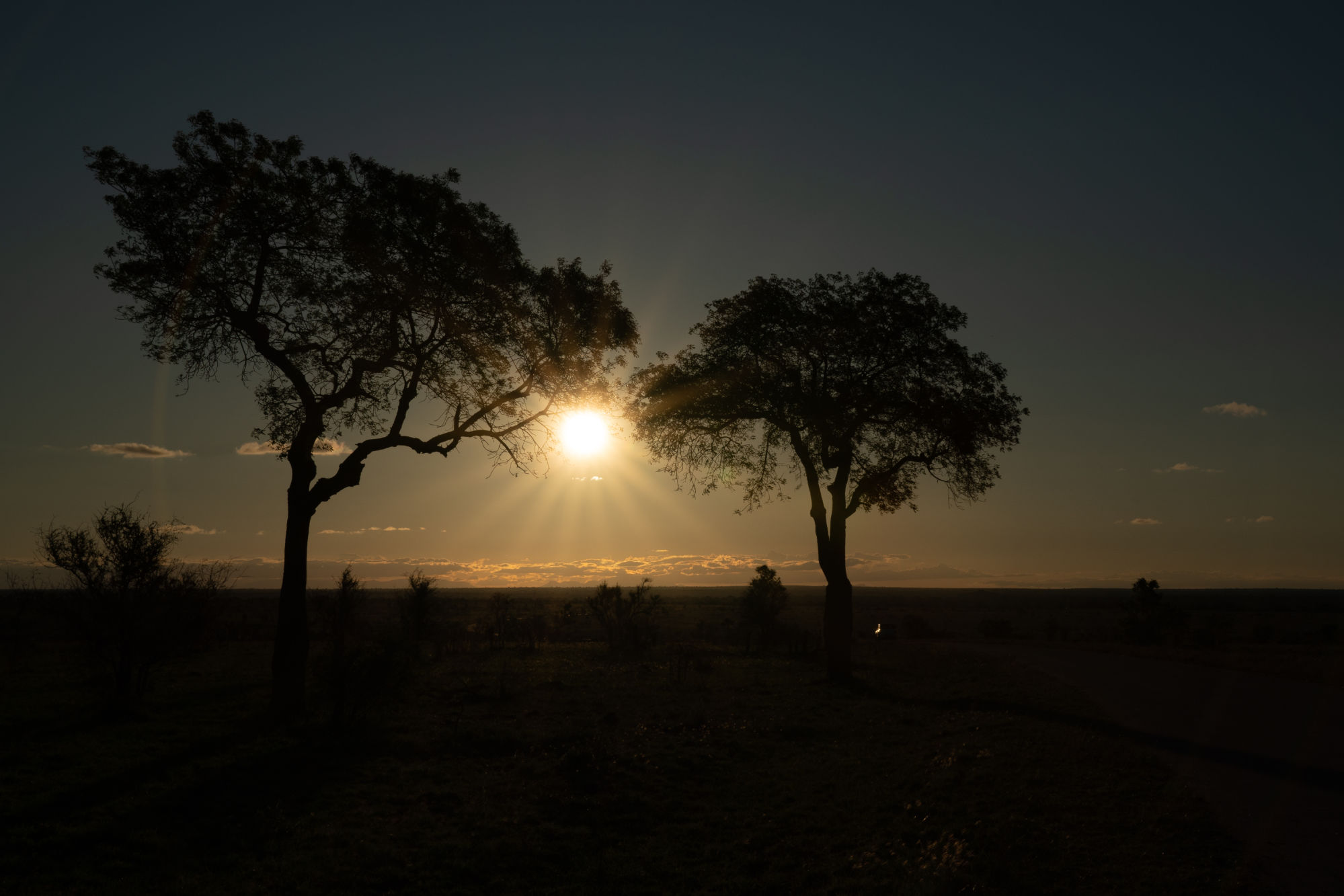
and played around with some landscape and sunset/sunburst photos.
We ended the day with some venison sausage and chicken kebabs on the braai.
Hennie and Bernhard of B1 Photo Safaris picked us up at 06h30, to go looking for Wild Dogs, but we only found vultures in the location where the Wild Dogs had been seen earlier.
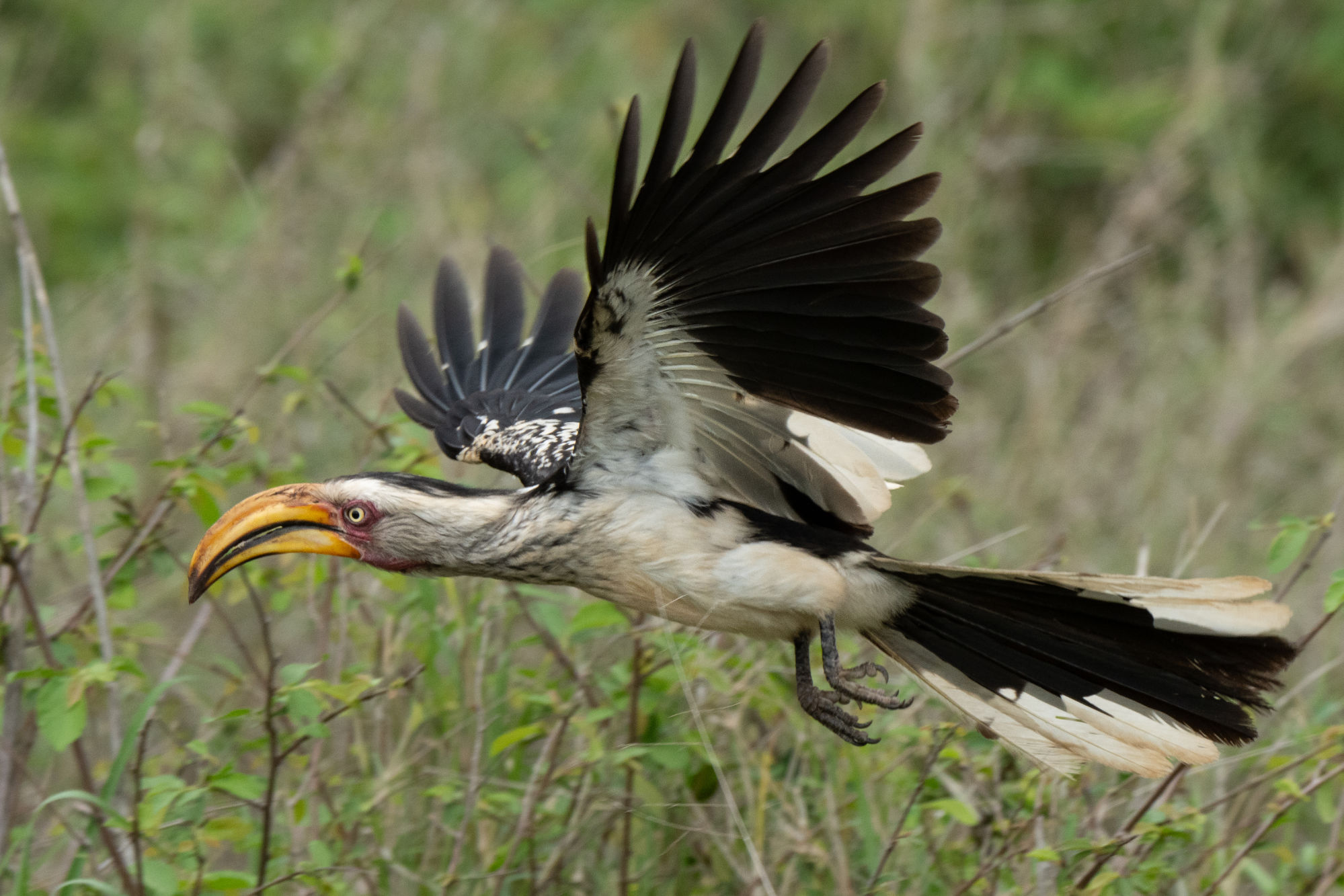
Along the way we also saw some Hornbills
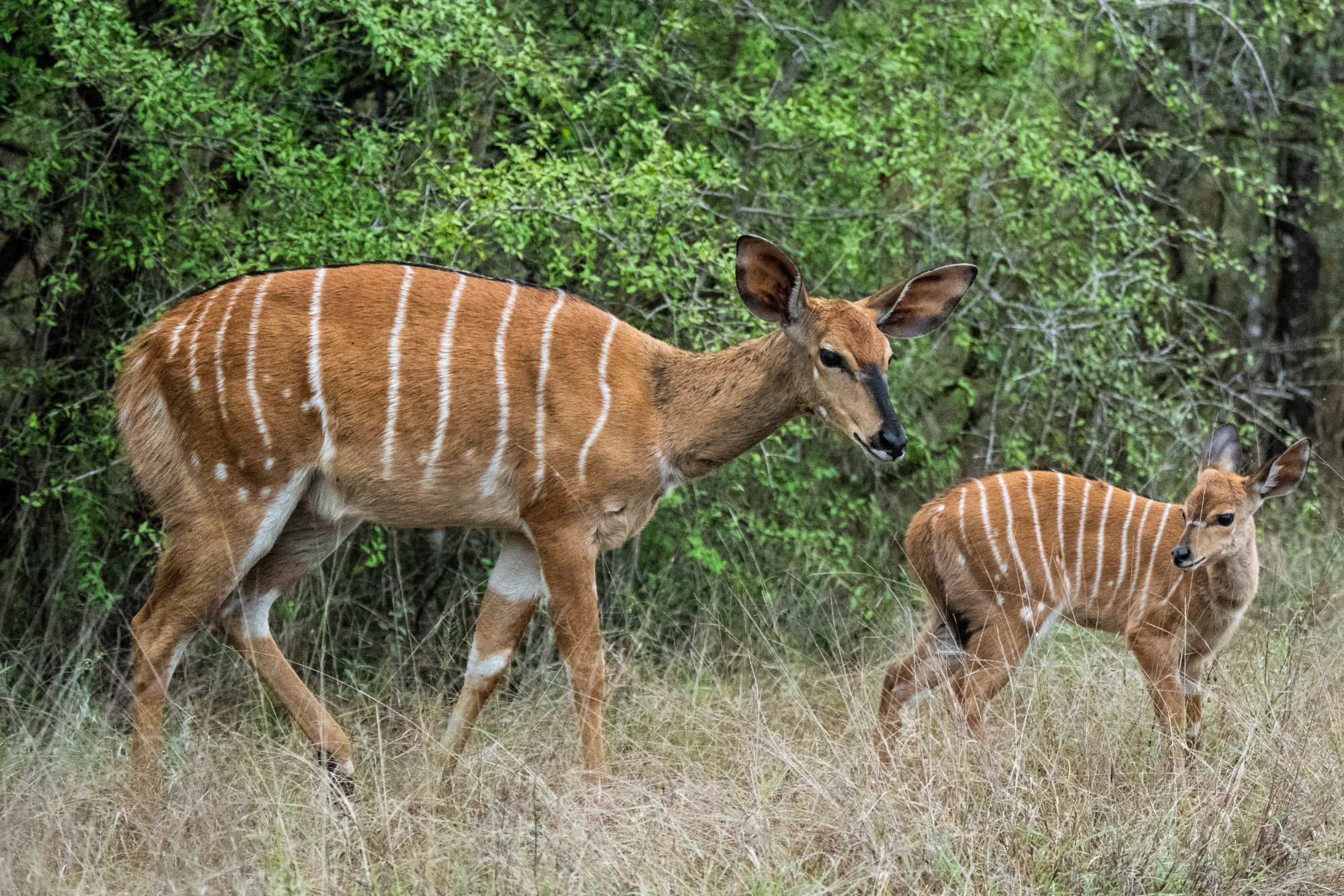
and Nyala
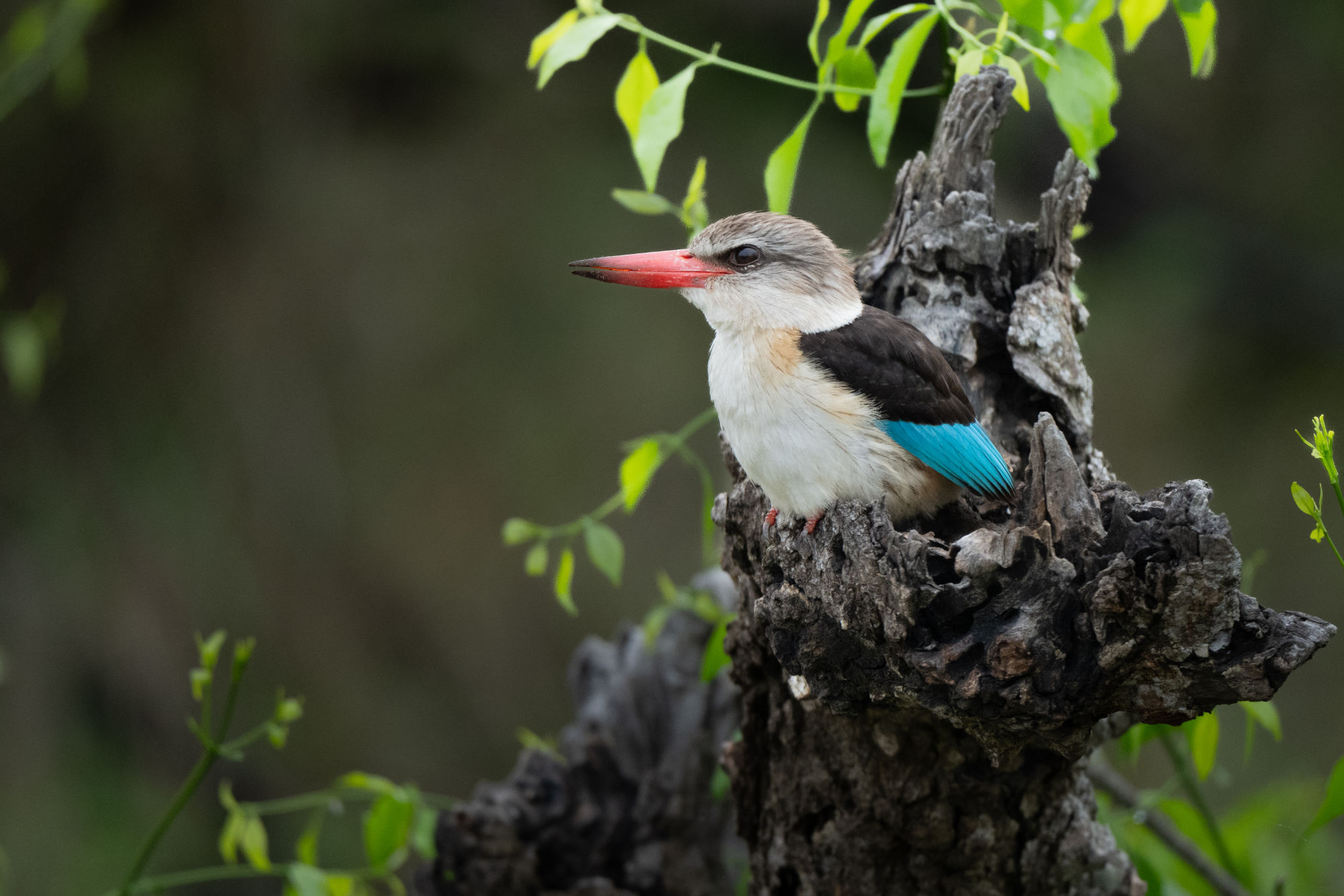
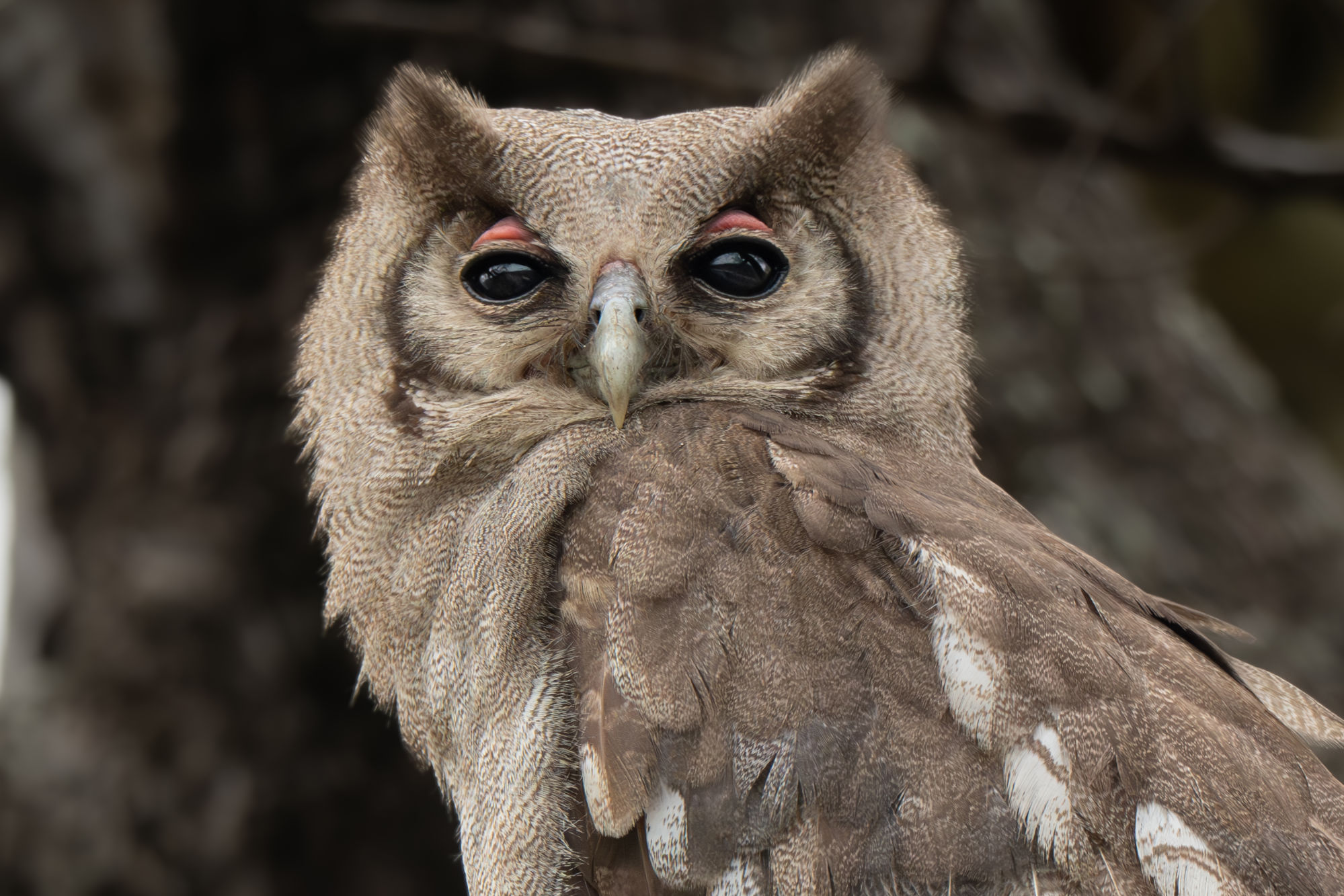
The bird sightings continued with a Brown Hooded Kingfisher and a rare sighting of a Verreaux Eagle-Owl sitting out in the open.
Then it was time to move on from Skukuza to Satara, with some great sightings along the way. First was a Giant Plated Lizard and a few metres away a Rock Monitor.
We also found a lion sleeping in the middle of the road, some giraffes, elephants, steenbok and many impala
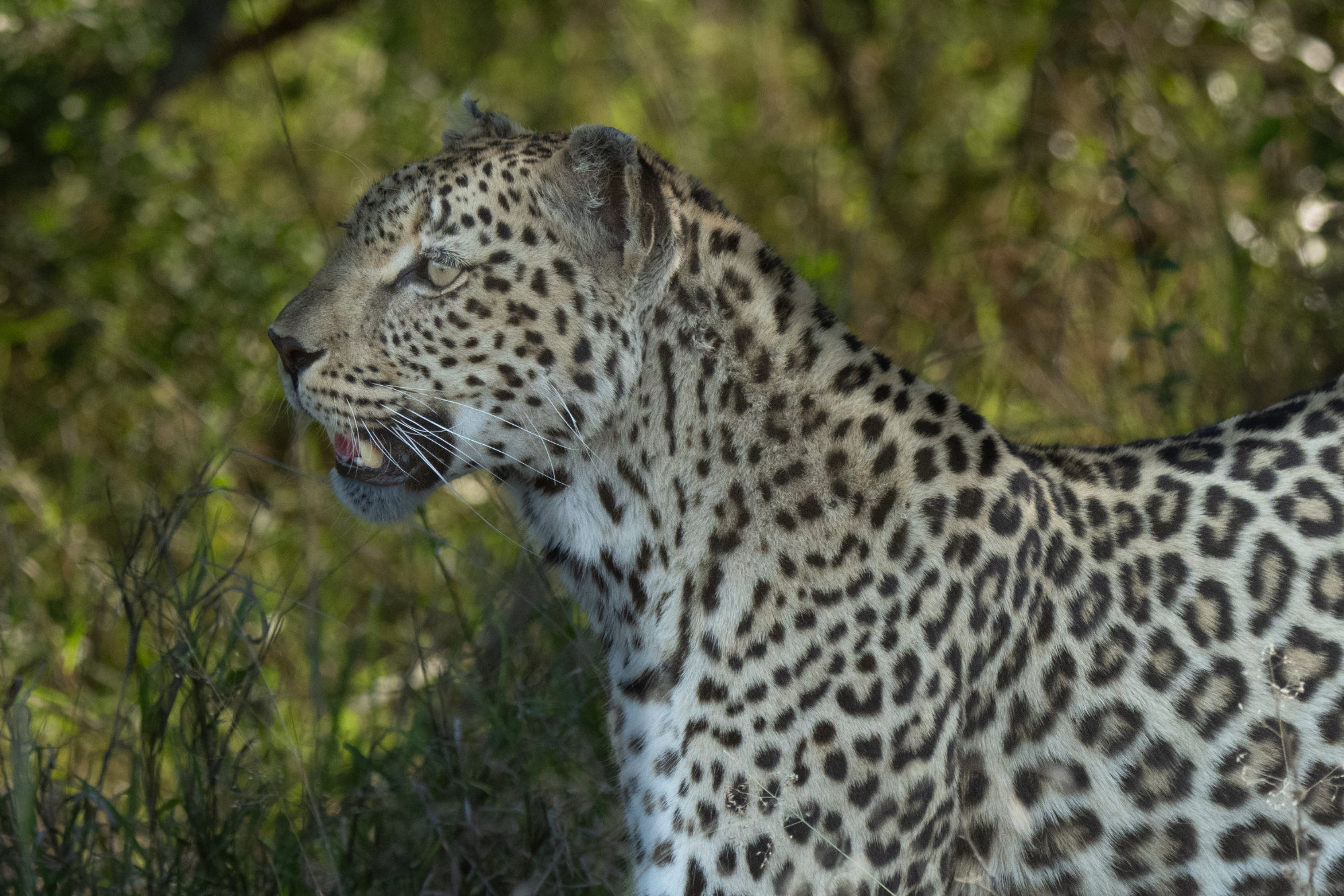
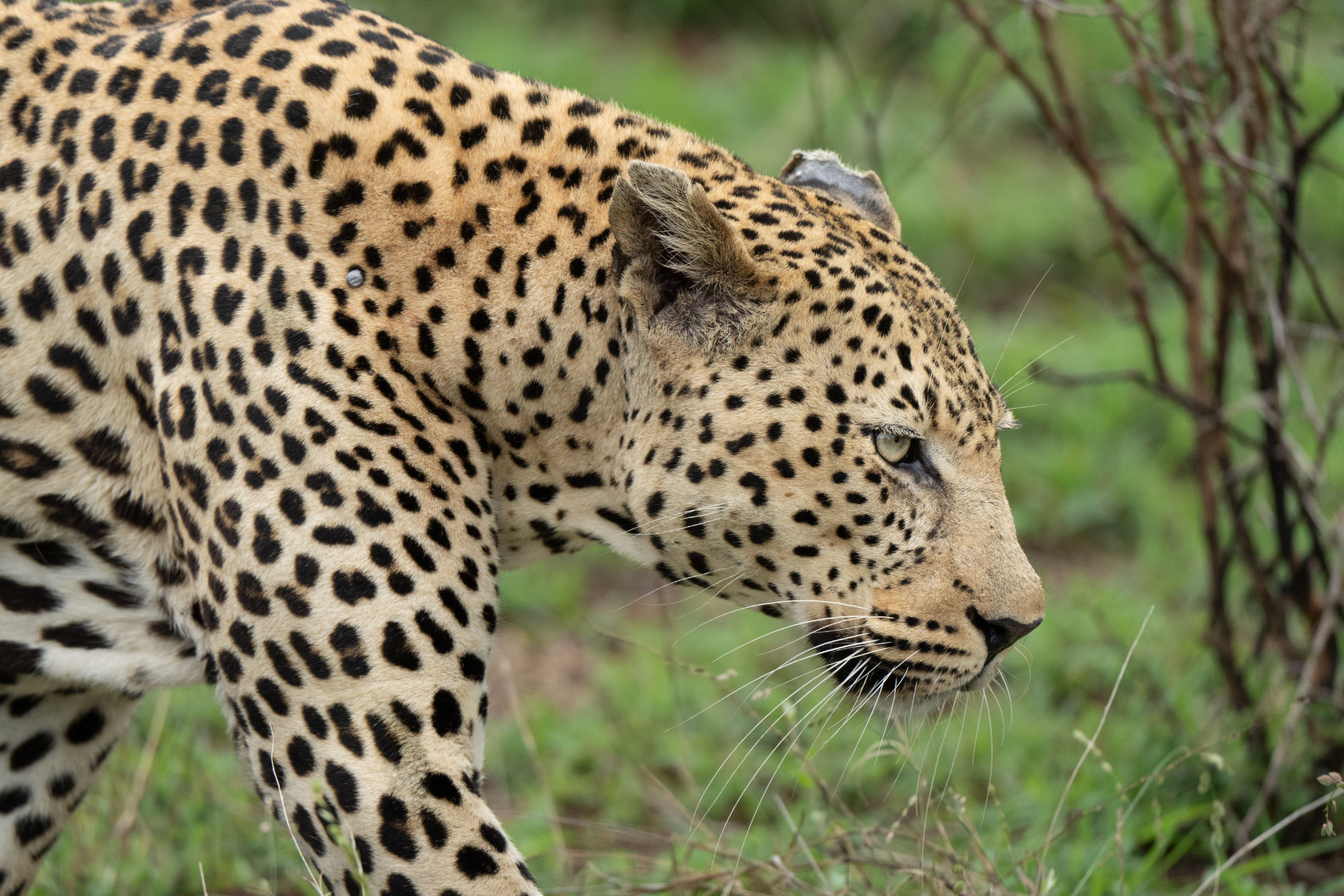
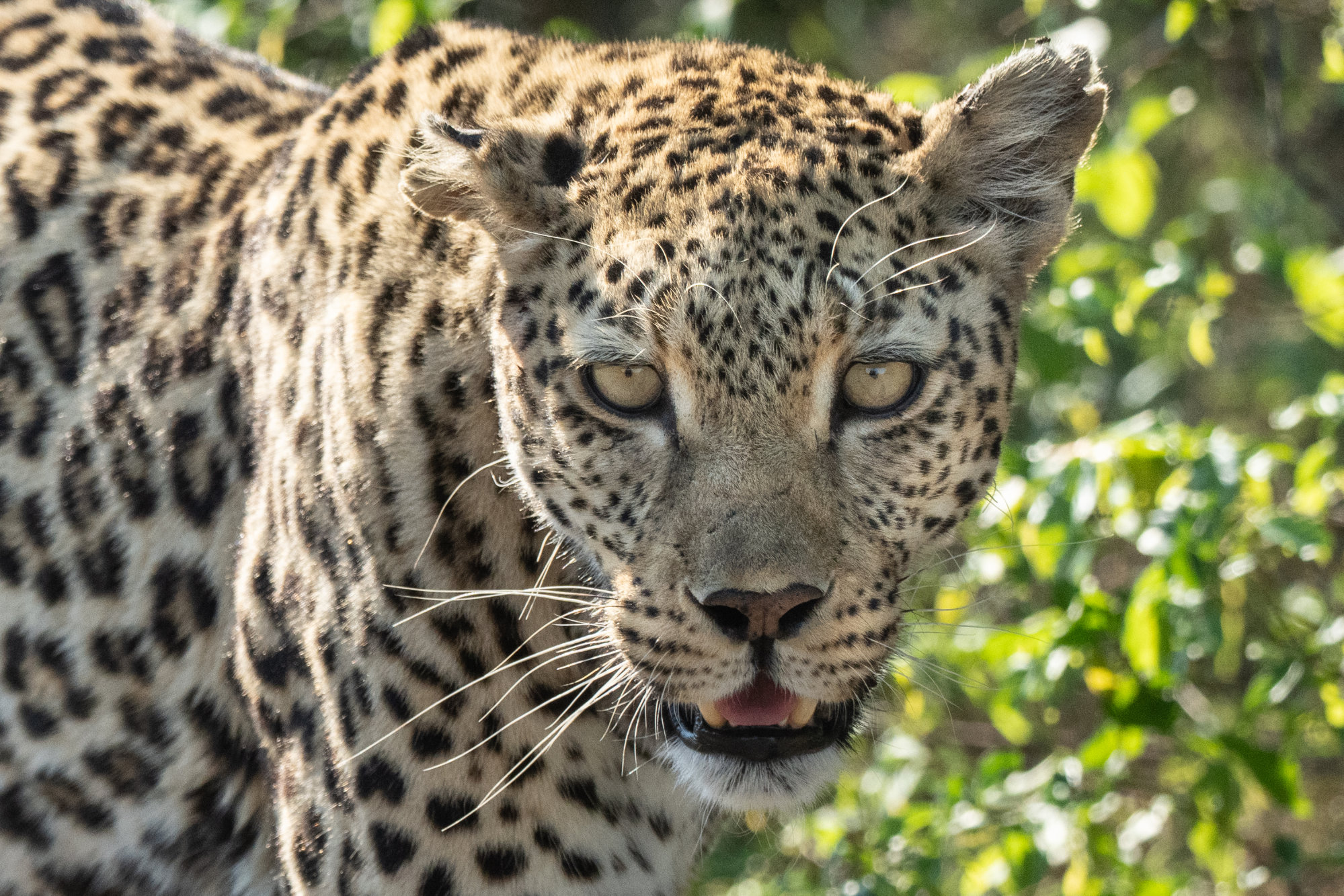
But the most exciting of the day, was a leopard which we nearly missed because it was lying partially hidden under a bush. When we stopped, it got up and crossed the road right in front of us.
Just before arriving at Satara, Bernhard got news that the unique white lion, which lives in the area, had been seen just north of the camp. Arriving at the sighting, there was the expected traffic jam, everybody wanting to see the lion, with the lion fast asleep next to its brother, ignoring the cars and people.
We decided to check in to our accommodation first and then went back for a second look. He was still quite lazy, but at least lifted his head, yawned and then got up to move a few metres before lying down again, giving us some opportunities for photos.
We were very excited for our first visit to Kruger National Park since our honeymoon 34 years ago. Little did we know, when planning the trip, that we would start out quite as exhausted after staying up late to watch the Springboks beat France in a very tense Rugby World Cup semifinal and then having to rise very early to be at the airport on time.
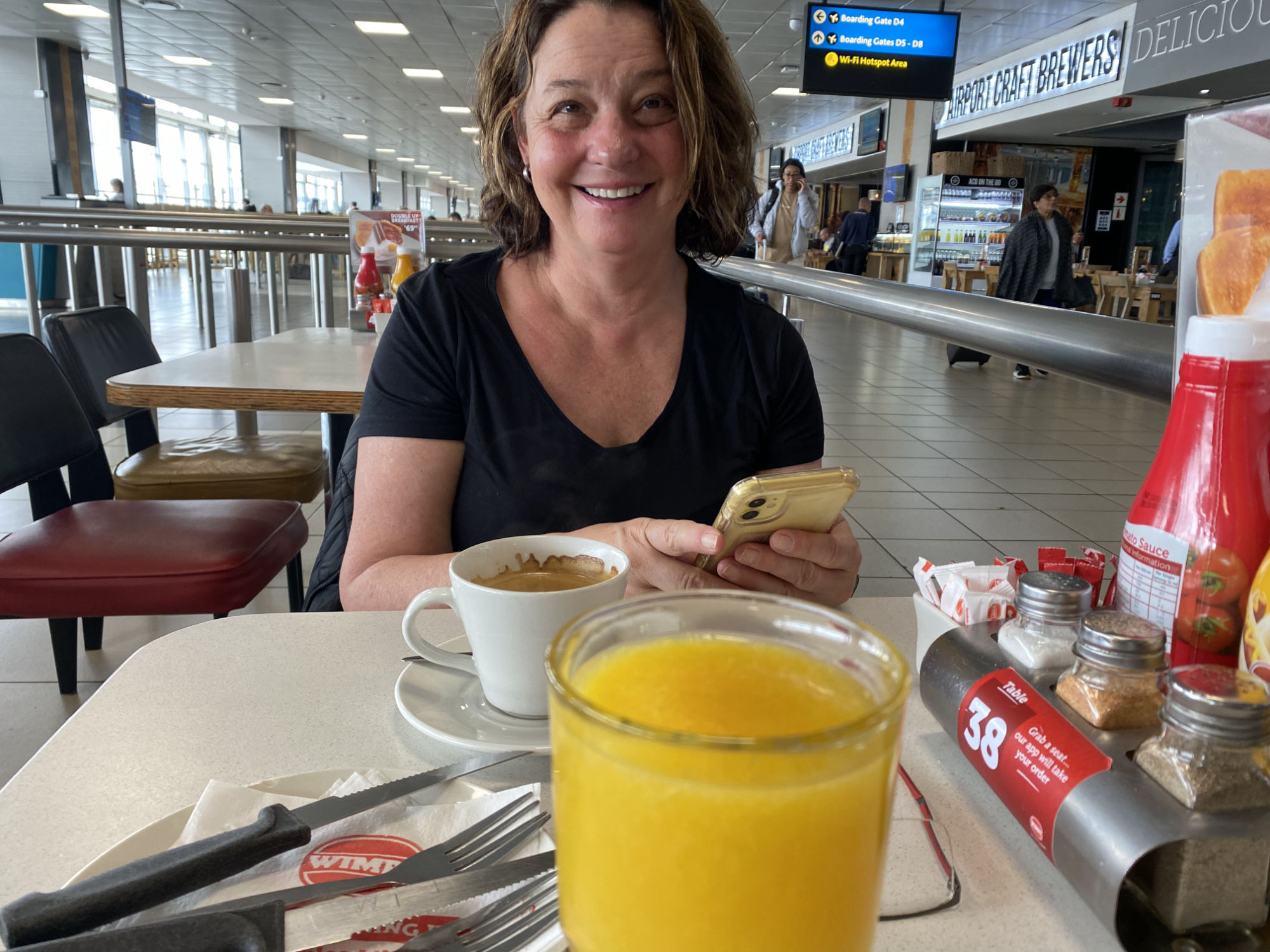
Our flight from Gqeberha to OR Tambo International airport was uneventful. At OR Tambo we had a few hours layover and decided to grab a Wimpy burger for brunch.
From OR Tambo, we got an Airlink flight to Skukuza.
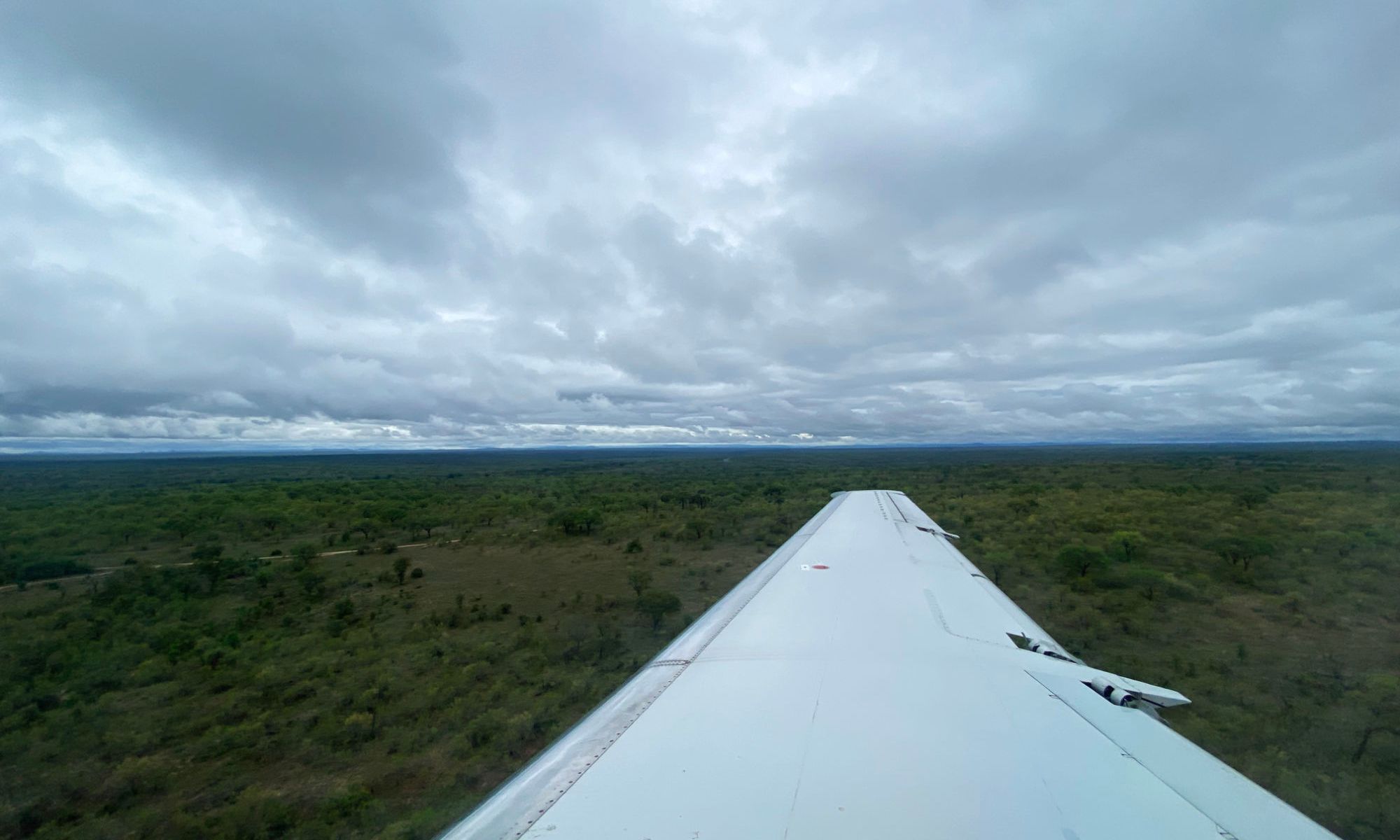
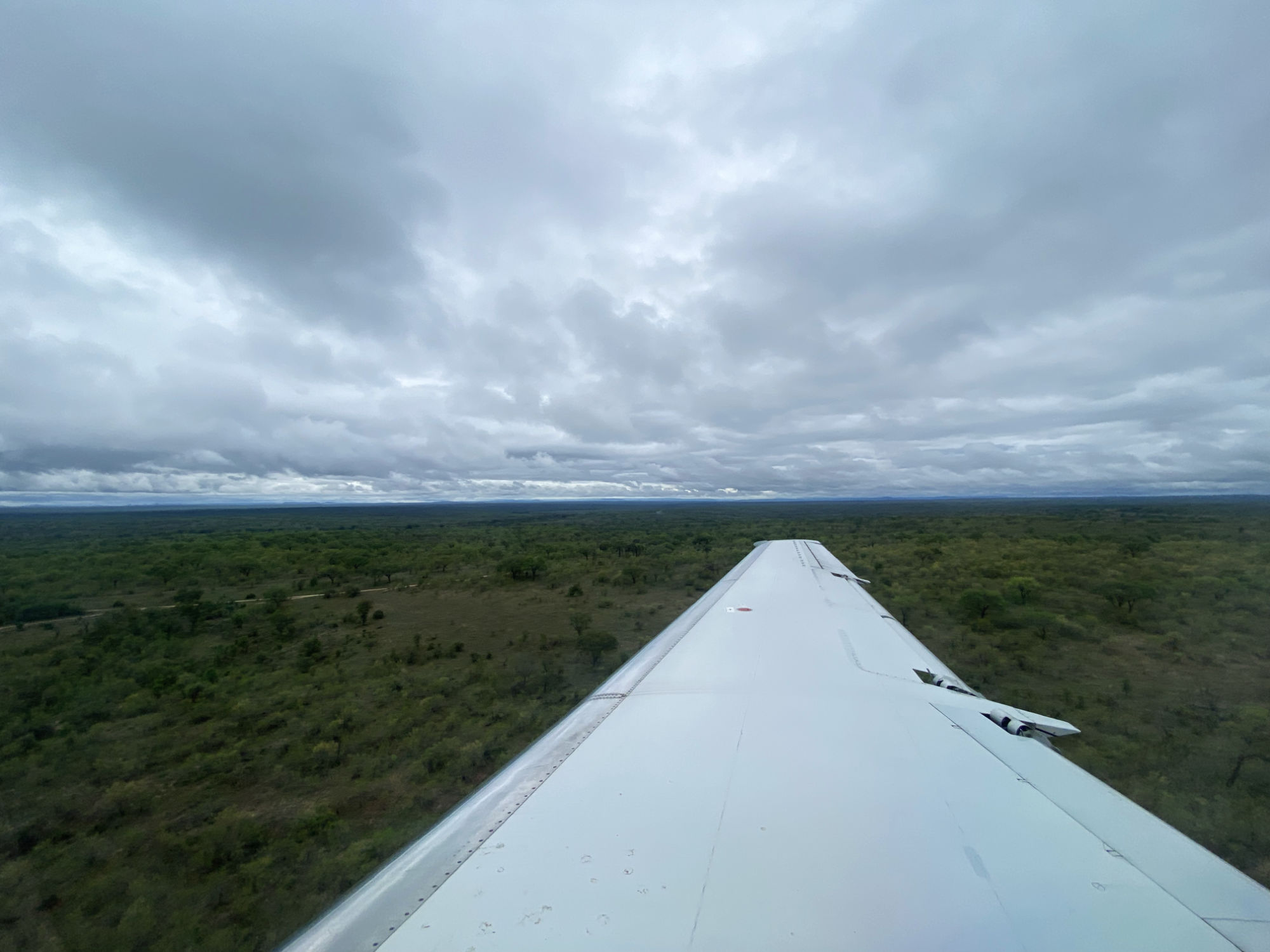
We arrived in overcast conditions
After being welcomed by Hennie and Bernhard from B1 Photo Safaris and checking in to our accommodation at Sanparks Skukuza Rest Camp, we went for our first drive in the Park. It soon started raining and as a result, there wasn’t much opportunity for photography. We saw a fresh leopard kill in a tree near the camp, but no leopard in sight.
Our next sighting was of a very lazy honeymoon couple resting next to the road,
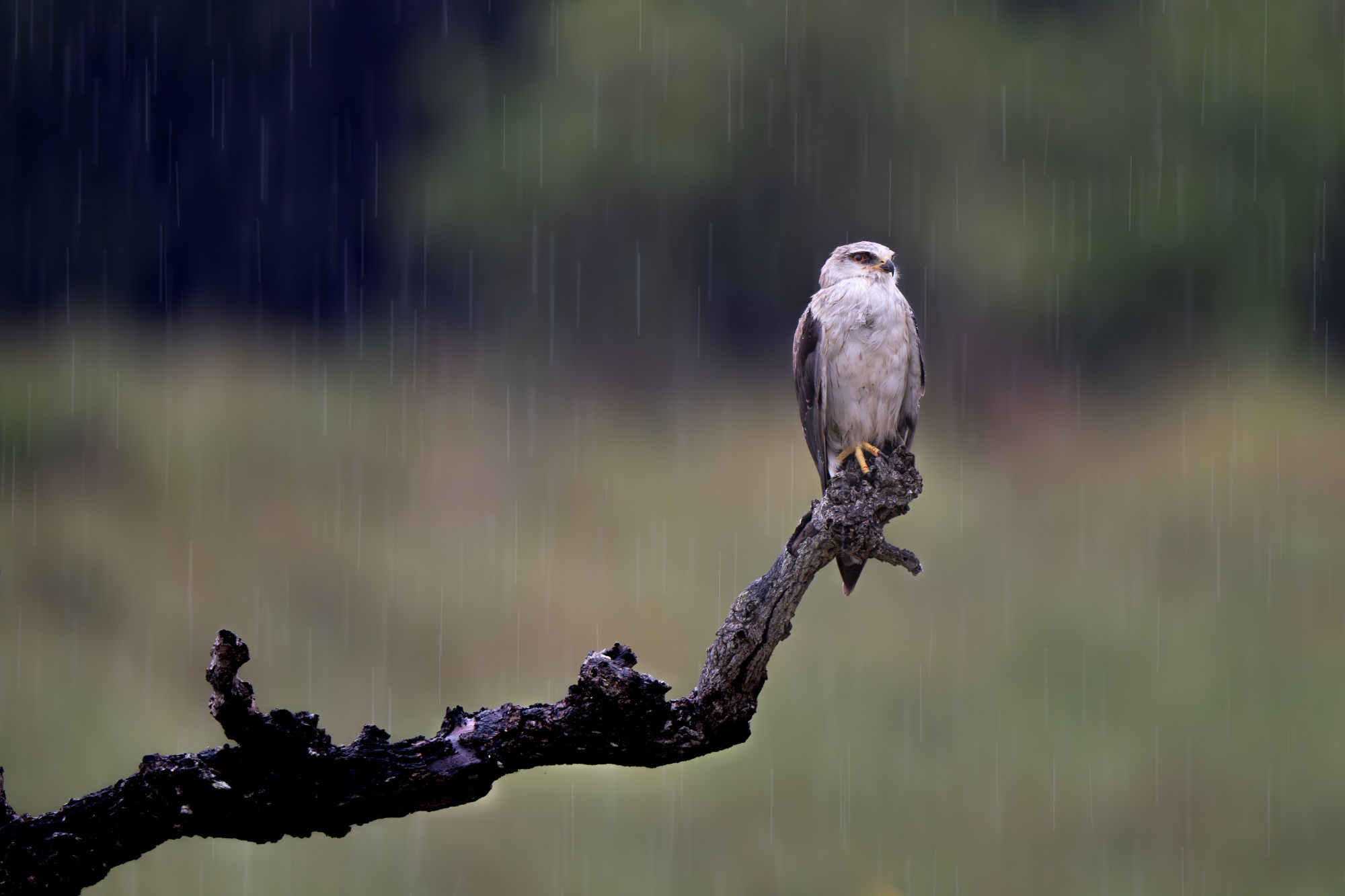
followed by a very wet Black-winged kite.
On our way back to the camp we stopped off at the leopard kill again, but still no leopard in sight. However, a few hyenas were seen walking down the road nearby.
Back to camp for an early supper and catching up some lost sleep.
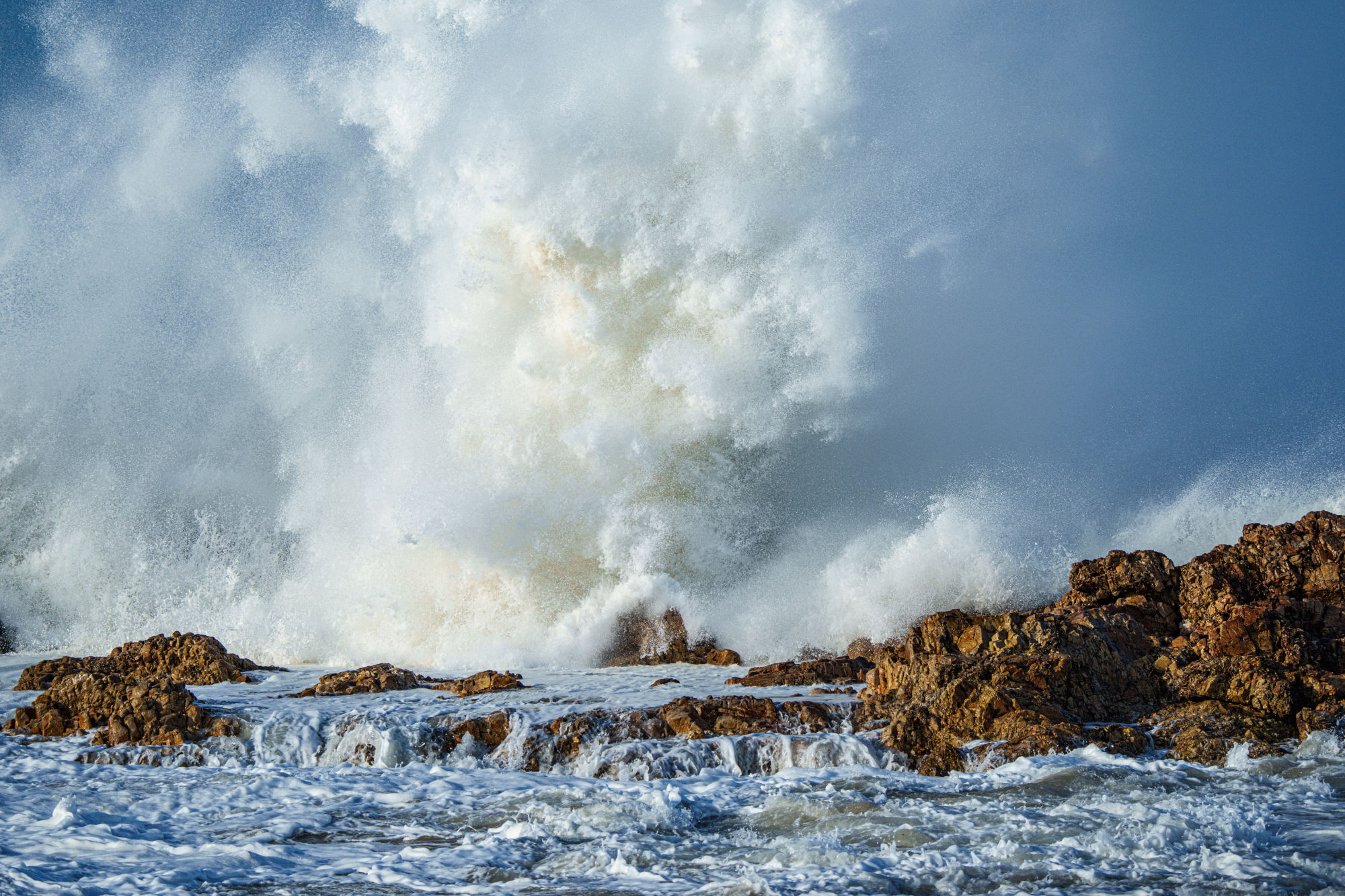
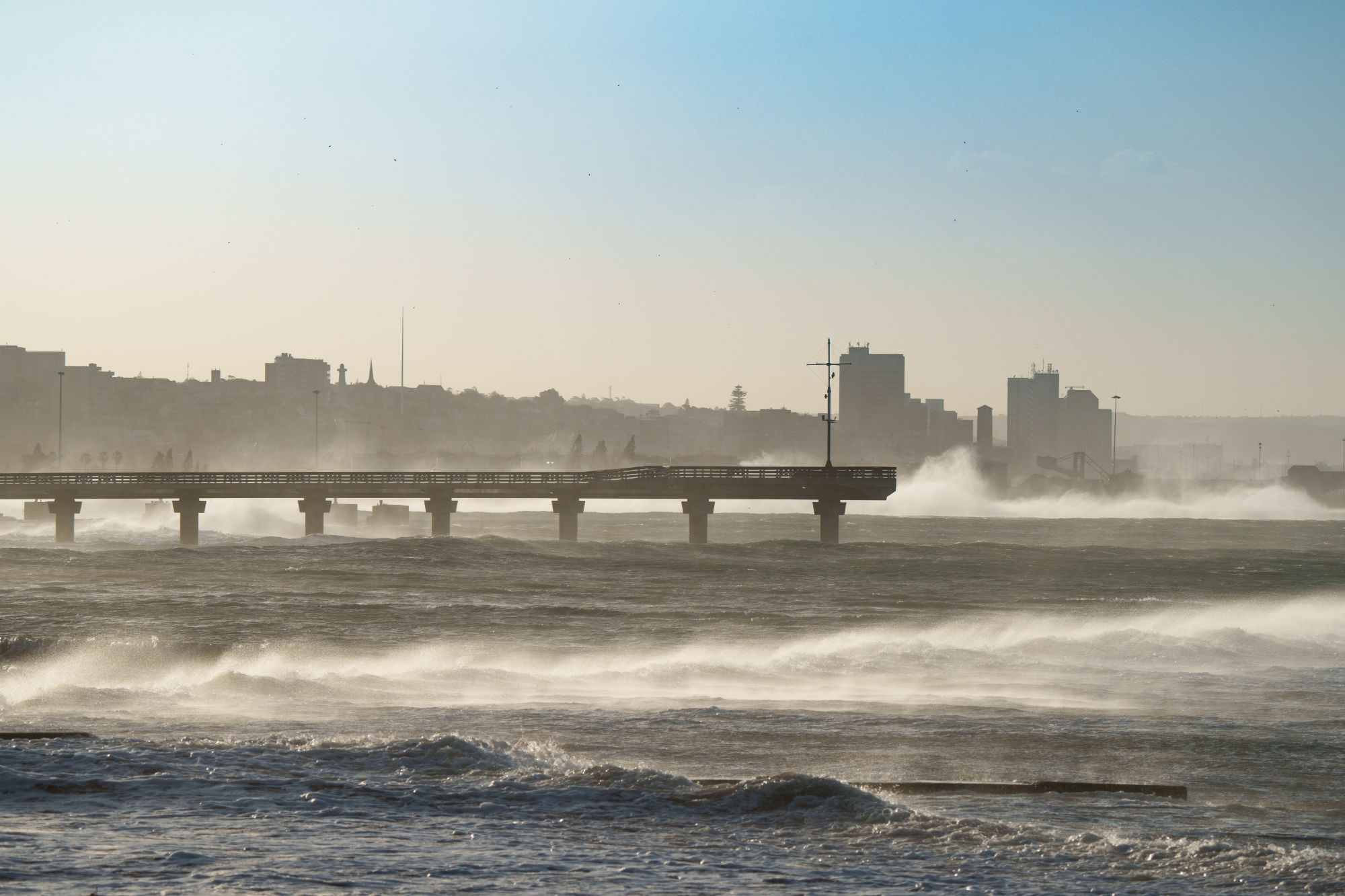
On a weekend of storms along the South African coast, coinciding with spring tide, much damage was suffered along the coast, but there was also spectacular beauty to be found.
Along the P1661 between Calitzdorp and Van Wyksdorp, a magnificently scenic route, possible to drive with a normal car in perfect weather, but best done with a higher clearance vehicle. The Rooiberg Pass and Assegaaibosch Pass lie along this route.
From Kigoma, it was another trip to Dar es Salaam for an overnight. The next morning we flew to Lake Manyara Airport, followed by a road transfer to The Highlands Lodge in Ngorongoro conservation area.
Along the way we got our first, breathtaking view of the Ngorongoro Crater.
Driving along the crater edge, we saw some Olive baboons. We also stopped for lunch and a hike up to the edge of Olmoti Crater. Along the way to the lodge we drove past several Masai villages.
Since we only had one full day in the Ngorongoro area, due to flight schedule changes, we decided to make the most of it and spend the full day exploring the crater. Thus it was a 06:00 start, seeing the sunrise as we descend into the crater.
The number of animals in the crater is quite impressive. It is almost impossible to capture the sheer magnificence of the experience on photos.
Video by Liana Steenkamp
We were entertained by two rhino’s
A rich birdlife is also to be seen in the crater. I was lucky to spot a malachite kingfisher while we were having breakfast. Later, during our lunch, a black kite tried its best to steal the food from our plates. Numerous egrets were to be seen all over.
The lions also didn’t disappoint, although they were clearly suffering in the midday heat
Some video of the lion cubs, by Liana Steenkamp
On our way out we got to see a beautiful serval
The next morning it was off back to Dar es Salaam for a short stopover before a middle of the night flight back home. Takeoff from Lake Manyara airport is quite an interesting experience.
Final reflections: Tanzania is a beautiful and very welcoming country, the people friendly and always helpful. The organisational skills of the ground staff at the small airports is amazing.
After departing Pemba, we had to spend a day in Dar es Salaam, waiting for a flight to Kigoma. From Kigoma it was a 5 hour road trip over pretty bad roads, including a ferry crossing, to get to Mahale Mountains National Park. Once in the park, an hour boat trip on Lake Tanganyika took us to Mbali Mbali Mahale lodge, a truly magical place.
After breakfast the next morning, we went chimpanzee trekking with our guide, Sixtus. Hiking in the forest was and interesting experience. The terrain was not too difficult, but the heat and humidity soon got to us. After an hour we were completely drenched, my clothes looking as if I had been swimming with them. Eventually, after about two hours, we found two large male chimpanzees resting in a tree. Sixtus ensured us that we just had to wait a while and they would come down. An hour later, still waiting, I started to question whether he knew what he was talking about, but not too long after that he was proven right. We were thoroughly entertained by Christmas and Teddy.
Photographing the chimpanzees proved to be quite a challenge due to the light conditions in the forest, with spots of very bright sunlight and areas of deep shadow.
The planned afternoon boat cruise on the lake got cancelled due to a thunderstorm which came through and we were told that the lodge would be closing for the rainy season within the next few days. Being exhausted from the morning hike, we did not really mind and spent the afternoon lazing about.
Next morning we went chimpanzee trekking again.
We soon found a large group, including several youngsters who were quite playful, but then had to follow them as they crossed through dense forest from one trail to the next. Once there, we could sit down and enjoy their antics, spending nearly an hour with them.
Video by Liana: sound on for full appreciation
Once again, that afternoon, a thunderstorm came through, leading to cancellation of the boat cruise on the lake. Fortunately the boat transfers to and from the lodge gave us a decent experience of the world’s longest and second largest (by volume) lake.
Another 5 hour road trip saw us back in Kigoma the next afternoon. From our hotel we saw the fishing boats going out on the lake for the night. The next morning, while having breakfast, we watched them returning, before going to visit the Livingstone museum in Kigoma.
At last the long anticipated family tropical island holiday arrived. Despite relatively short distances and flight times involved, travel to Zanzibar and Pemba Island from South Africa has become a bit of a challenge. We left home Friday 10 February at around 10:30 and finally arrived at The Aiyana on Pemba Island around 14:00 on Saturday, having had a long layover in Johannesburg, arriving in Dar es Salaam at around 02:00 with about 3 hours sleep in Dar es Salaam Serena Hotel. From Dar es Salaam to Pemba we flew in a Cessna Grand Caravan, a plane which we would eventually spend a lot of time in over the course of the Tanzania trip.
Sunday morning saw us ready to go diving with Afro Divers. After a light breakfast of fruit, croissants and coffee, we were picked up from The Aiyana at 08:00 and transported to the dive centre, where we were welcomed by Michael and his crew and kitted out. A short boat trip got us to our first dive site and for some of the family members who don’t scuba, to a lovely site for snorkelling. The diving off Pemba Island is truly magnificent: warm water, unspoilt coral reefs, easy entry with gradual descents along the walls. This is about as relaxing as diving can get.
More diving was to follow for the next few days.
The octopuses and their ability to camouflage themselves by rapidly changing their appearance according to the surroundings never cease to amaze me.
Equally well camouflaged amongst the corals are the leaf scorpionfish.
Some beautiful moray eels also poked their heads out.
We took a day off from diving to explore some other attractions on Pemba Island. A visit to the mangroves was followed by lunch in a small local restaurant in Makangale town and an afternoon boat ride to the sandbank north of the island. These were all organised by Sija of Pemba Tours
Finally some more diving to end off the first part of our trip.