After our previous stay at Ironstone Cottage outside Graaff Reinet, during which overcast and rainy conditions ruined any chance of astrophotography, I had decided to return and now the time had come.
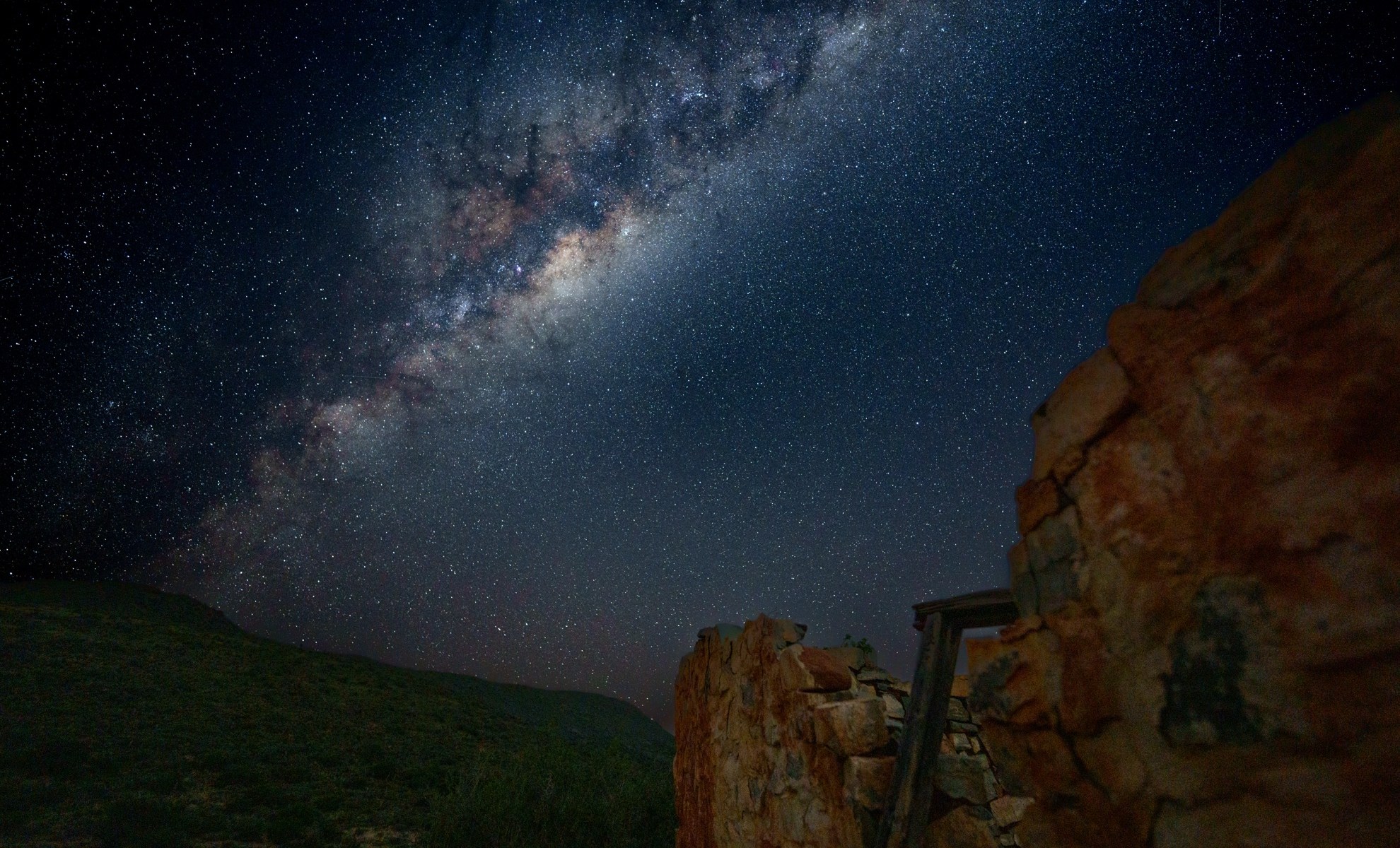
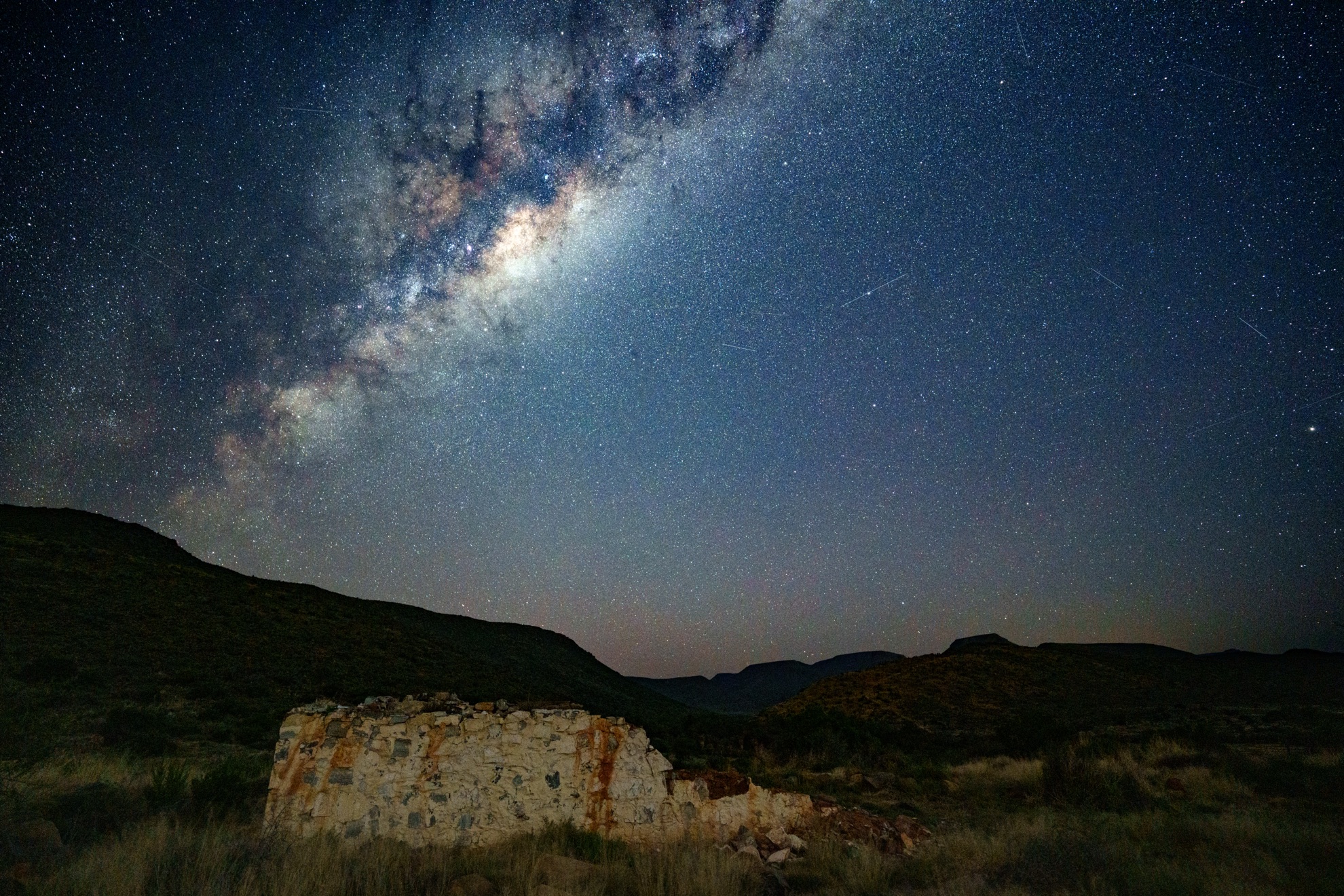
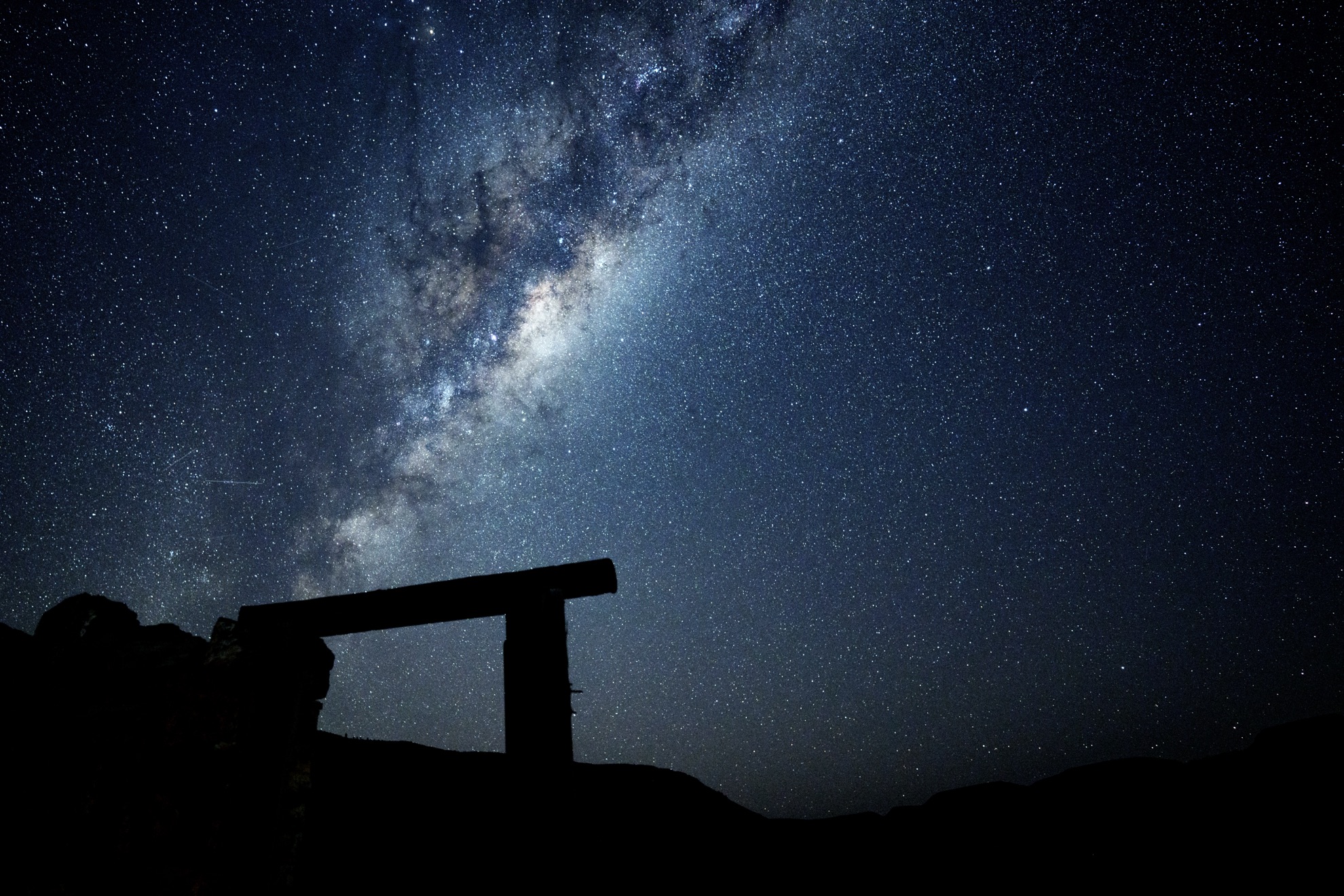
Naturally, we arrived in Graff Reinet to overcast conditions, but at least with the weather forecast promising better conditions for the next day and, most importantly, evening. In the meantime, I took out my camera and started looking around for subjects to photograph and also scouting possible photos for the next night. A nearby ruin of a stone cottage held much promise.
A prickly pear plant also looked interesting.
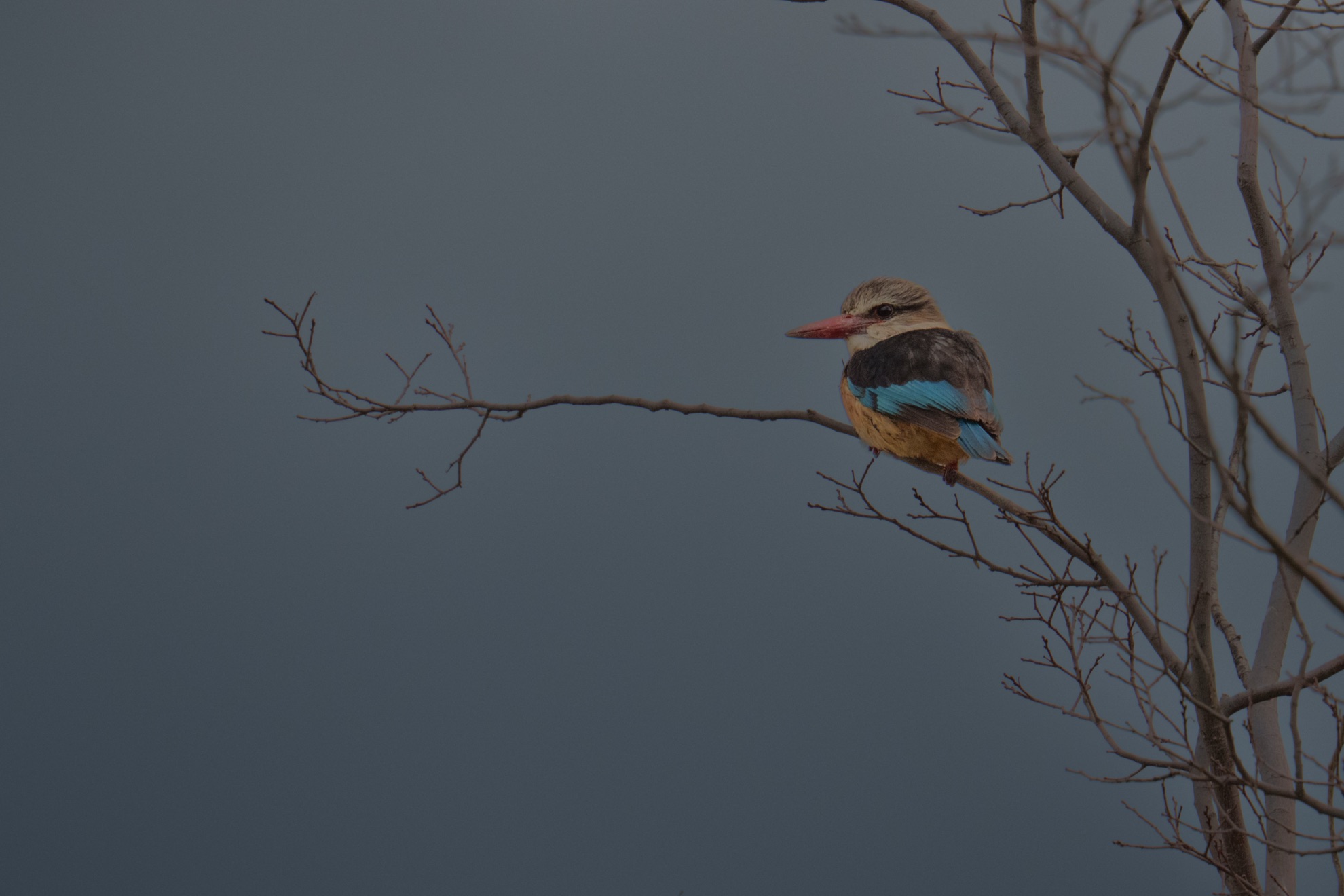
We had a surprise visit from a Brown Hooded Kingfisher.
The next morning, we took a drive out to Nieu-Bethesda to visit the famous Owl House. Arriving in Nieu-Bethesda just before 9am, it initially seemed like a ghost town, with not a person in sight. We stopped to photograph the church.
By this time, we realised that we were simply a bit early and businesses started opening up. The visit to the Owl House was interesting, but an unexpected pleasant surprise was the visit to Kitching Fossil Exploration Centre, which included a guided walk, with a very well informed guide, to view some fossils still embedded in the river bed.
Before leaving Nieu-Bethesda, we purchased a cement owl from the daughter of Koos Malgas, the man who had worked closely with Helen Martins at the Owl House, manufactured by his grandson.
Back at Ironstone Cottage, we saw that the skies had started clearing and the evening turned out perfect for astrophotography
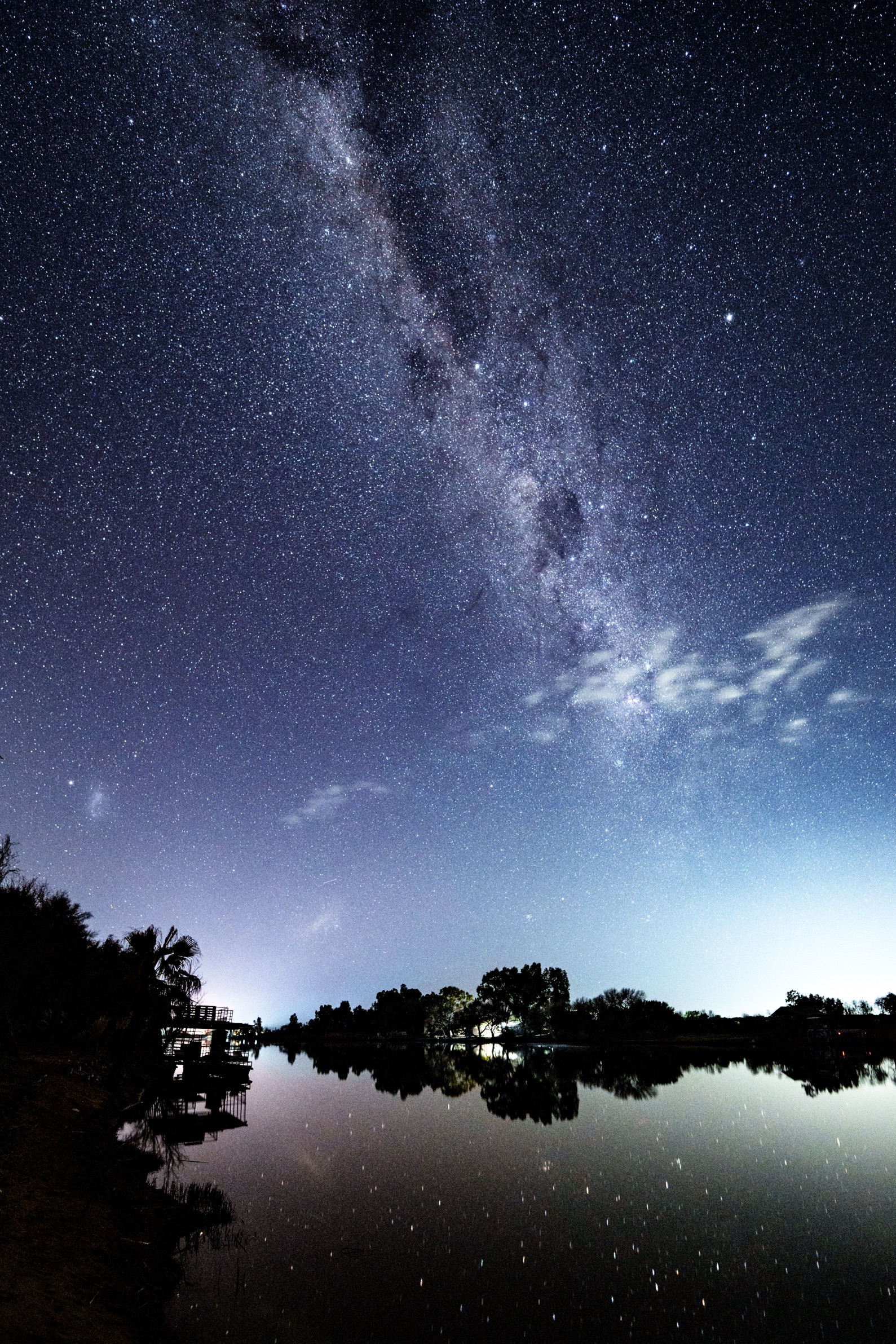
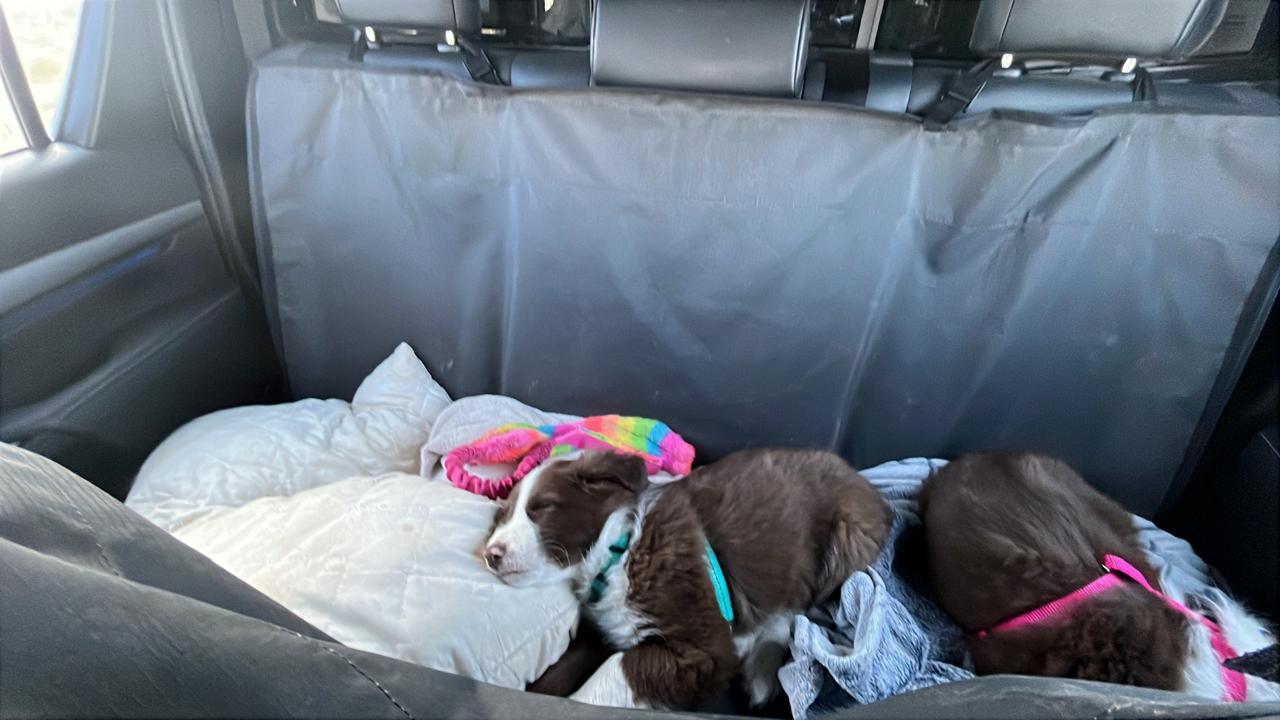
The next day saw us traveling north, to Douglas, for a brief family visit and to collect two puppies for friends. That evening, staying with family on their farm on the Vaal river, provided further opportunity to photograph the stars, despite the presence of a few clouds.
An early morning start, saw us collecting the puppies in town for the long drive home.
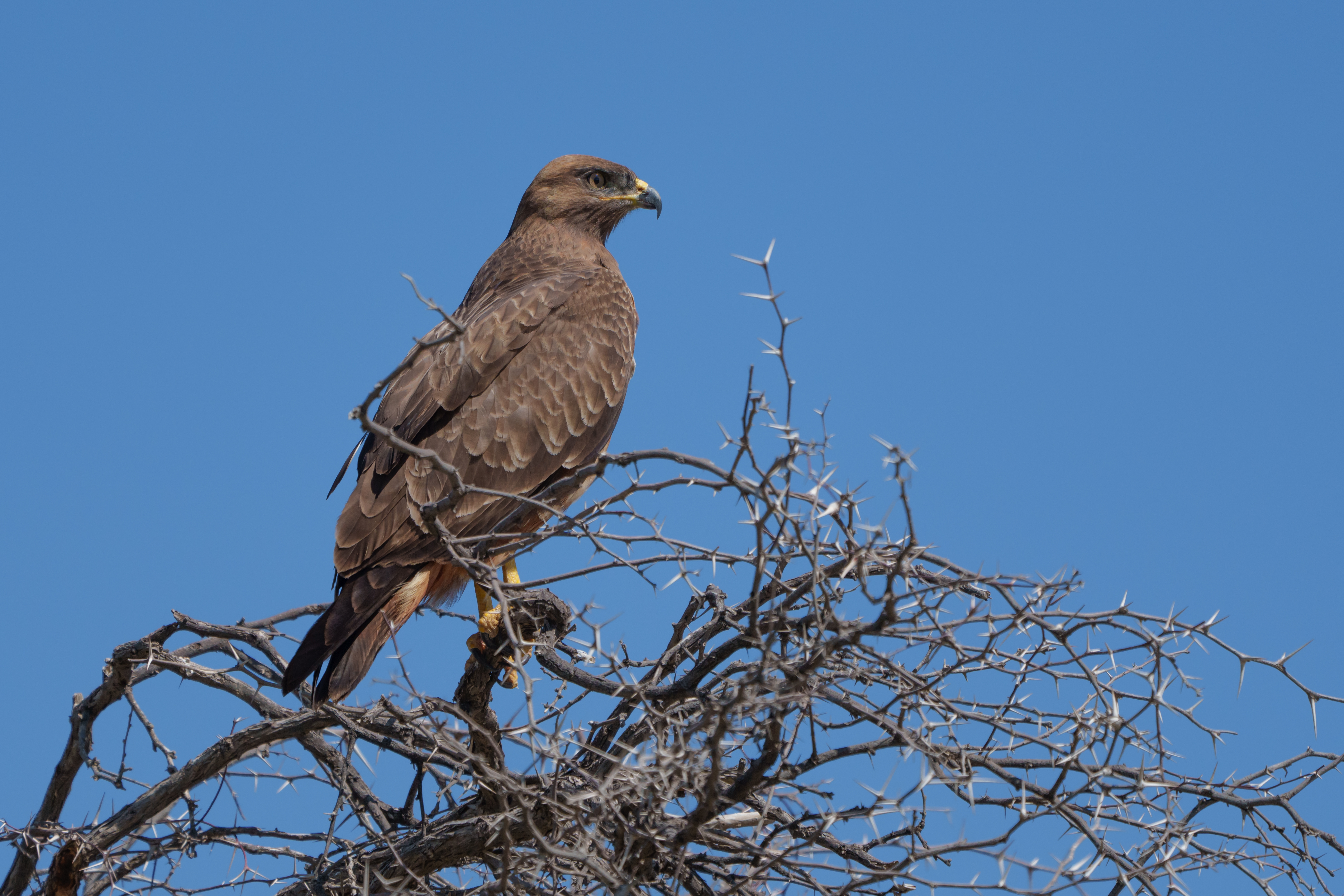
Once again we decided to do the transition between rest camps as a game drive. Leaving Nossob early, we soon saw a Pale Chanting Goshawk dive down to catch its breakfast in the long grass and then fly up into a dry tree to enjoy its meal. Unfortunately we could not see what prey it had caught.
A young Springbok and its mother provided a lovely picture.
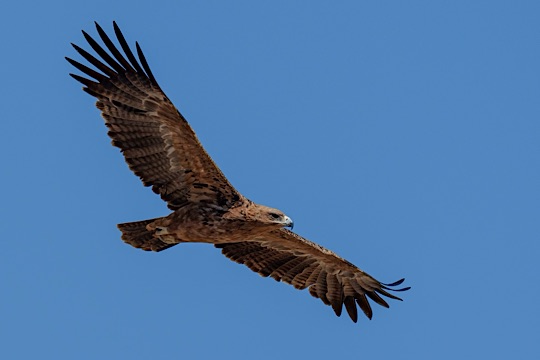
The rest of this day delivered little in terms of sightings. A few times we saw raptors circling in the distance. Once again I have to rely on Merlin’s identification, since I am unsure.
More Oryx, a few giraffes and the unusually green Kalahari with flowers reminding one of Namaqualand in September, were our enterainment for the rest of the day.
We did come across a traffic jam caused by a cheetah resting close to the road, next to a recent kill, but the number of cars and their positioning precluded any photographic opportunities.
Not a particularly exciting day with relatively few opportunities for interesting photography, but nonetheless an enjoyable and relaxing day in the Kgalagadi.
We were up early, eager to get to the Kgalagadi entrance gate and start our drive to Nossob. The plan was to use the drive into the Park as our first game drive, so although only 166 km from Twee Rivieren, we were estimating that it would take us between 5 and 7 hours.
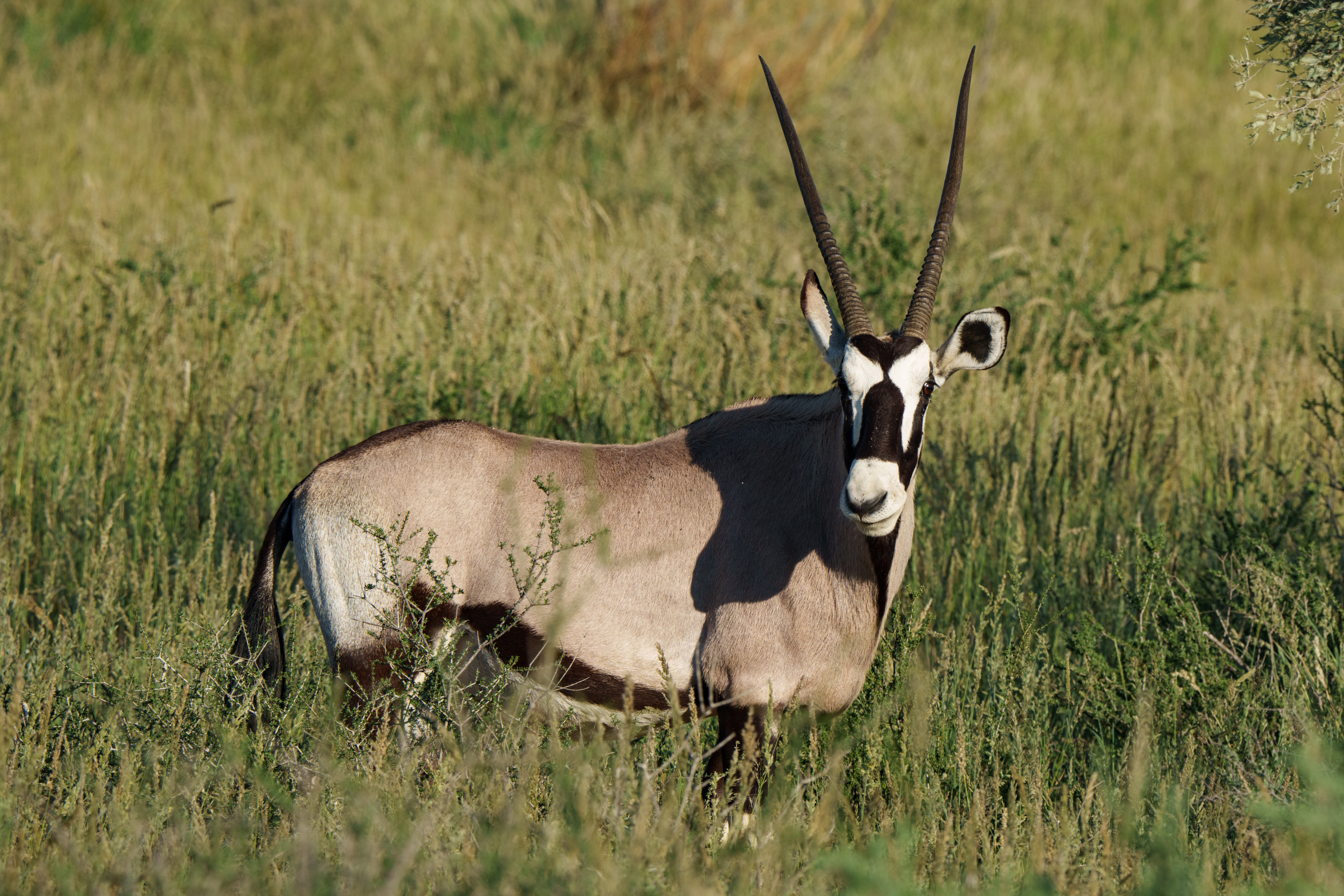
With the recent rains, the grass was lush and green and, apart from large numbers of Oryx and the occasional Black Backed Jackal, no too many four legged animals visible.
However, the birdlife did not disappoint. Since I am still a beginner in the bird identification game, I rely on my Merlin app to identify them for me. If you disagree with my ID please let me know.
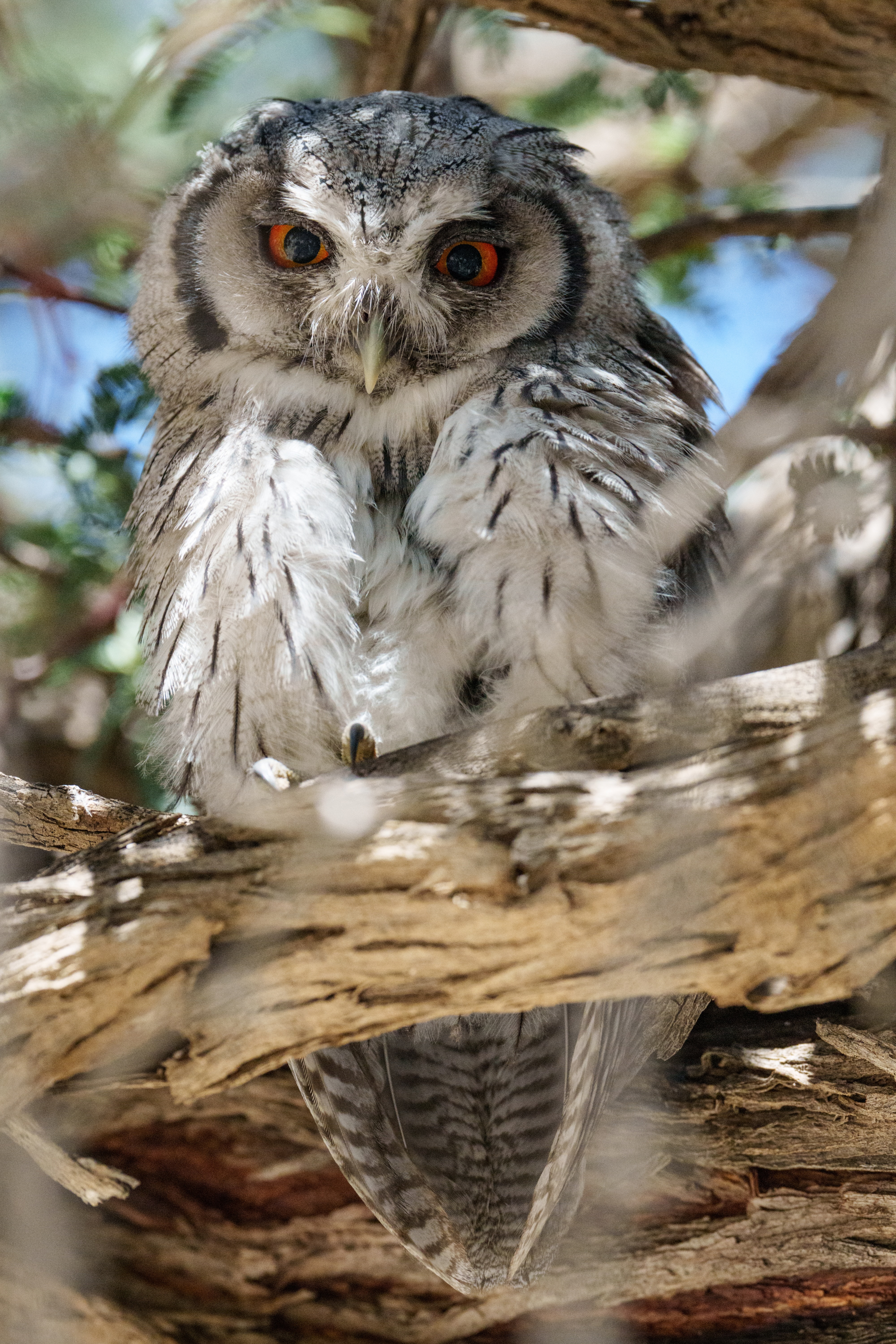
Stopping at the Melkvlei picnic site, we got a nice surprise in a tree right above us
Southern White-faced Owl
We also saw many Kori Bustards walking along, but didn’t see any of them in flight.
Arriving at Nossob in the mid afternoon, we checked in and settled into our campsite. At the shop, we were informed that they had run out of Wi-fi vouchers and the new vouchers would only be arriving in two days’ time, so although there was Wi-fi available, we could not connect to it. Once more, no uploading of photos or blog posts possible.
A late afternoon drive, yielded a sighting of a very sleepy lioness lying in the road north of Cubitje Quap. Occasionally, if a car came too close, she would open her eyes or lift her head.
I got a nice photo of our Toyota Hilux reflected in her eye.
The evening was rounded off with a braai and “kuier” (no proper English word exist to encompass everything included in that Afrikaans word) around the fire.
On our last morning, we went for a short game drive before returning to 4 Rivers camp to pack for our flight home.
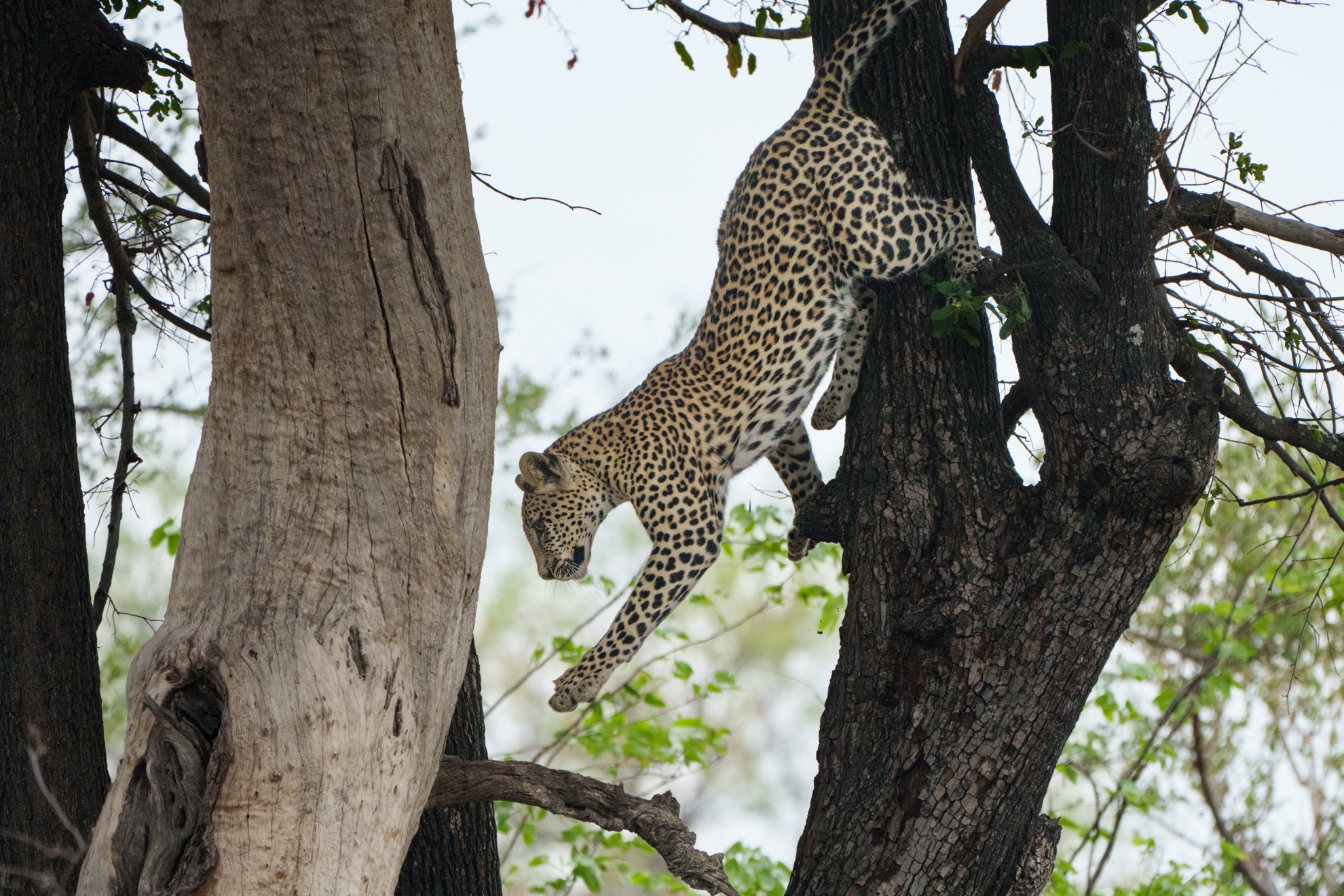
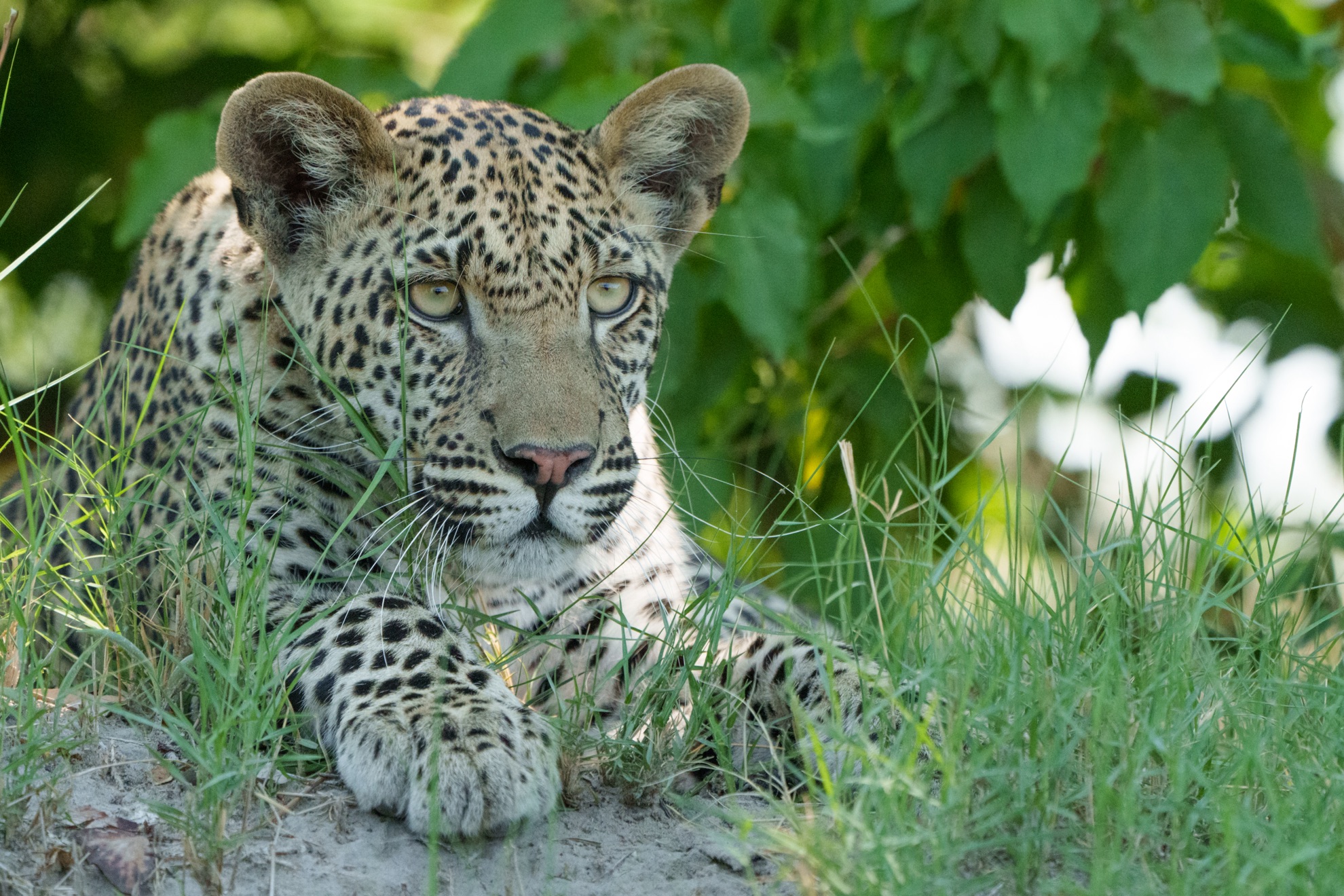
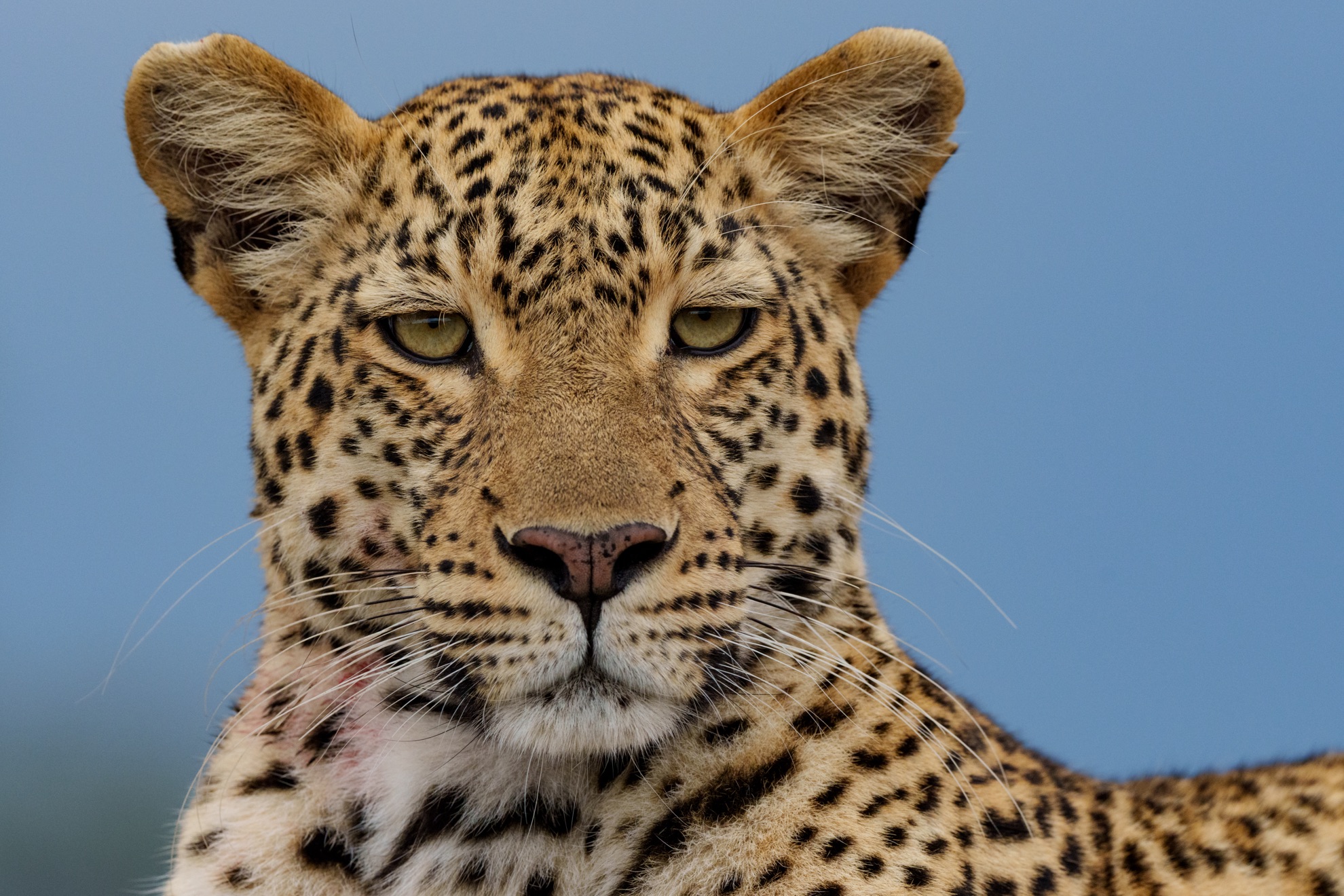
The young male leopard we had seen on a previous day, was lying out in the open on a termite mound, watching the passing giraffes, giving us ample photo opportunities, before disappearing into the trees
There was some smoke in the air from grass fires, resulting in a hazy photo of the Southern Ground Hornbill in flight.
Thus came to an end our amazing 10 days in the Okavango Delta, having achieved our main objective of seeing and photographing the Painted Wolves, but also so much more, truly an awe inspiring experience of God’s wonderful creation. It is so sad that so many of the wonderful animals we saw, are on the Vulnerable, Endangered or even Critically Endangered lists. As humans, we really should take our responsibility towards the world we live in more seriously and work harder towards protection and conservation of these wonderful animals that we are privileged to share the earth with.
Many thanks to Grant Atkinson for the invaluable input, both in the planning phase and during the trip itself. Without your input, many of the great photos and videos we got, would not have been possible.
Joanne at Biggestleaf Travel, who did our bookings, ensured that we had smooth sailing all the way with no drama and hitches.
Kwando Safaris camps where we stayed, Pom Pom, Splash and 4 Rivers, certainly lived up to their promise of delivering a “a high-quality wildlife experience”.
Our guides and trackers were awesome, going out of their way to get us the sightings and then patiently positioning and repositioning the vehicles to get us the best angles for our photos. I remain amazed at their ability to spot the animals at a distance, when often all I could see was bushes.
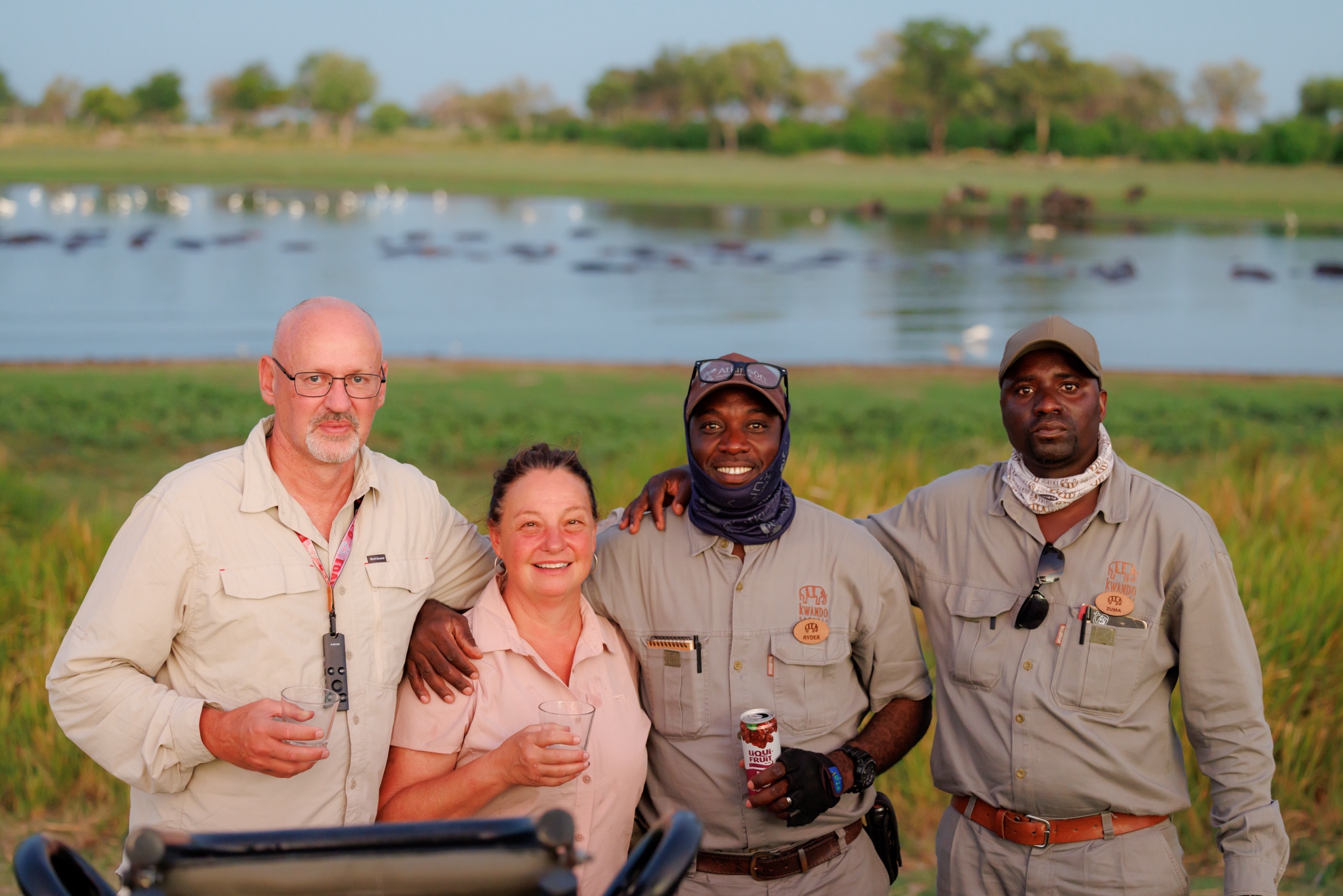
Ryder and Zuma at Pom PomST and SB at SplashClifford and James at 4 Rivers
Finally, a few tips for those who may be planning a similar trip:
The Okavango is a magical place and absolutely worth a visit. If you just want to get the sightings and not really interested in photography, I am sure you will get as many sightings as we did, if not more, by simply booking a trip to these awesome destinations which we visited. However, if you want to get the photos, you really should book a dedicated photography safari with someone like Grant Atkinson who knows the area, animal behaviour and photographic technique and will assist you to get the best shots possible. This will also allow you to spend enough time with the animals in order to give you the best photo opportunities. Many times we saw other vehicles arrive at a sighting, stay 10-15 minutes and then depart, while we stayed for the photos.
In order to keep the trip somewhat affordable, we went in the “Low Season” but from a photographer’s perspective this might actually be preferable because the grass is shorter, there is less water, so certain areas which are not accessible in flood season, were accessible to us, there are fewer vehicles around to ruin your shots and the occasional clouds in the sky did assist with better light for photography.
On this trip I used two Sony A1 camera bodies with respectively a 600mm f/4 lens (44% of my shots) and a 100-400mm f/4.5-5.6 lens (55%). I also had along a 24-105mm lens which I used for about 1%, mainly a few sunset photos.
For her video, Liana had two Sony A7IV camera bodies with Sony 70-200mm f/2.8 lens and Tamron 150-500mm f/5-6.7 as well as a GoPro Hero 11
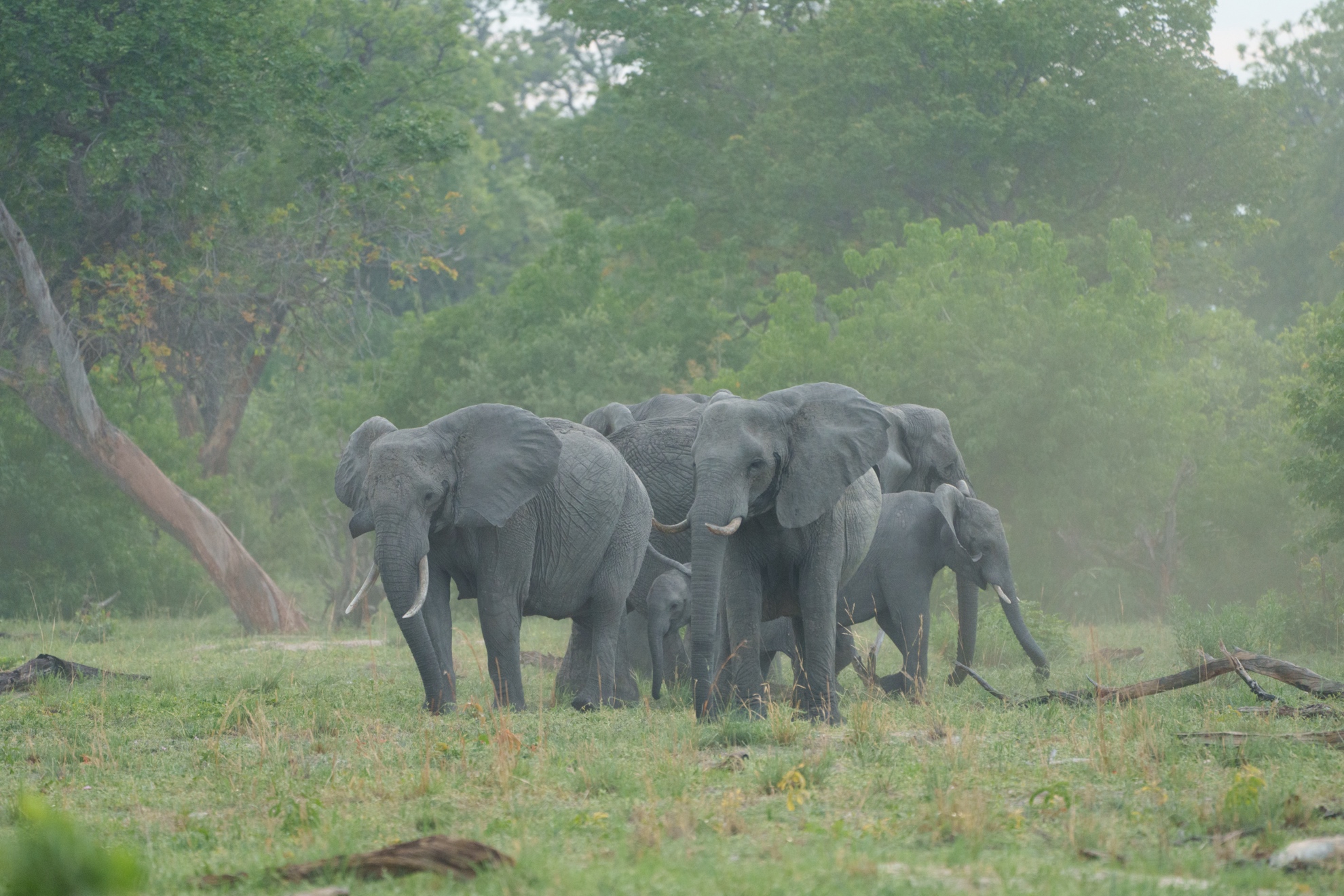
Setting out early, as usual, we soon found leopard tracks. While searching for the leopard, we accidentally surprised a family of elephants, who then decided to chase us off. Clifford had to know his driving to get away from them. They stood staring after us through the dust, checking that we were not going to return and bother them again.
Some promising clouds were on the horizon, but unfortunately soon disappeared, resulting in another scorching hot day
With the riches of predators to photograph, one can easily forget the beauty of the “ordinary and common” like Kudu, Impala and Tsessebe
We saw a beautiful Lappet-faced vulture, another species unfortunately listed as endangered on the IUCN Red List, sitting at the water
Soon we spotted a leopard, fast asleep in a tree.
We spent the rest of the morning waiting for him to come down from the tree. He did wake up a few times to change position and look at the Zebra, Red Lechwe and Impala, but after waiting more than 2 hours, we had to accept that he was not interested in coming down. The Zebras seemed oblivious to his presence.
In the afternoon, we set of for one last search for Painted Wolves, not finding any, but seeing the most beautiful landscapes with green flood plains interspersed with woodlands. Waterbuck, Elephants and many other animals were grazing on the flood plains
We were fascinated, watching Kestrels hunt, hovering and then swooping down on their prey in the grass, flying up and eating in flight. Their main prey on this day seemed to be some juicy caterpillars
Finally, we stopped to have our sundowners, watched by a Kingfisher
After our usual light breakfast, we headed out to the west, soon encountering fresh leopard tracks, apparently belonging to a young male, usually still seen in the company of his mother. This led to a prolonged search for him, with a second vehicle eventually joining in the search, but with no success.
We tried photographing birds, but also with limited success, since the wind direction was not favourable. I did manage to get a nice shot of a Broad-billed Roller in flight.
Eventually we decided to head back to camp a little earlier than usual. Along the way, James spotted the elusive young male leopard lying at the base of a tree. The leopard was quite curious, giving us ample opportunity to photograph him and eventually approaching and inspecting the vehicle, before moving into a bush where we could no longer see him well enough to photograph.
Back at camp we went through our usual routine of brunch, followed by downloading photos and videos, backing up, clearing memory cards and charging camera batteries. By this time we were exhausted from lack of sleep and extreme daytime heat and tried to get a brief afternoon nap, before setting out for our afternoon drive. I did find that the advice given to us, to lie under the fan under a wet kikoi, was quite an effective way of cooling down in the extreme heat.
In the afternoon we headed out in the direction where a group of lionesses had been spotted the previous day, two of them with cubs. We had been informed that they had left their cubs somewhere they considered safe, in order to go hunting. This was also the direction where we could possibly expect to find Wild Dogs, but these had not been seen at 4 Rivers for quite some time.
Along the way, we spotted two Red Lechwe males, having a bit of a tussle, but soon deciding to go their different ways.
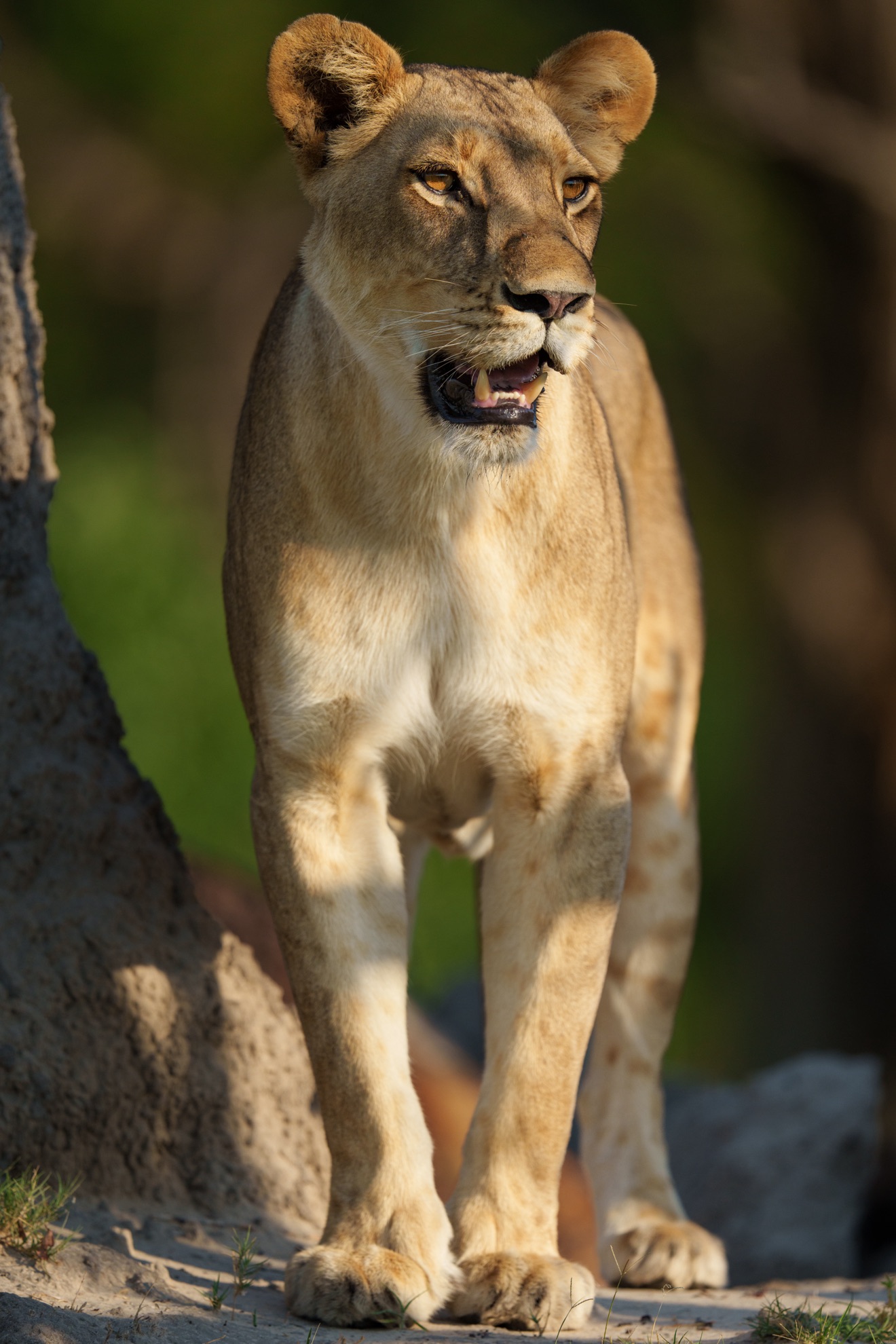
A lone lioness was seen approaching in our direction. Clifford was of the opinion that she was part of the group previously seen, but this was obviously not one of those with cubs.
She was clearly feeling the heat, since she was walking from one shady spot to the next, eventually approaching our vehicle and lying down in the shade, looking quite aggrieved when we decided to drive off, taking our shade with us.
One of the other vehicles had found the cubs and we drove to their location, where we found some forlorn looking cubs, clearly pining for their mothers to return.
The sun was setting and we left the cubs to drive back to camp, the end of another stunning day in the Okavango.
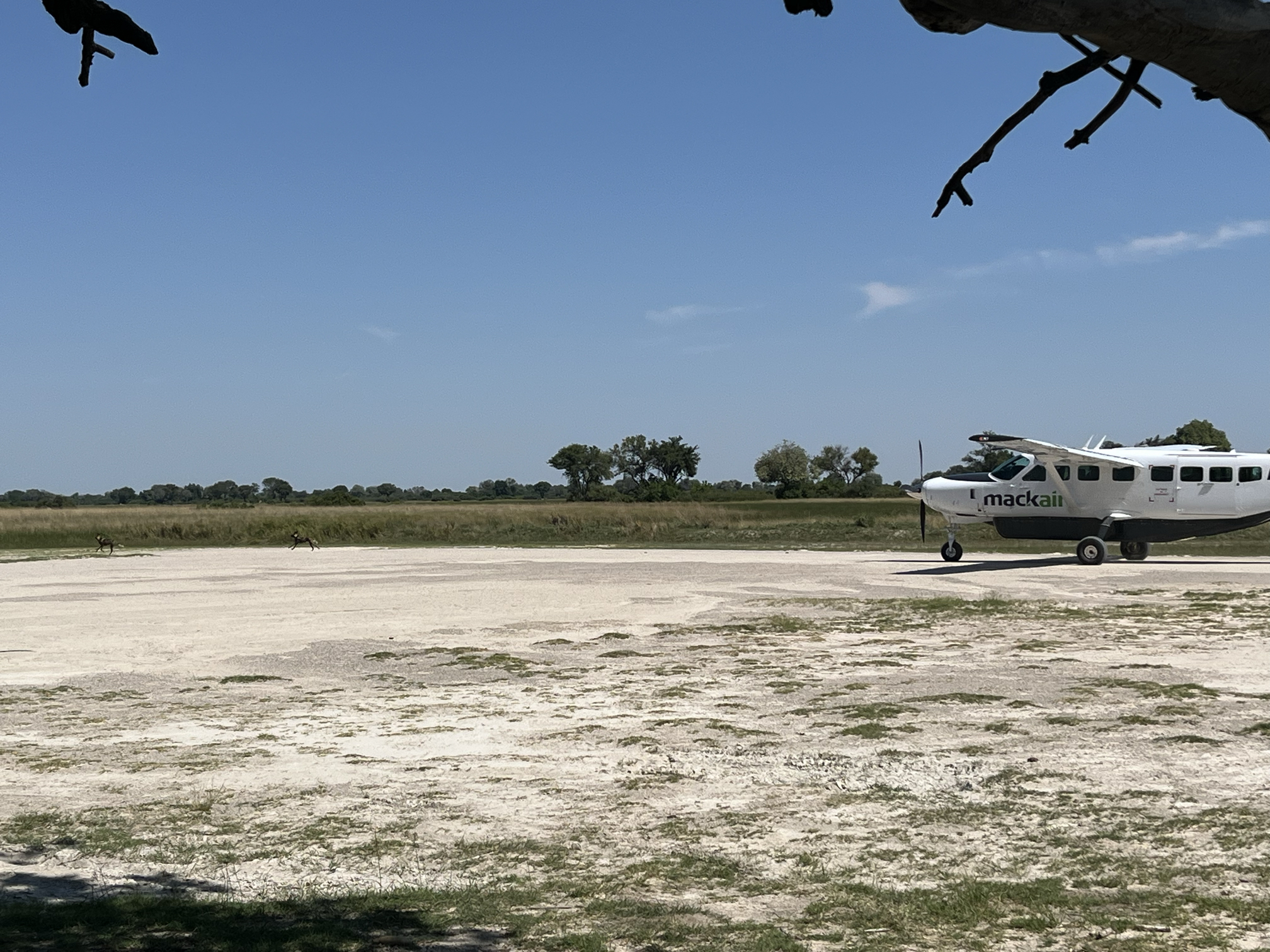
With a feeling of great satisfaction and gratitude, after spending two full days with the Painted Wolves, we departed Splash, taking a short game drive on our way to the airstrip. At the airstrip, while waiting in the “VIP lounge”, we saw two Wild Dogs running across the runway just as the plane came in to land.
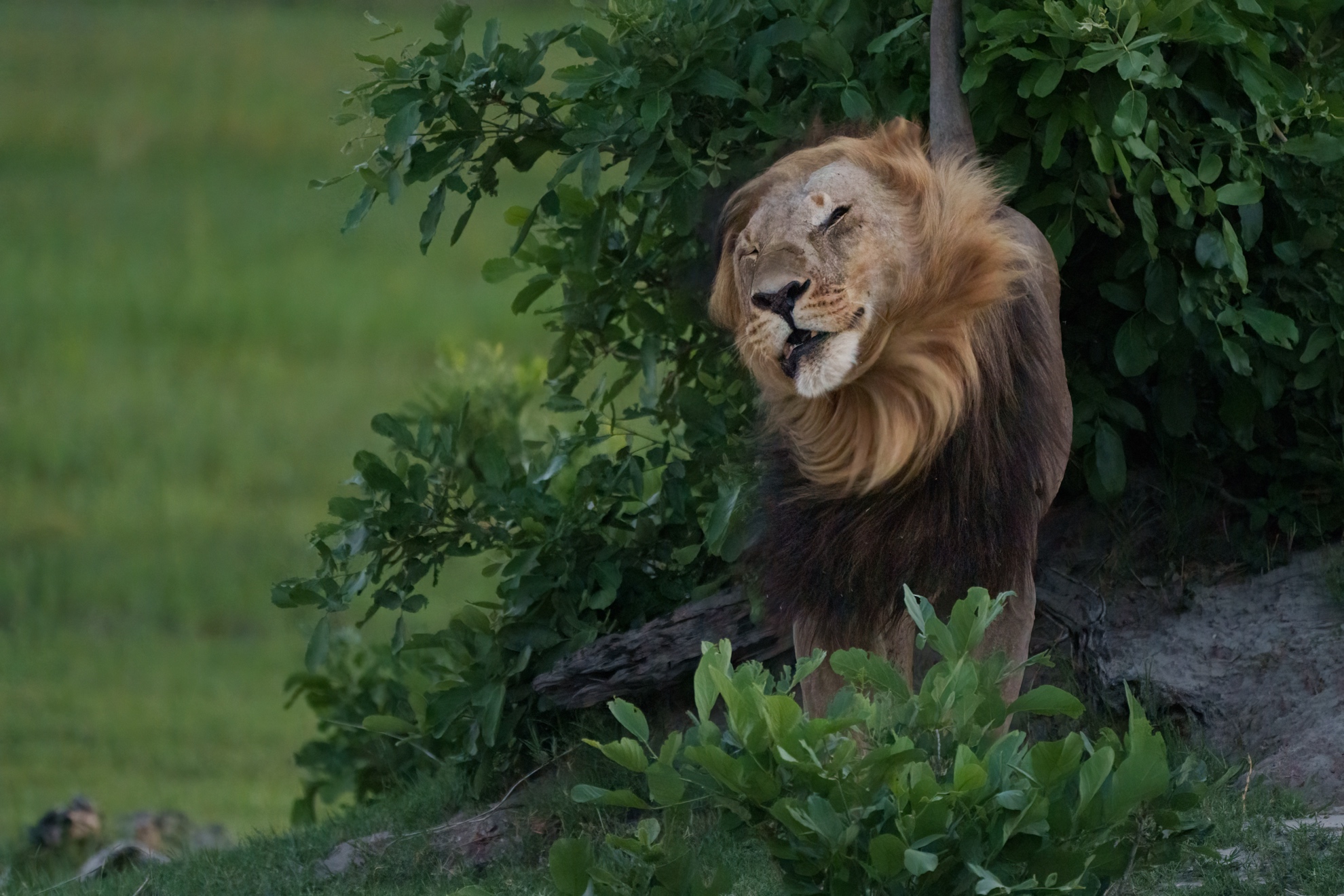
A 10 minute flight to 4 Rivers with a 20 minute drive to camp, saw us arrive just in time for brunch, after which we settled into our luxury tents. In the afternoon, our guide, Clifford and tracker James picked us up for a game drive. Soon they spotted two male lions, fast asleep in the shade of a tree.
Moving along, we saw a beautiful Bateleur, which unfortunately turned away from us when taking off, as a result we could not get any in-flight photos of it.
A kite flew up out of the long grass with a snake clutched in its talons
A small herd of Roan Antelope, unusually, stayed still long enough for us to get some nice photos.
By this time the sun was low above the horizon
We decided to return to the sleeping lion brothers, finding them waking up and starting to move around
Look at the video with sound on. These guys roared ferociously.
With the lions’ roaring shaking the ground, Liana still getting great video of them, but the light becoming too low for photographing them, I turned to the sunset for one last photo of the day.
Once again we made an early start, driving east to the crossing, onto the island and then starting the search. We eventually found the Painted Dogs on the western side of the island, almost directly opposite Splash camp, but still only accessible via the long route to the crossing on the eastern side of the island.
When we found them, they had already concluded a highly successful hunt and their bellies were clearly full. They were starting to settle down for their daytime nap.
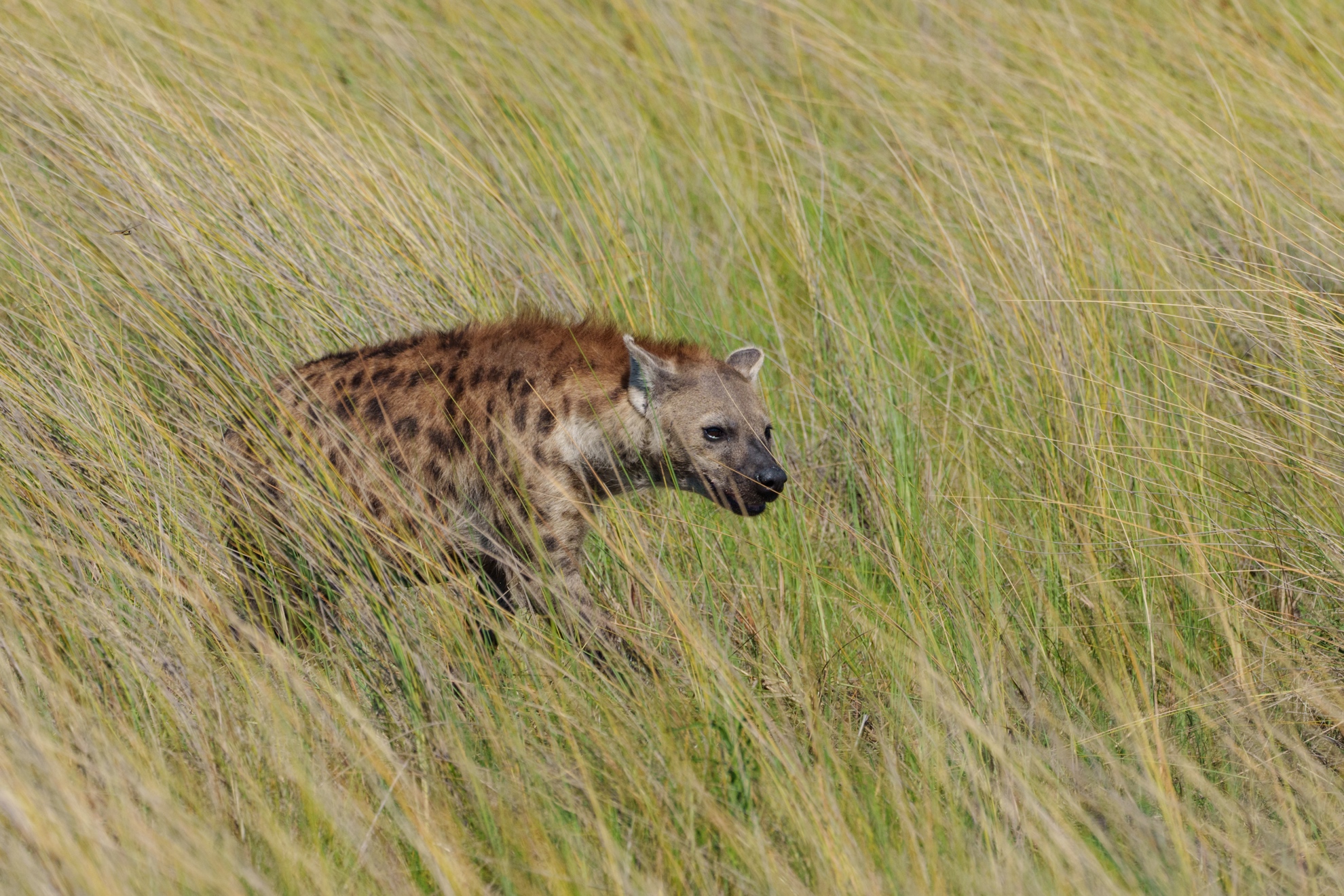
Some were still nibbling on the leftovers, but the hyenas were also starting to approach carefully, hoping to get a share.
Some Wild Dogs remained alert and a few token attempts were made to chase the hyenas away, but eventually they got their share.
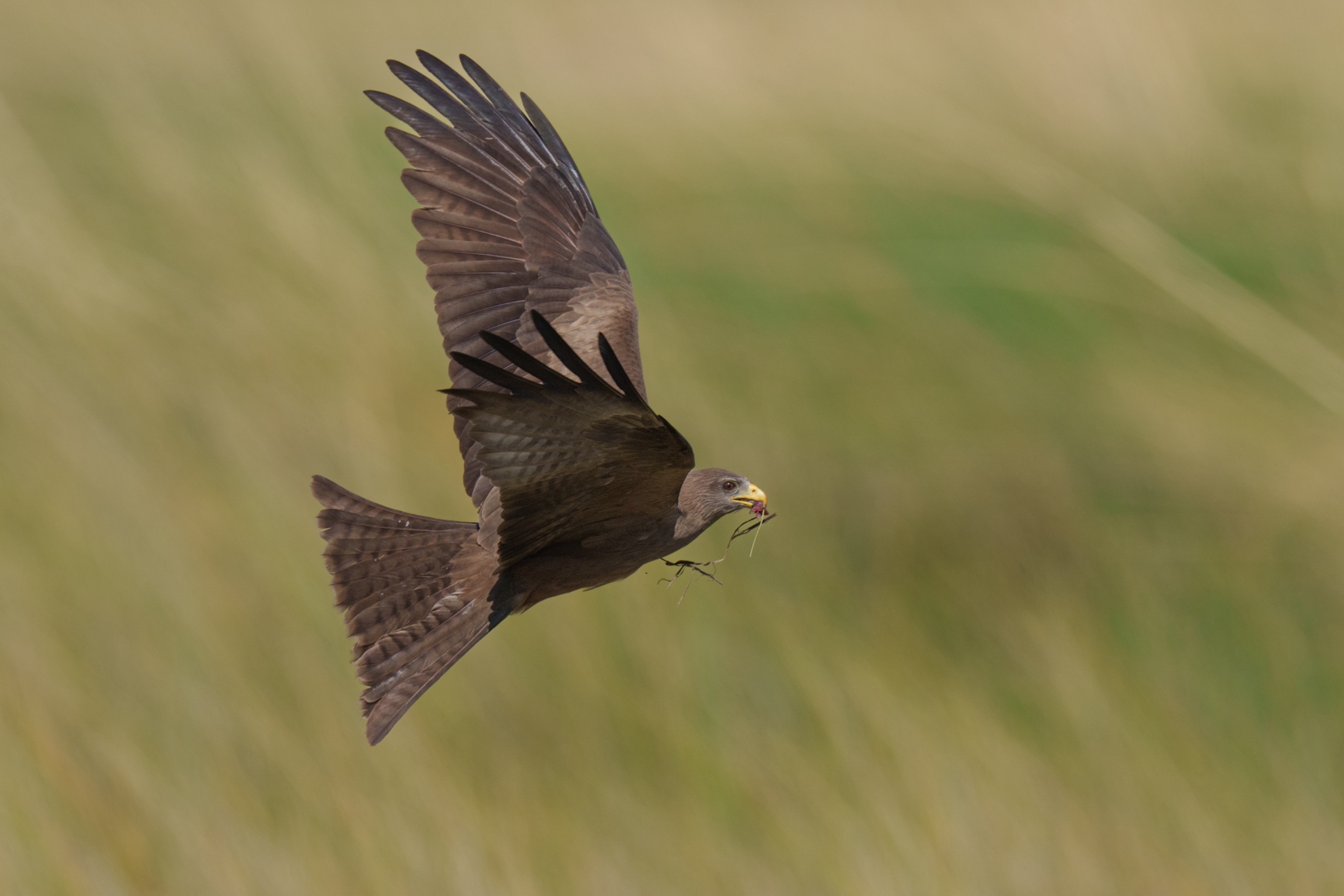
Another visitor who managed to get a share, was a Kite (need birders here to tell me whether this is a Yellow-billed or Black Kite, since my apps give different opinions)
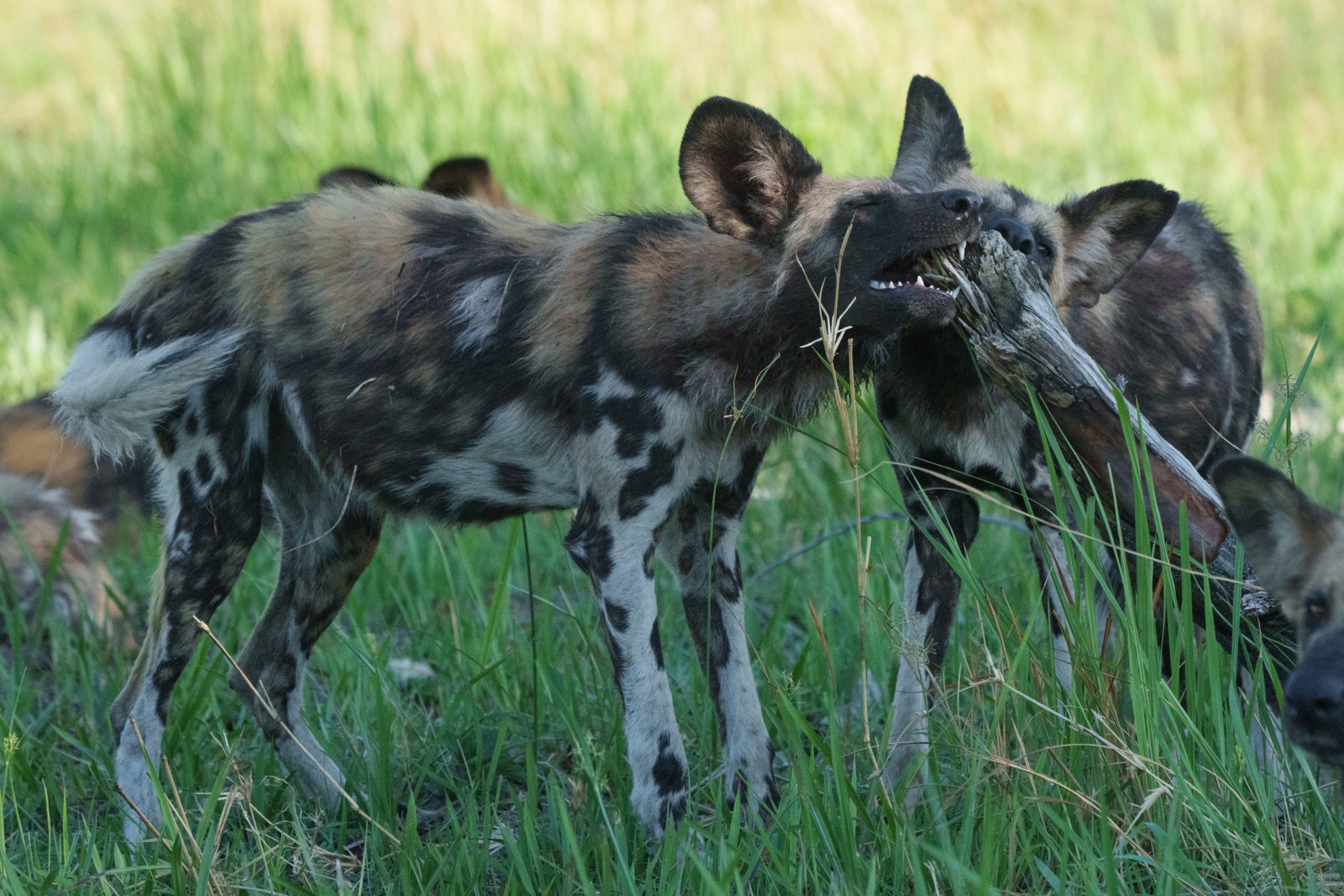
Some of the Wild Dogs were still playing around and nibbling on a tree stump, while others were clearly ready to go to sleep.
When they finally settled down, we departed for the long drive back to camp. As we were driving away, we also saw vultures approaching, looking for their share.
Still on the island, we saw a lioness with three subadult cubs and were told the amazing story that these were her younger siblings who she had been taking care of since their mother died from a snake bite.
In the afternoon we made an early start again, hoping to find the Painted Wolves where we left them in the morning.
Along the way, we saw a Side-striped Jackal
When we arrived, the Dogs were still fast asleep, but a few Hooded Vultures were moving around. These Hooded Vultures are know to follow the Dogs around, cleaning up after them.
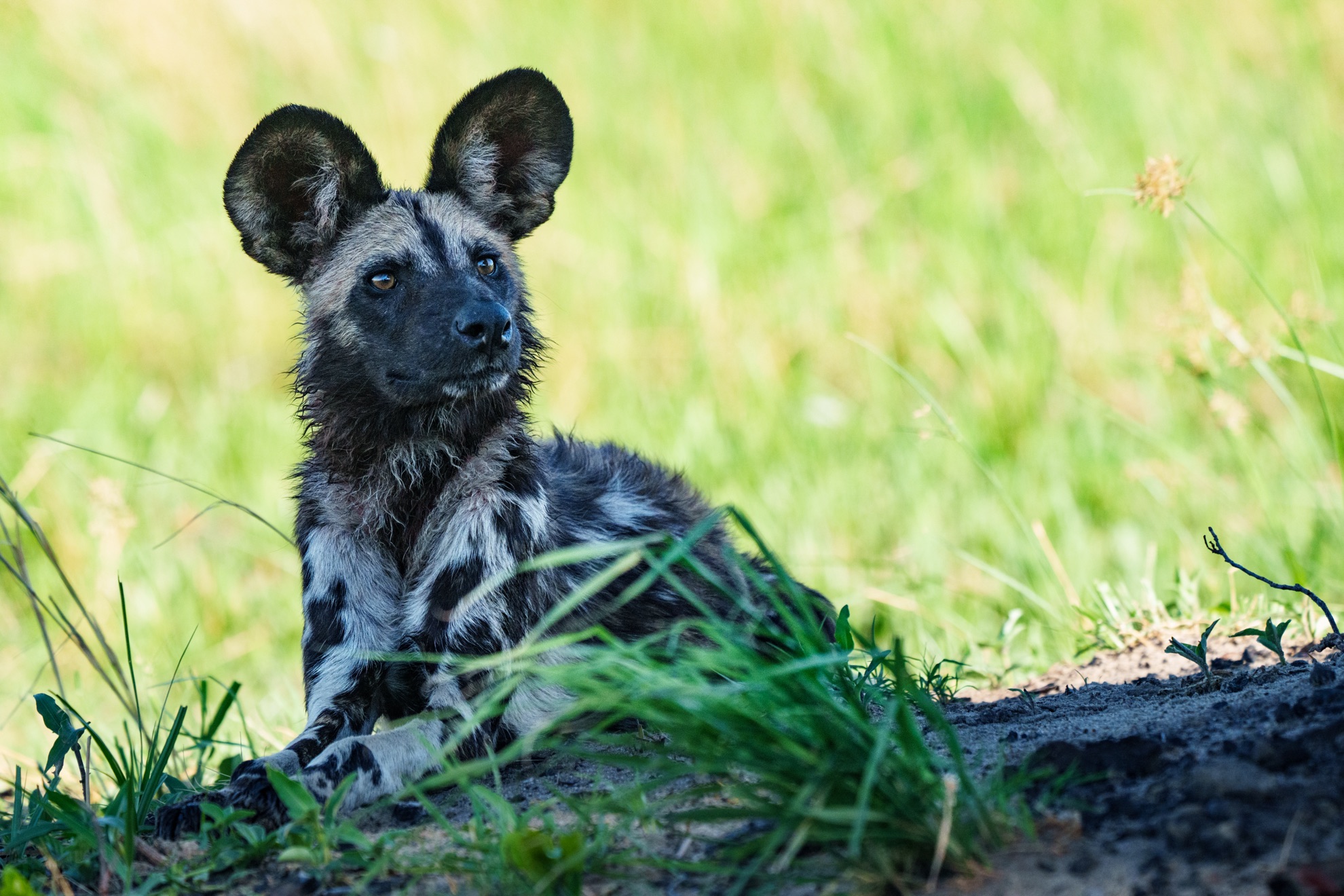
Soon the pups started to wake up and look around.
With their bellies full, the Dogs were clearly relaxed, with a less frenzied greeting than the previous day, some rolling around in the grass.
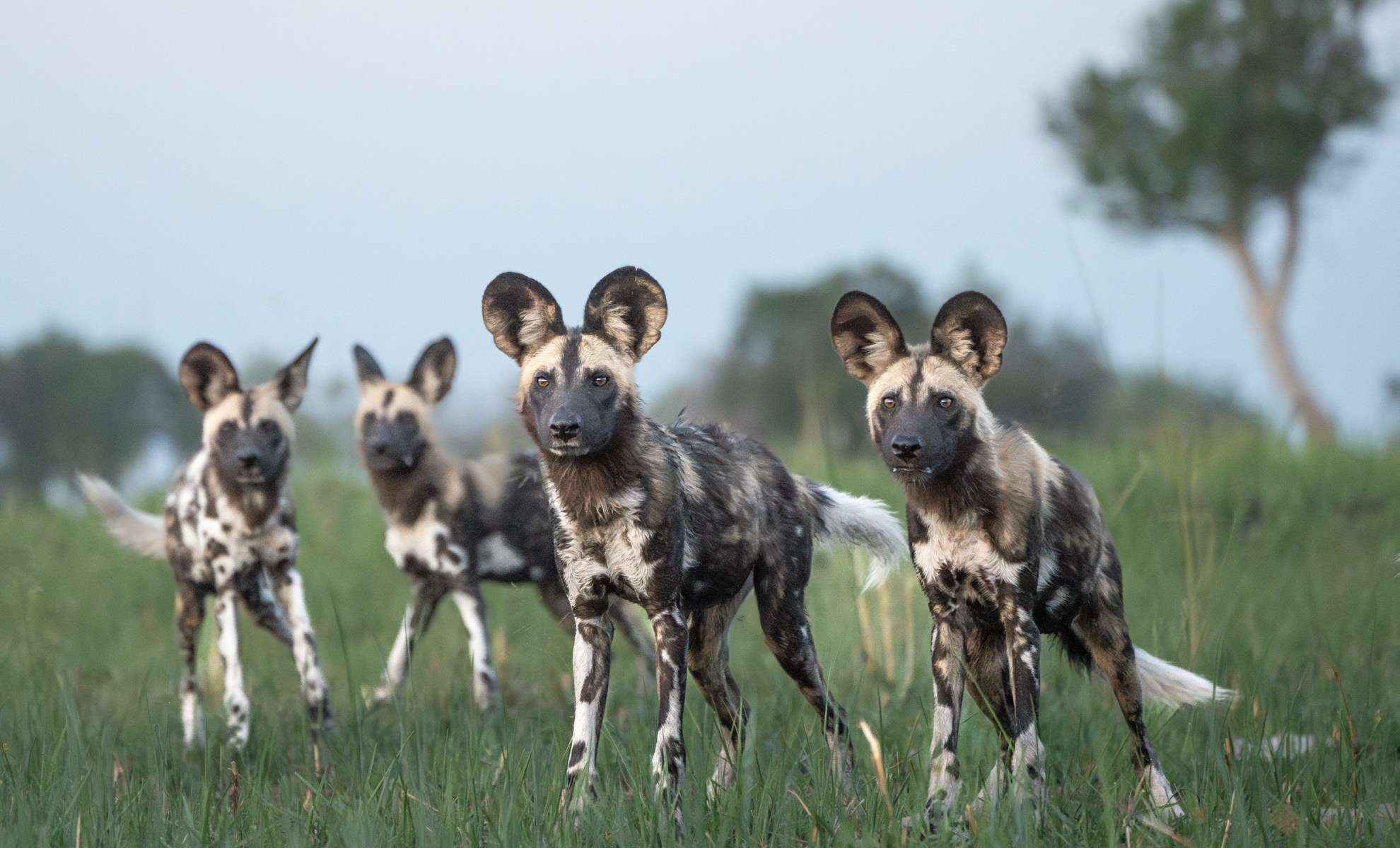
There was no urgency to start the hunt and they seemed to be going on a stroll, exploring the countryside. We drove past and parked up ahead of them, managing to get some really nice low level shots of some curious Dogs as they approached.
Having spent as much time as possible with the Painted Wolves, we drove back to camp in the dark. This had been a magical two days, finding the Painted Wolves, seeing them at play and hunting. These are such amazing animals and it is such a tragedy that this species is at risk of extinction. If you want to learn more about them and support their conservation, please have a look at The Painted Wolf Foundation website.
Just before reaching camp, we spotted a male lion in the dark.
Liana managed to get great video footage during these two days with the Painted Wolves. Have a look at her video here, or if you want to watch it in full screen mode, follow the link to watch on YouTube.
On this morning we again went out early, looking for the Painted Dogs in the region where another guide had told Ryder that he had seen their tracks recently. I had stopped taking malaria prophylaxis and was starting to recover from the side effects.
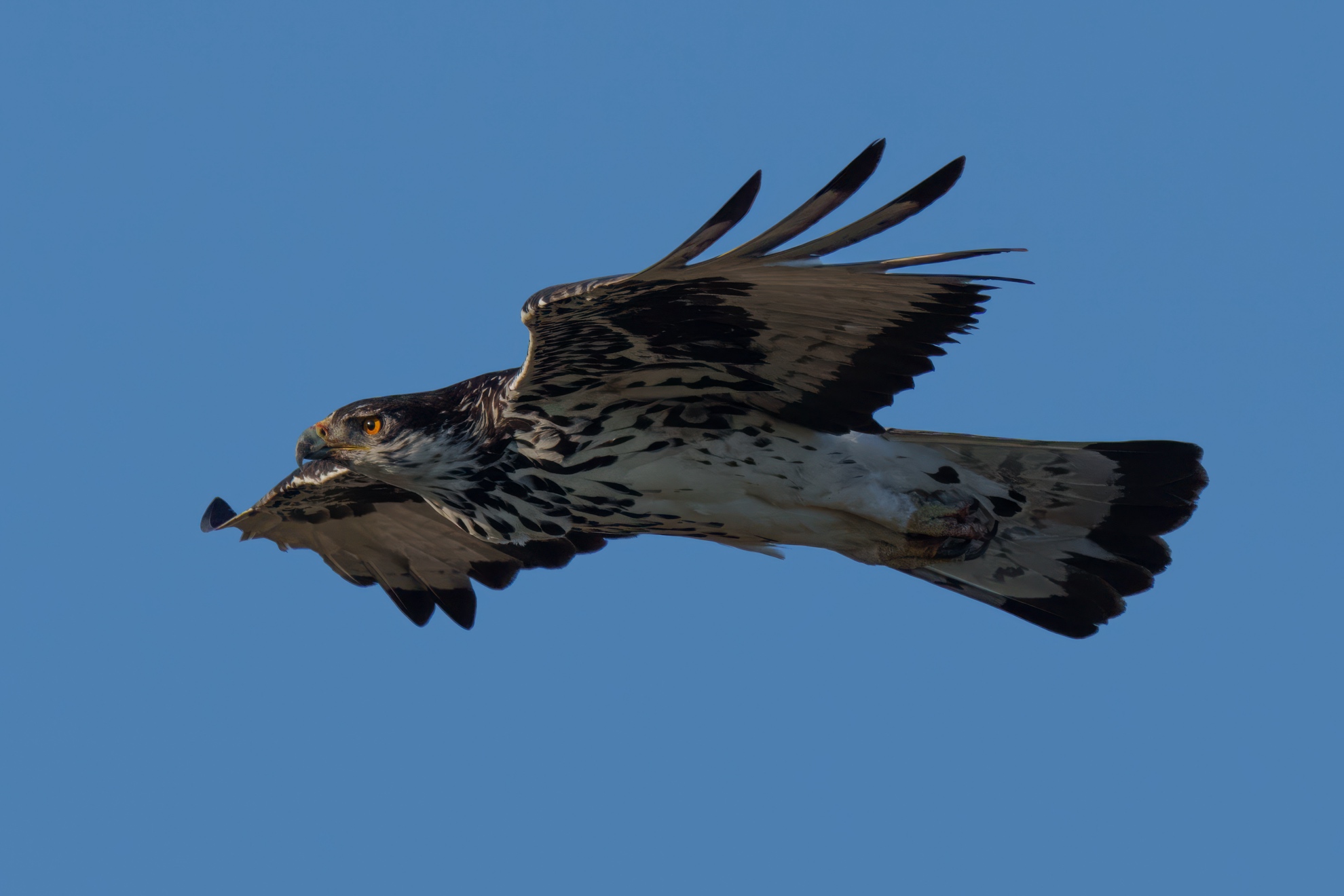
Although I am not a true “birder”, more of an occasional opportunistic bird photographer, I did enjoy photographing this beautiful African Hawk Eagle in flight.
Soon we came upon two beautiful cheetahs, who were rather shy and not overly keen to be photographed. We managed to get some long range photos of them, but when we tried to approach closer, they moved away and we decided not to disturb them further.
Moving further in our search of the Wild Dogs, we found a leopard cub in a tree, happily eating a young impala. The cub’s mother was nearby, eyeing an adult impala for the kill, possibly even the mother of the one being eaten by her cub. One is reminded that nature, in all its beauty, can be harsh.
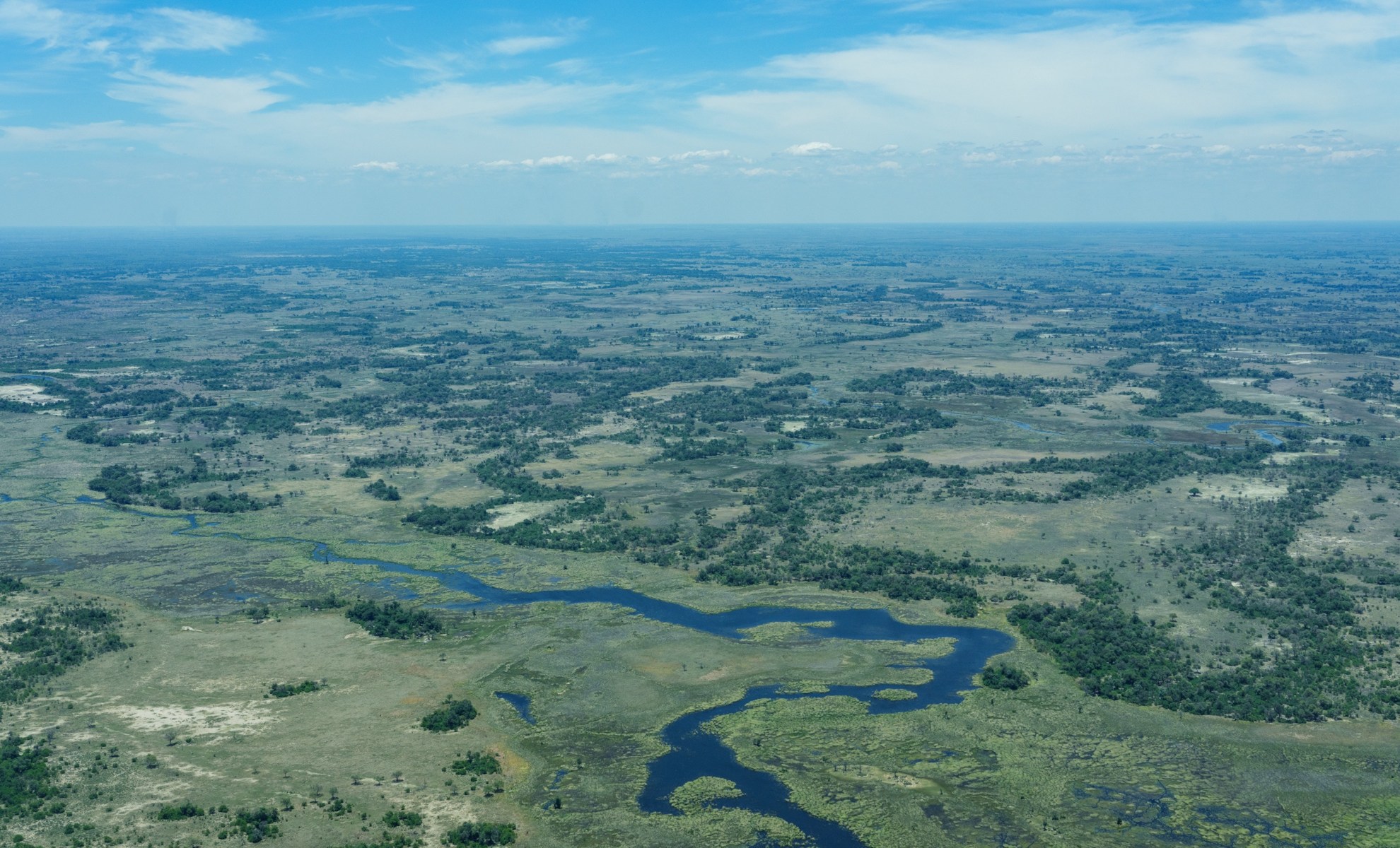
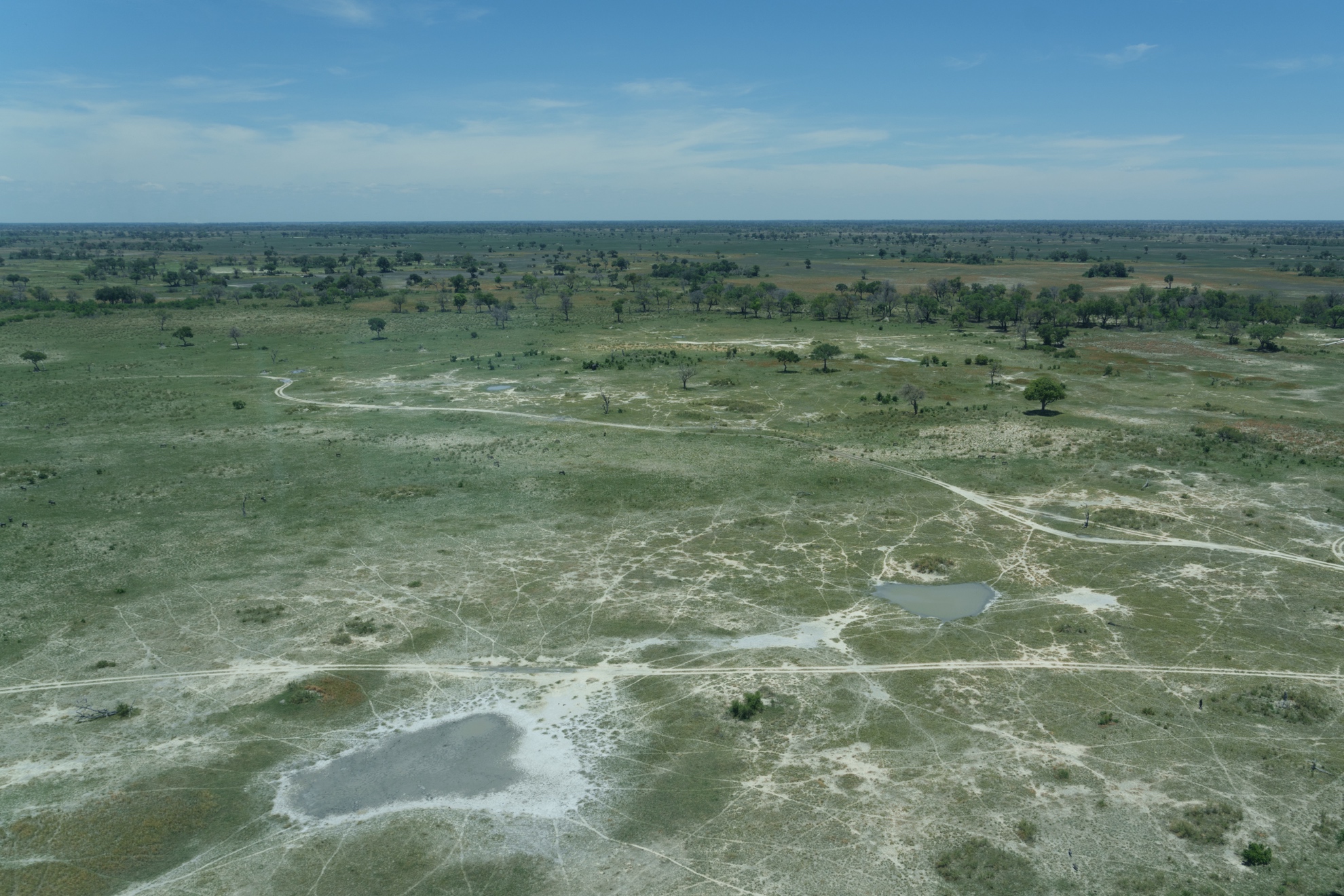
We returned to camp, still not having found the Wild Dogs. After brunch, it was time to depart Pom Pom, on our way to Splash camp. We flew across Moremi Game Reserve, from South-west to North-east, landing at Kwara landing strip. Flying across the Okavango delta, one cannot help but to be impressed by the beauty of the flood plains below. At this time of year, there is very little water and the areas which are covered by water in the flood season, are seen as large green, grass covered plains.
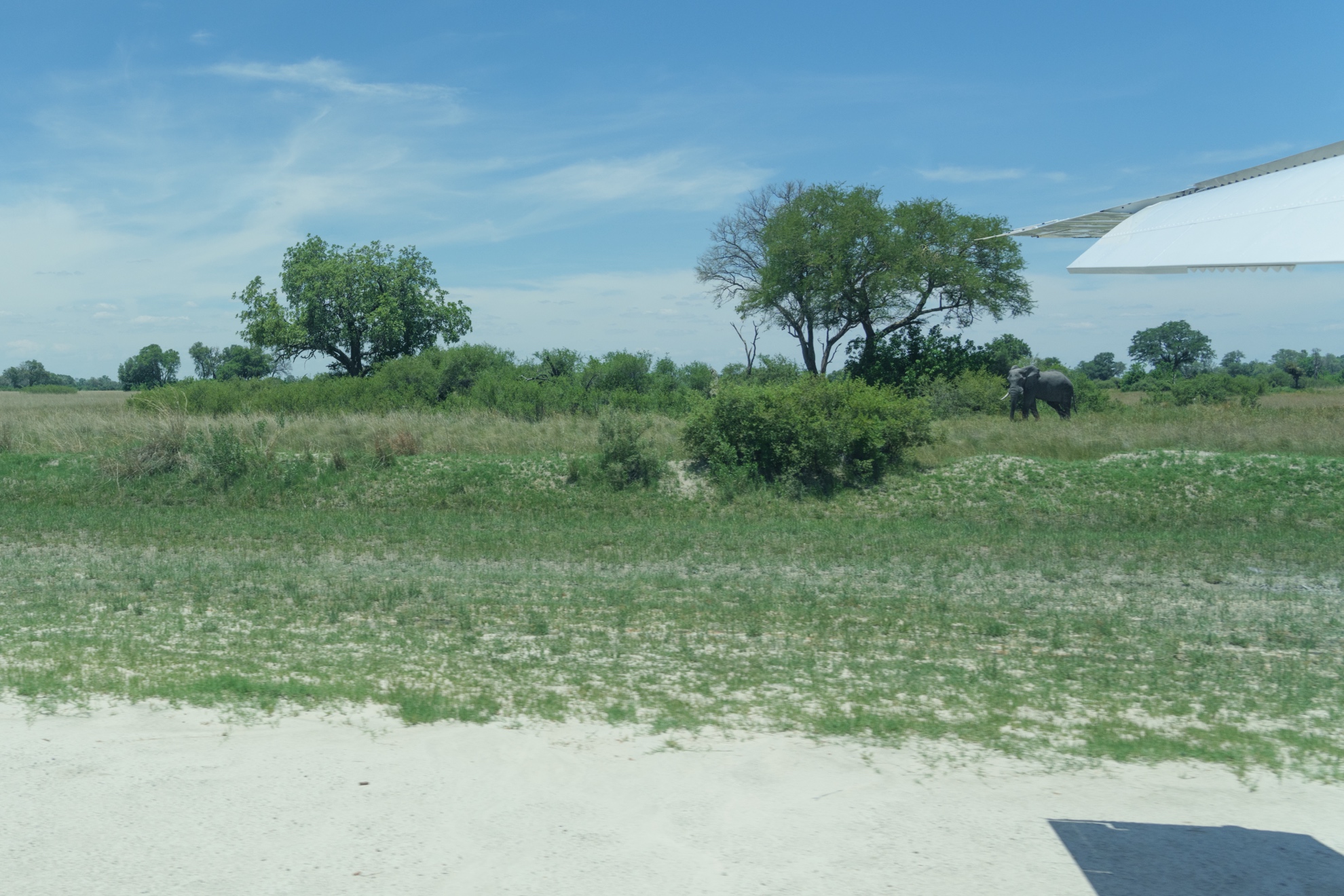
Landing at Kwara, we saw an elephant next to the landing strip and were later told that the guides had to chase it away from the landing strip just before our arrival.
We were met by our guide ST (who jokingly told me that ST stands for “Serious Trouble”) and tracker SB.
After settling in to our accommodation, we went for an afternoon drive. ST told us that the large pack of Wild Dogs had moved to neighboring Khwai around 4 or 5 days earlier, but could be expected back in the Kwara concession soon. We explored in the direction of Khwai, up to the boundary between the concessions, without finding their tracks. ST indicated that he thought they could be on an island, to which the only vehicle access was a crossing in the Kwara concession, close to the Khwai boundary. Due to the distance from our camp, we could not explore this in the late afternoon, but would return in the morning.
On our way back to camp, we stopped for sundowners and to appreciate another beautiful sunset.
If you enjoyed this, feel free to subscribe and be kept informed of new posts. I will not spam you.
Our first full day at Pom Pom started with a thunderstorm and rain, which passed quickly and did not delay our planned early start, with a 5am wake-up call, quick light breakfast and out on our game drive by 5:45am.
Very soon our excellent guiding team found a male leopard, who seemed to be sniffing around for something. He had a deformed tail, possibly previously injured and healed with a deformity, but this did not seem to bother him too much. He did interrupt his sniffing to pose for a few quick photos.
We followed him until he eventually reached a tree in which there was a half eaten impala, possibly a kill left behind by another leopard. This one may have been sniffing around because he had gotten the scent and was looking for it. He proceeded to jump into the tree and enjoy the leftovers.
We received information that lions had killed a wildebeest nearby and proceeded to that site, where we found two lions, shortly joined by a third. The beautiful morning light after the rain, offered more opportunity for low angle photos.
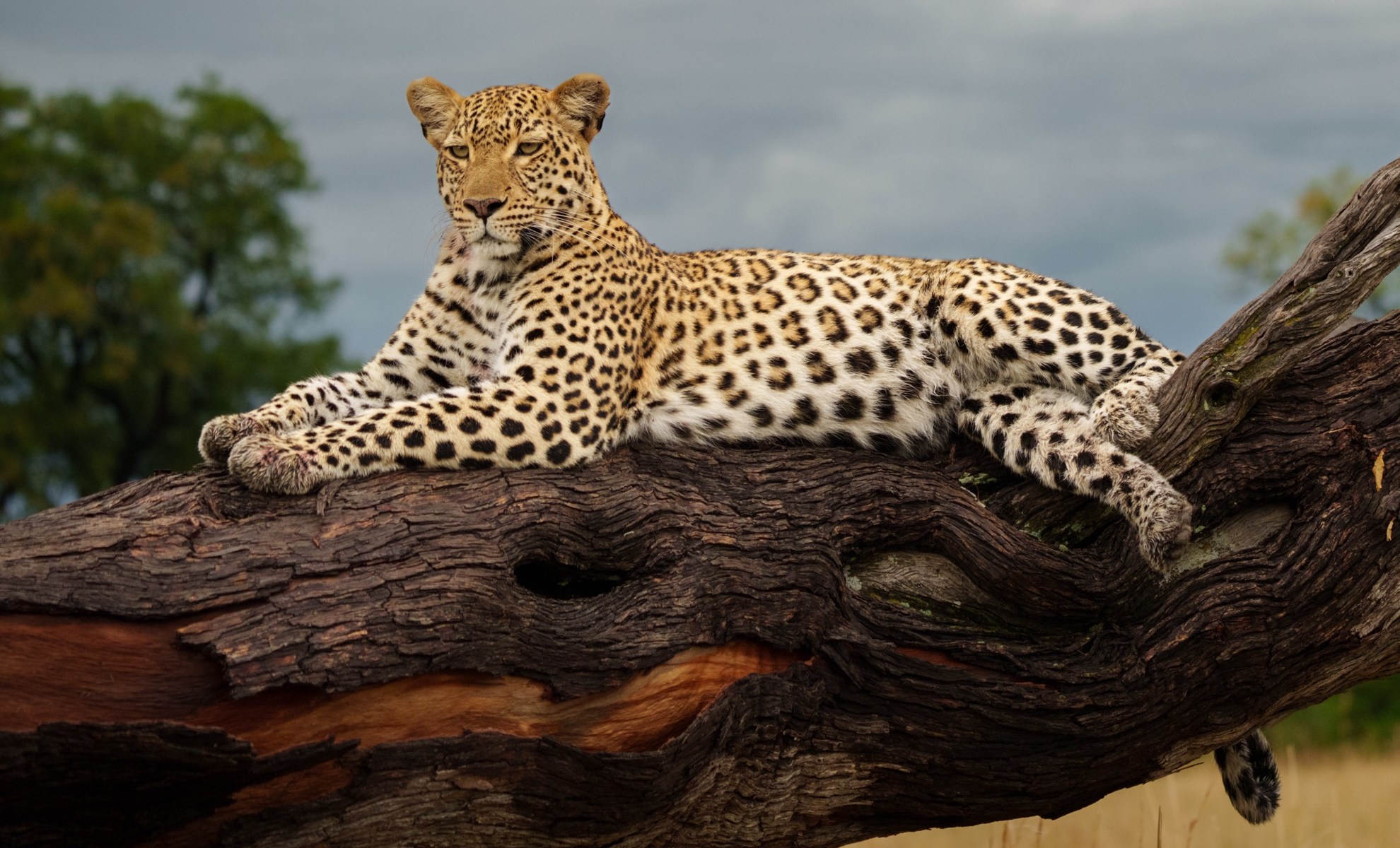
Moving along, almost unbelievably, we found a female leopard and her cub. We had been informed of their presence in the vicinity and that hyenas had stolen their food. Mom was resting on a tree stump and junior was lying in a nearby tree.
When the mom started stirring, she offered excellent photo opportunities with the partly cloudy skies in the background.
When she got up, she called her cub down from the tree and they strolled along to where a dead impala was lying under a bush, presumably another kill she had made after losing her first one to they hyenas. She looked like she had already eaten and the cub started to eat.
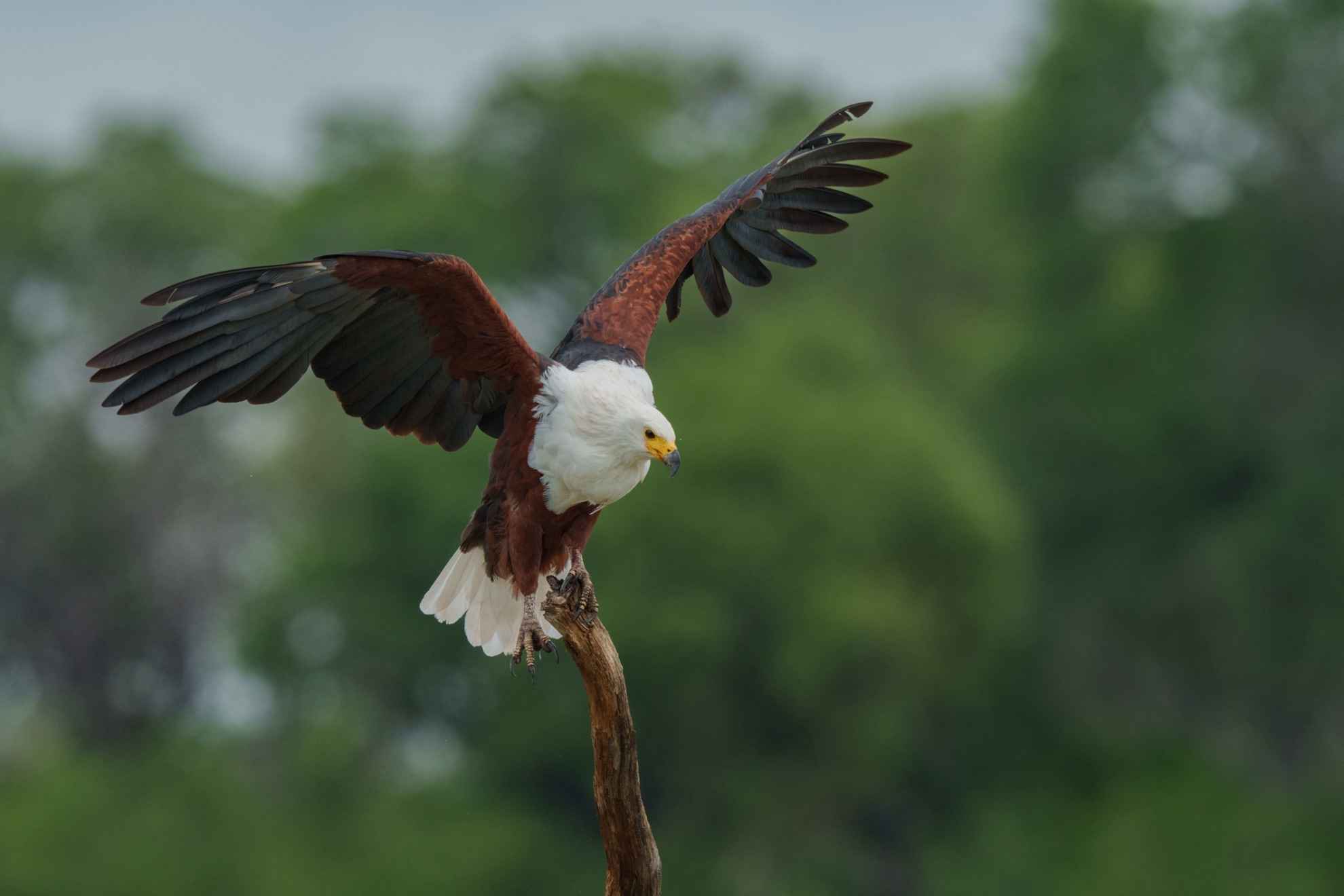
With the day just a few hours old, we had already had the most amazing sightings and in between, a few other photo opportunities with Warthog, Red-billed Oxpecker, Lilac-breasted Roller, Striped Kingfisher, Fish Eagle and others.
By 11am we returned to camp for brunch, then settling into the usual rhythm of these photography trips: download and backup photos and video, charge camera batteries and clear memory cards to get ready for the next session. “Siesta time” was spent processing photos instead of resting.
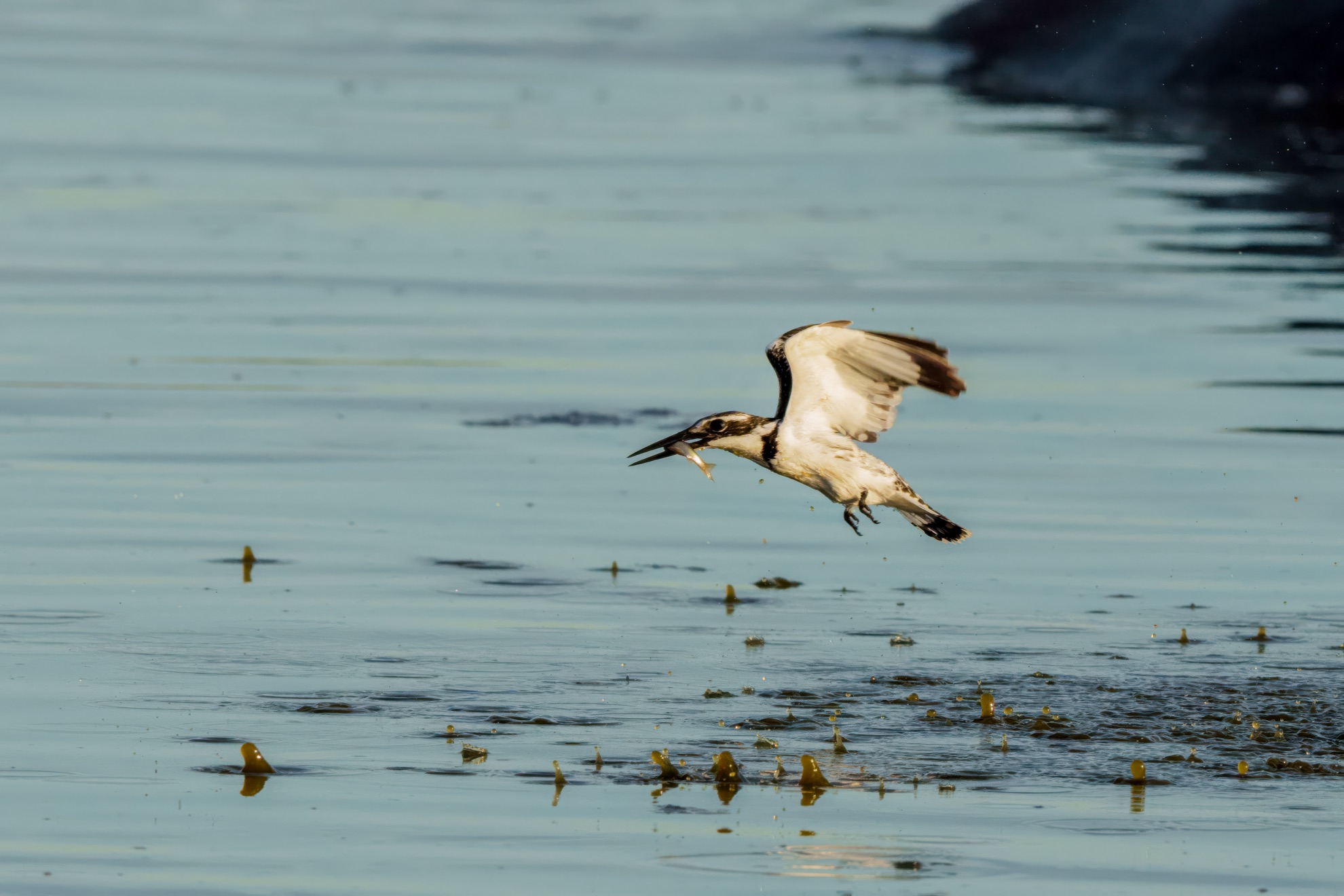
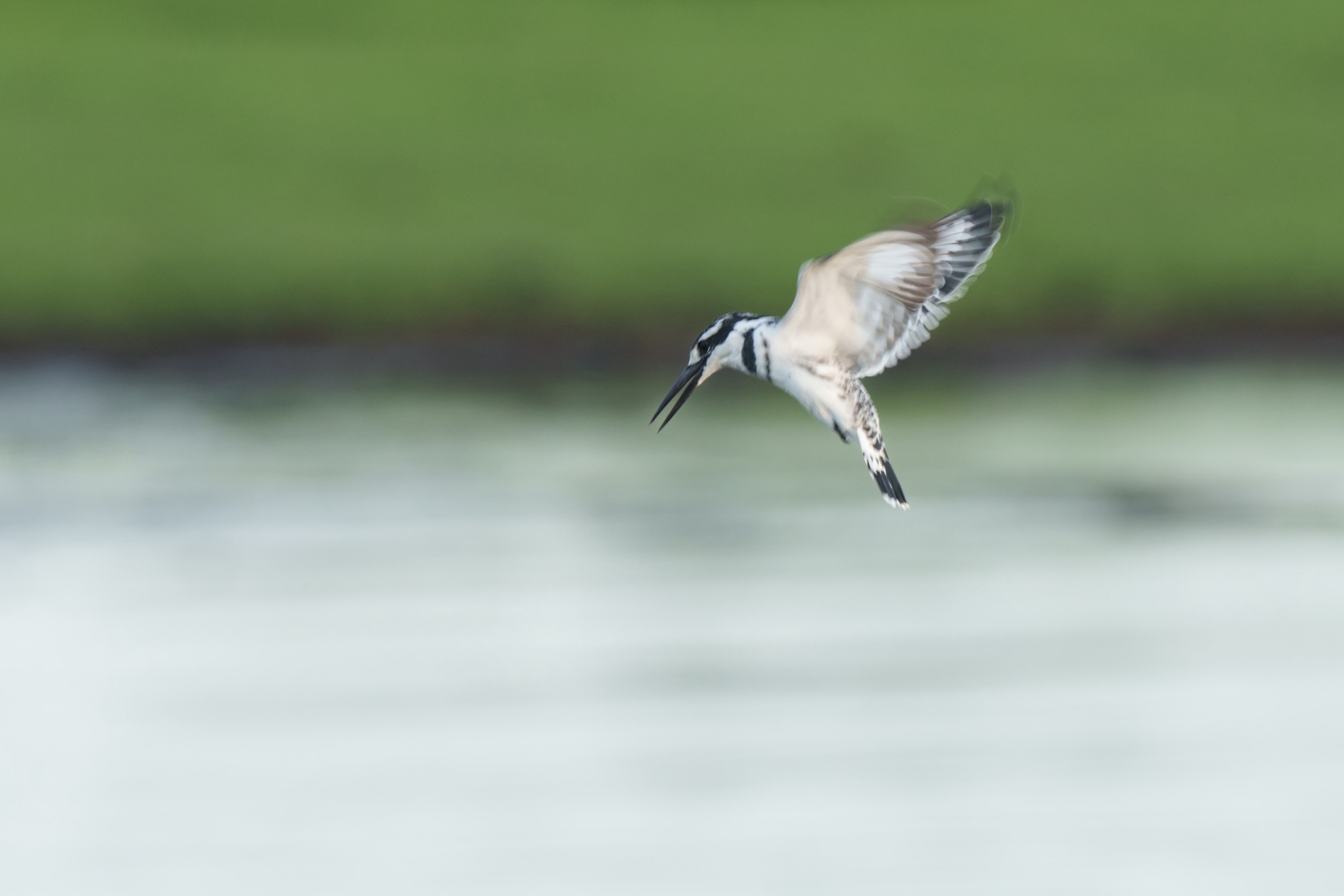
At 4pm we went for “high tea” before starting out at 4:30pm for our afternoon drive. We spent some time trying (wholly unsuccessfully in my case) to photograph Carmine Bee-eaters in flight. After spending a while watching Pied Kingfishers hover, fish and fight, we proceeded to find a beautiful male lion, lying in the grass, looking interested.
Soon, he got up and started walking with intent. When we looked around, we saw a lioness approaching enthusiastically from behind. They met up and he started following her.
She made him work hard for it, but eventually he caught up and the relationship was consummated.
Returning back to camp after sunset, we stopped briefly to watch hippo’s emerge from their pool.
Reflecting on the day, even though we did not find the Painted Wolves, it had been almost too good to be true, an amazing experience. Throughout the day, Ryder and Zuma had managed to get us the most amazing sightings and Grant had made the occasional invaluable comment, helping us to get great photos and video.
If you enjoyed this and want to be kept updated when I post again, please subscribe.
















































 Etienne's Camera