I’m still not entirely sure how it happened, but somehow saltwater found its way into the battery compartment of my strobe. I only discovered it the previous afternoon while preparing my camera gear for the next day’s shoot. Thankfully, Mudy stepped in to help me carefully clean it out. After that, I left it to dry overnight and checked it again first thing in the morning. The moment I inserted the batteries and the strobe powered up normally, I let out an enormous sigh of relief.
After this the morning initially proceeded in the usual way, until we got on the dive boat and one of the engines refused to start. Since it was our final day of diving, Michael had planned to take us to a more distant and rewarding site. With the large boat fully loaded with divers, however, running on a single engine made the longer trip impractical. After a quick discussion, we transferred to the smaller boat for the extended journey, while the rest of the group remained on the larger vessel and headed to a nearer site.
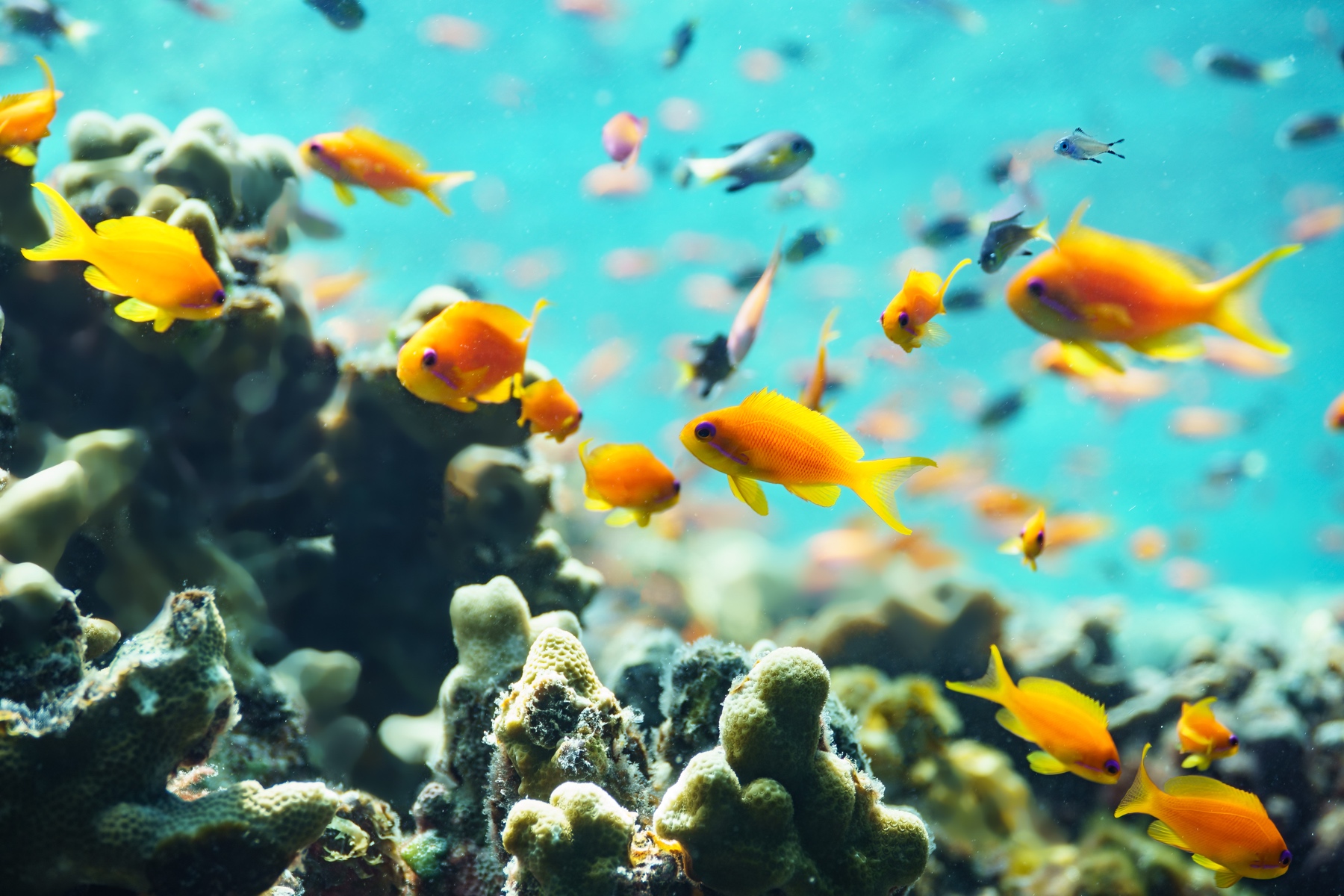
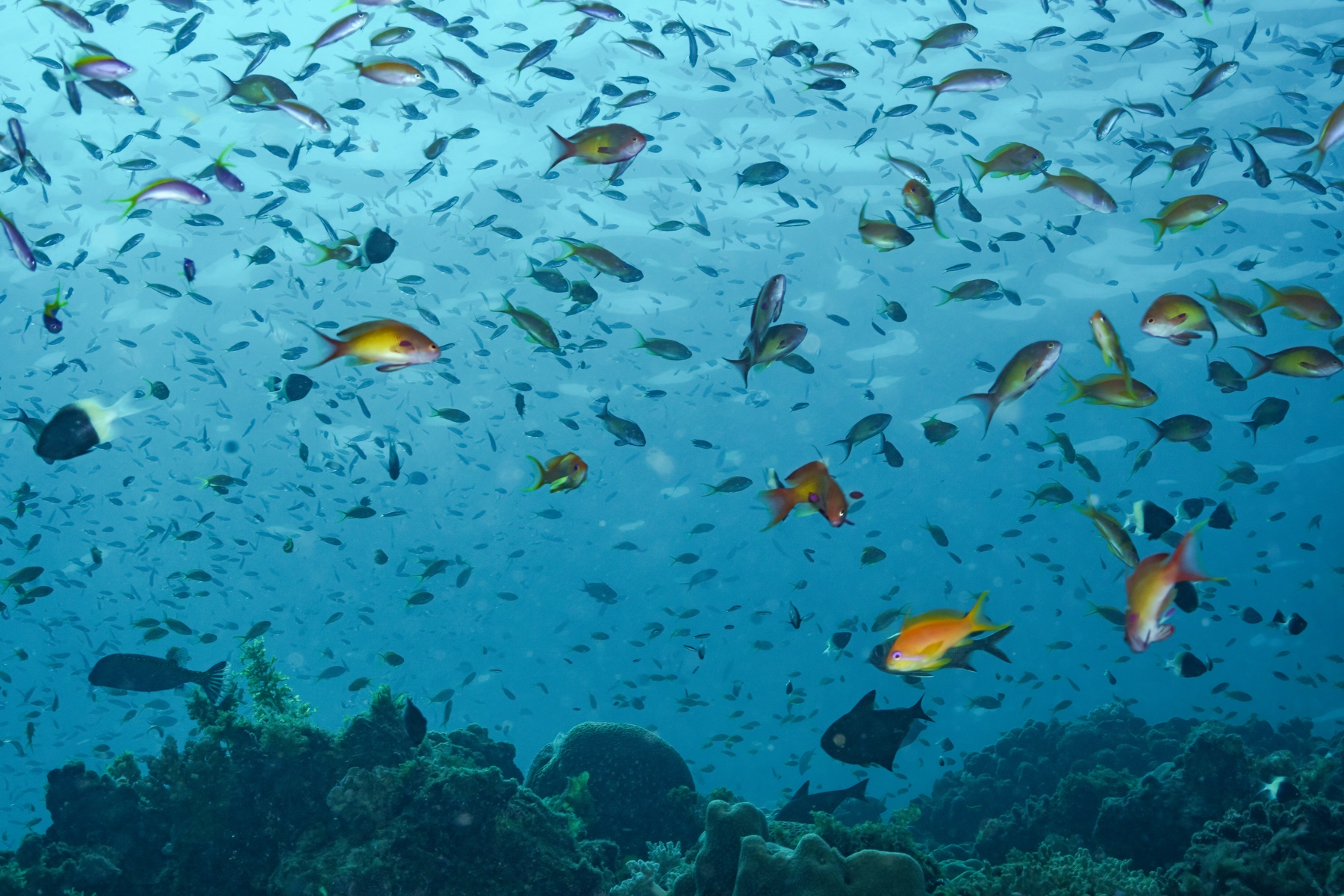
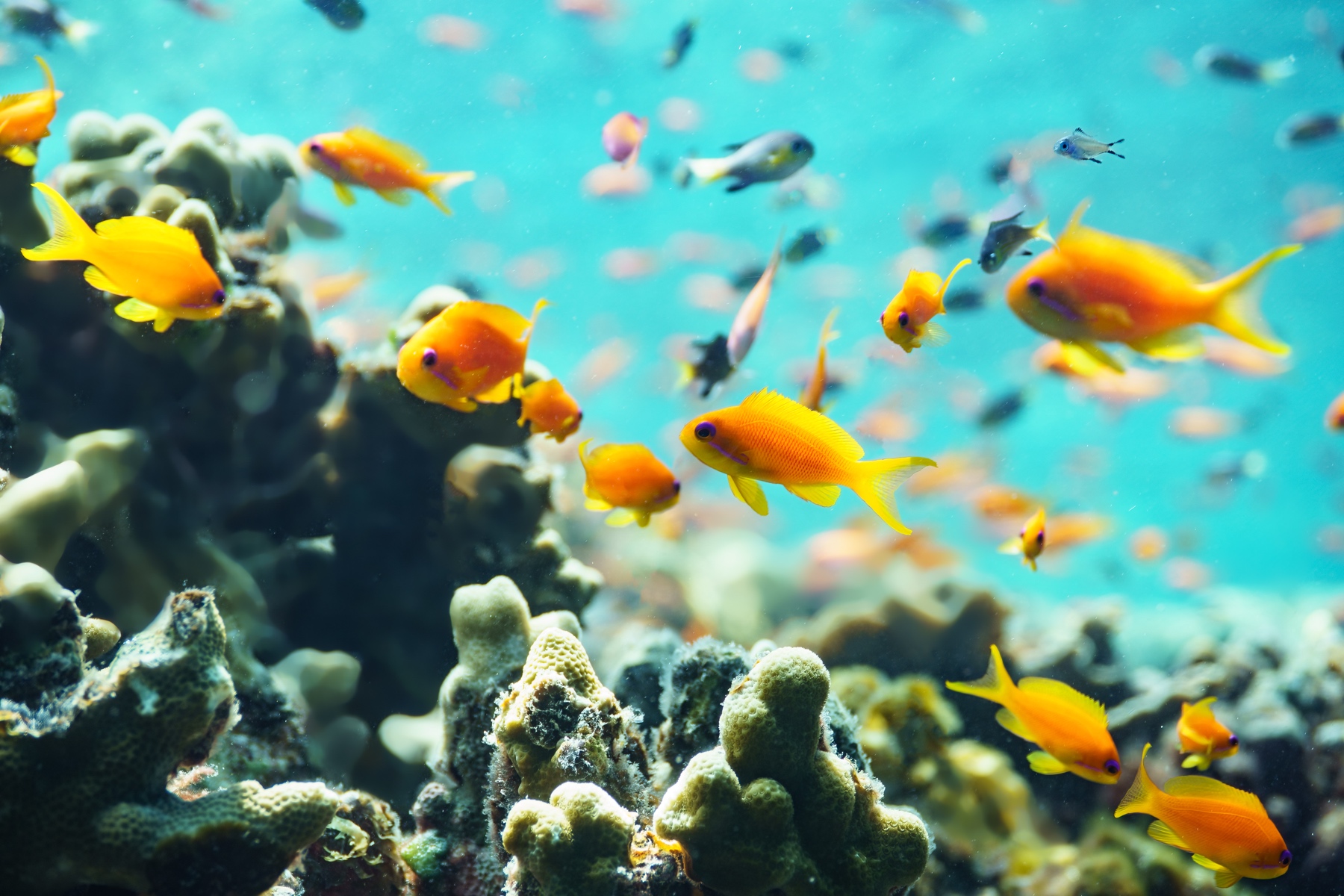
The longer journey proved more than worthwhile. We were rewarded with some breathtaking corals —vivid, intricate, and almost impossible to capture fully in still photographs, especially with a macro setup. Liana’s video (watch in 4K if possible) comes closer to conveying the sheer spectacle, yet even it falls short of the experience in person. With stronger video lighting, perhaps one could come nearer to revealing the true magnificence of that underwater world in full colour. **
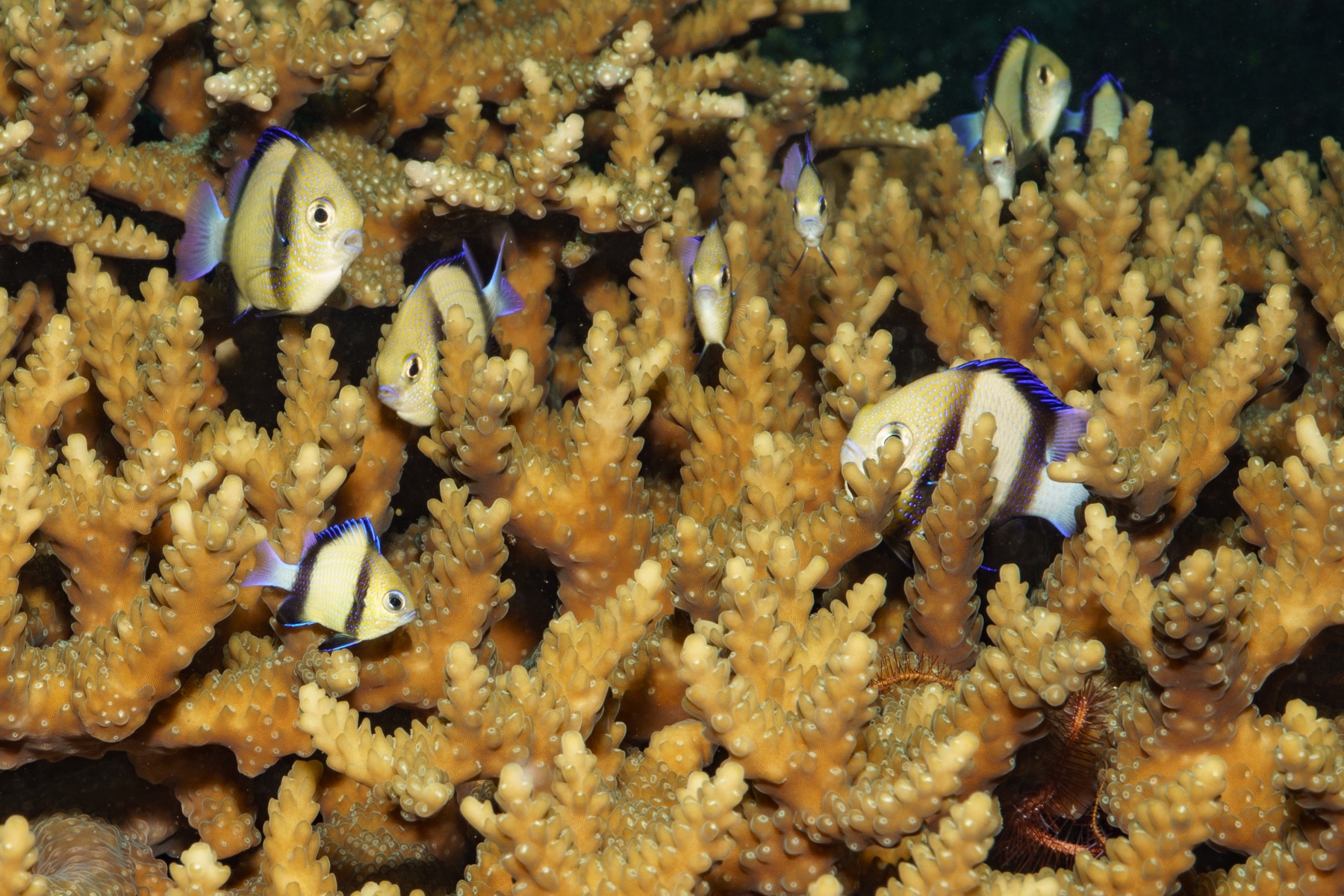
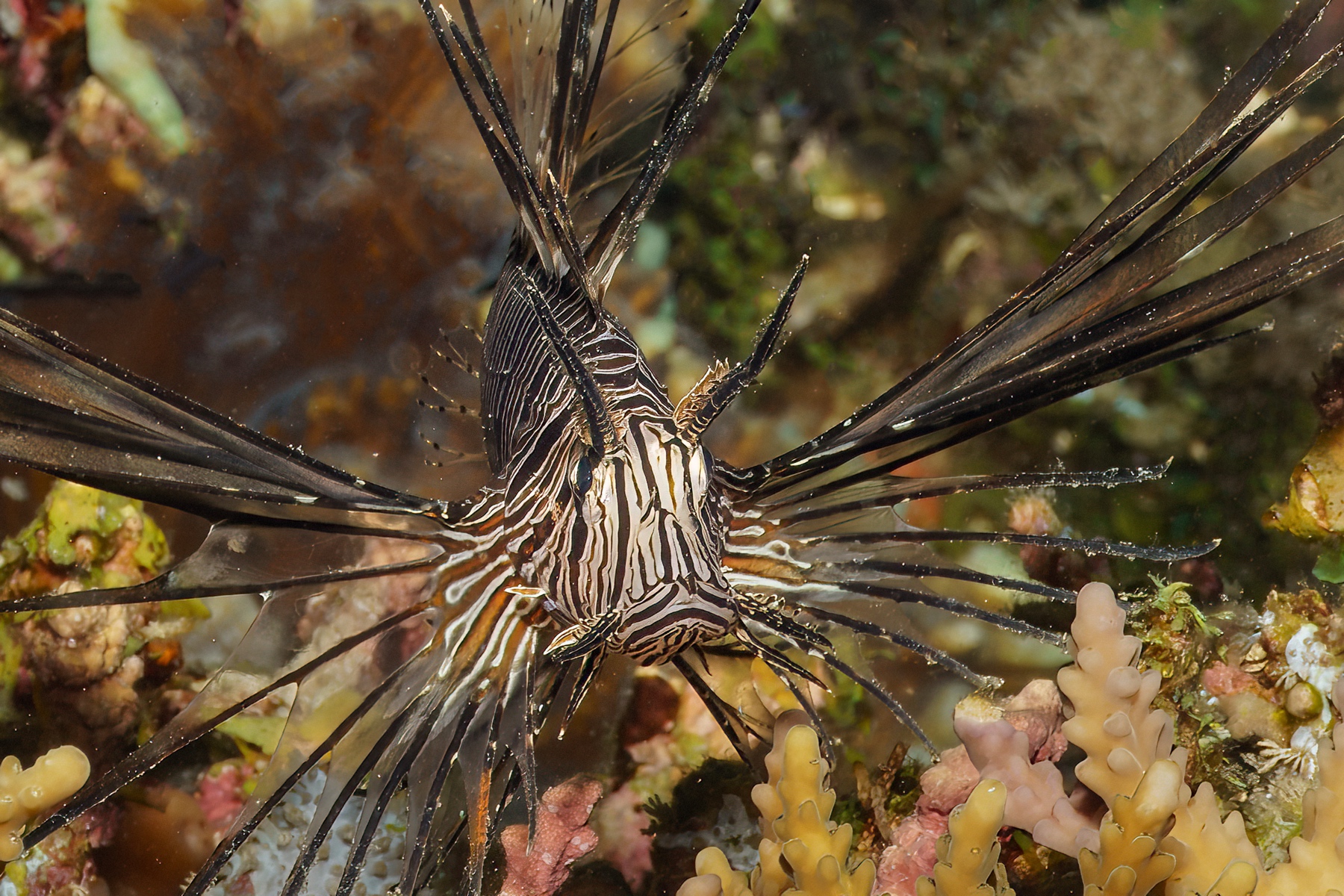
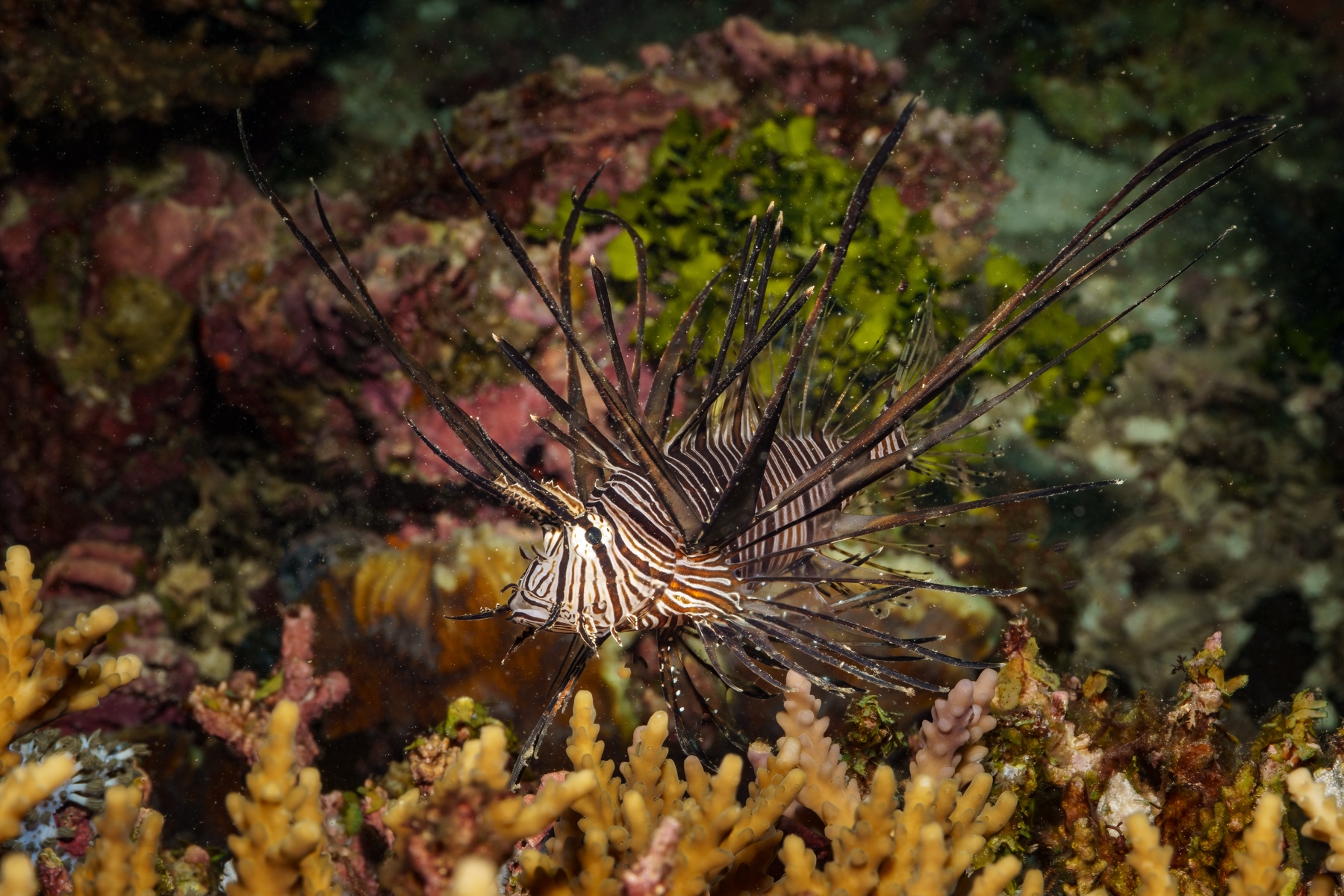
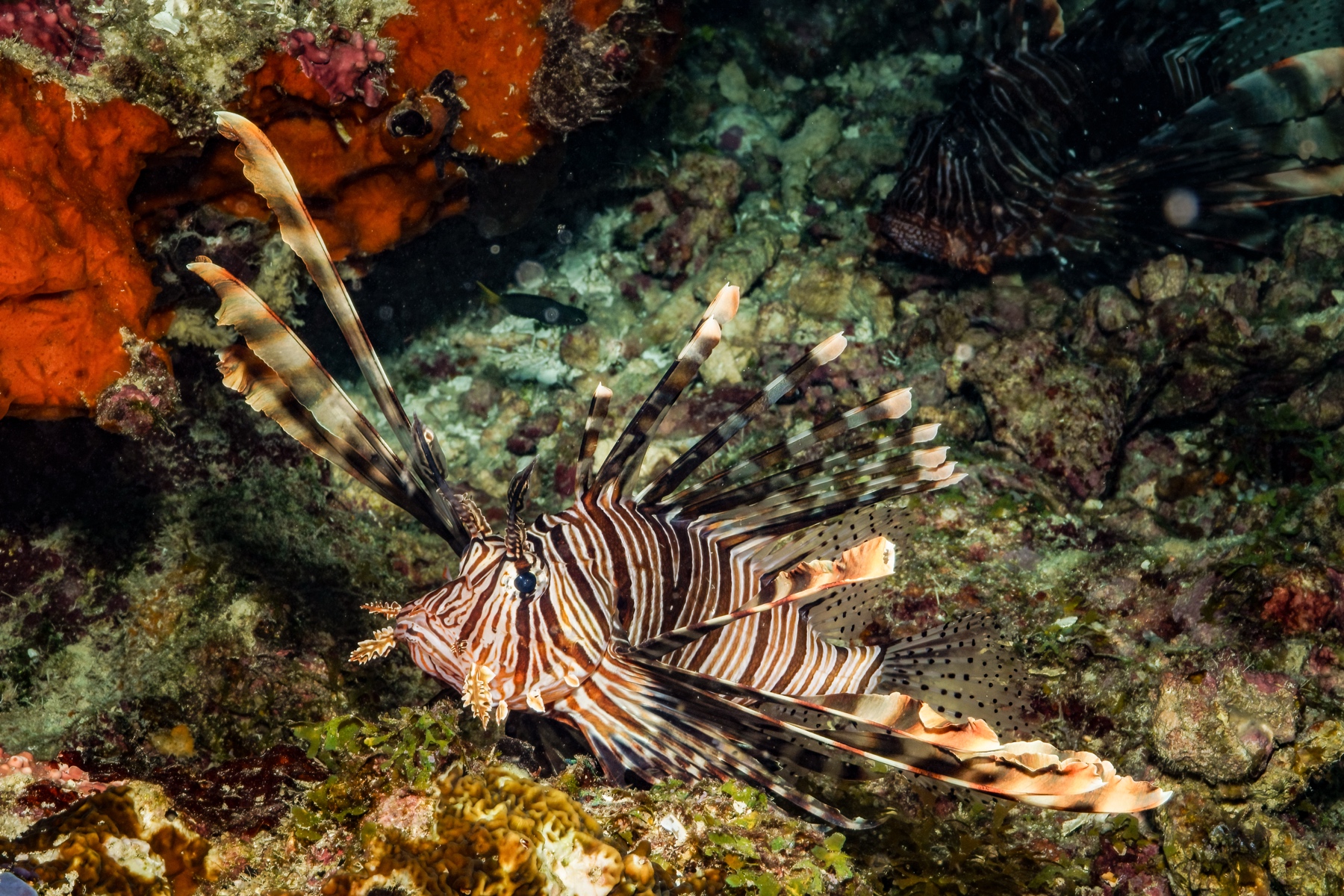
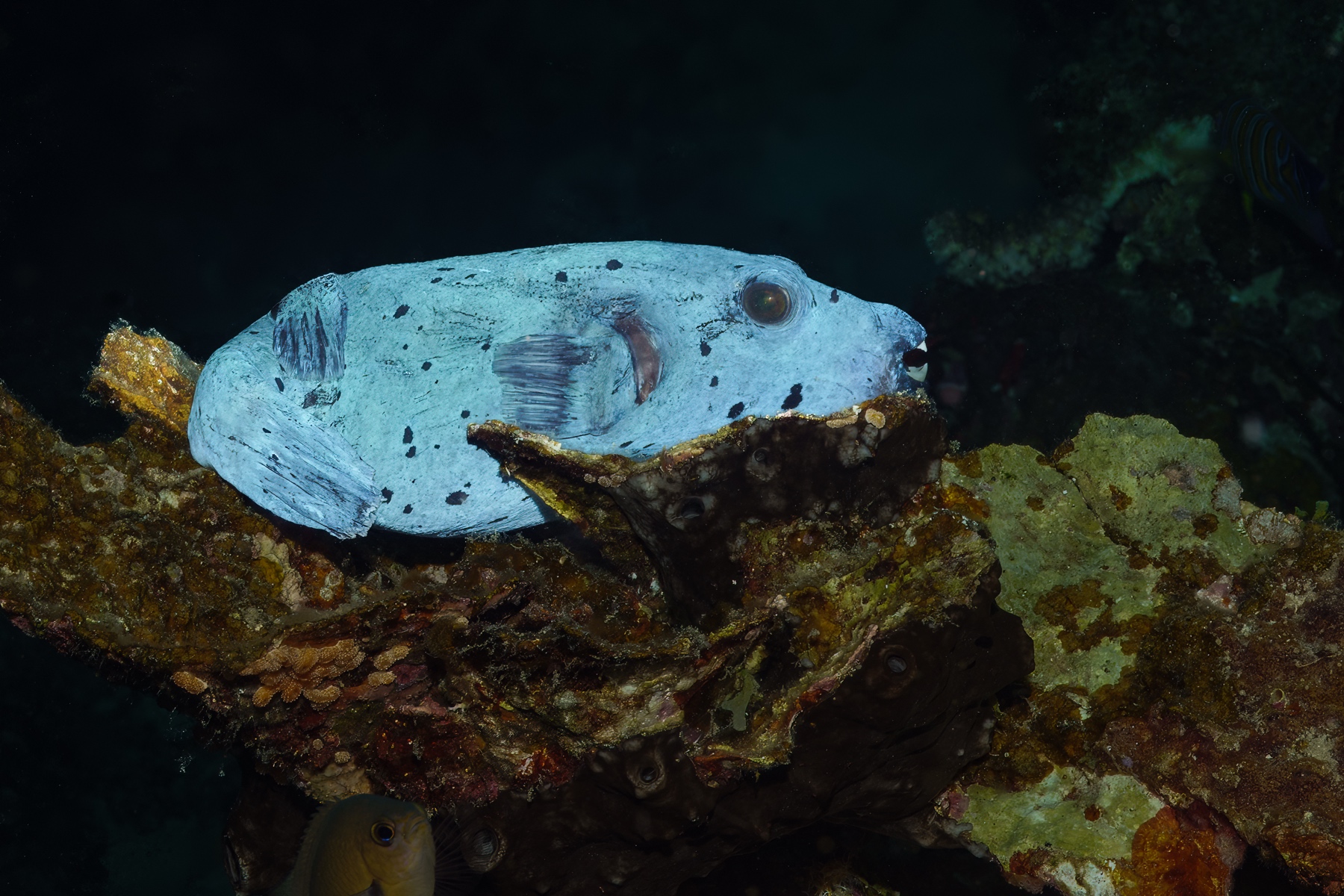
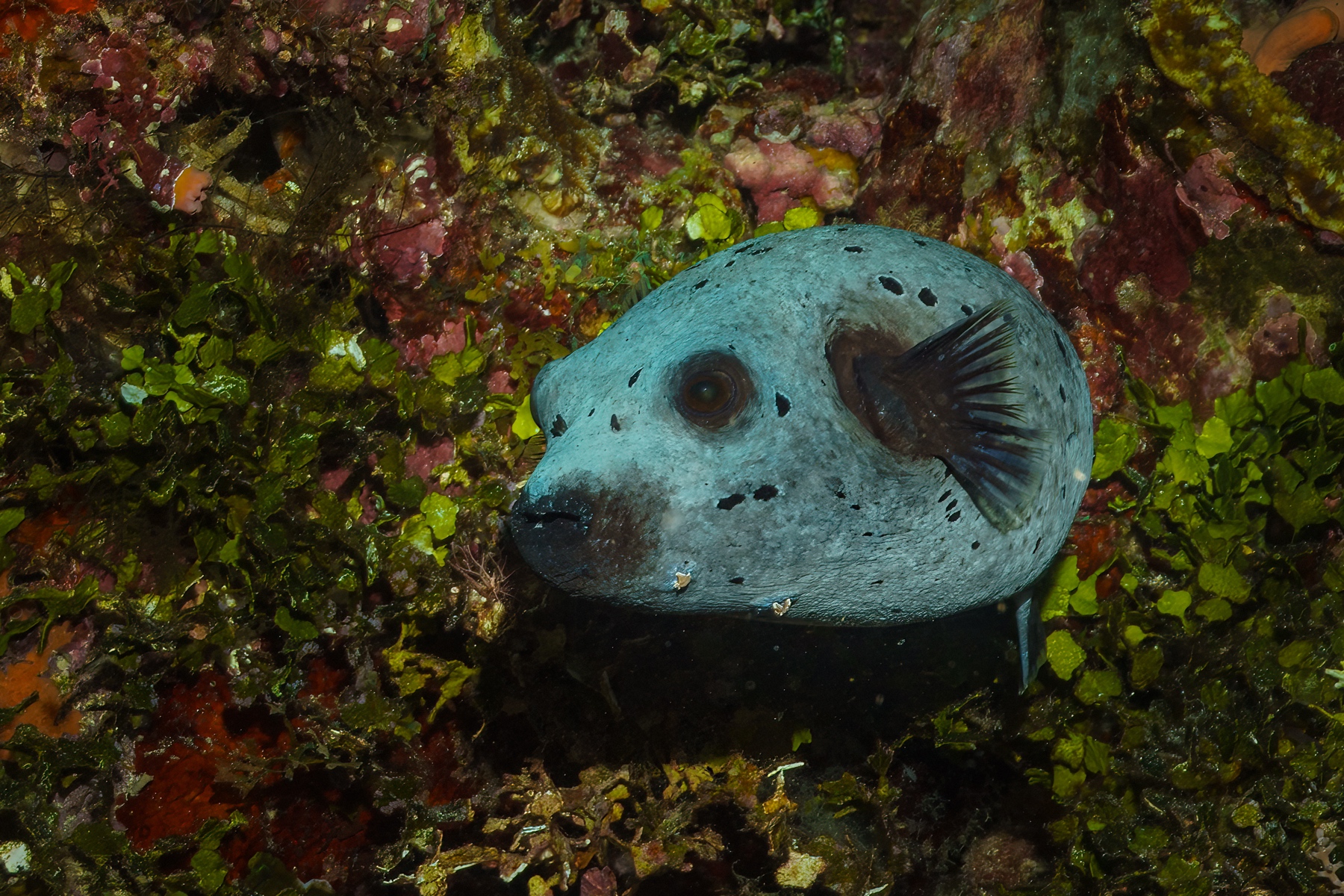
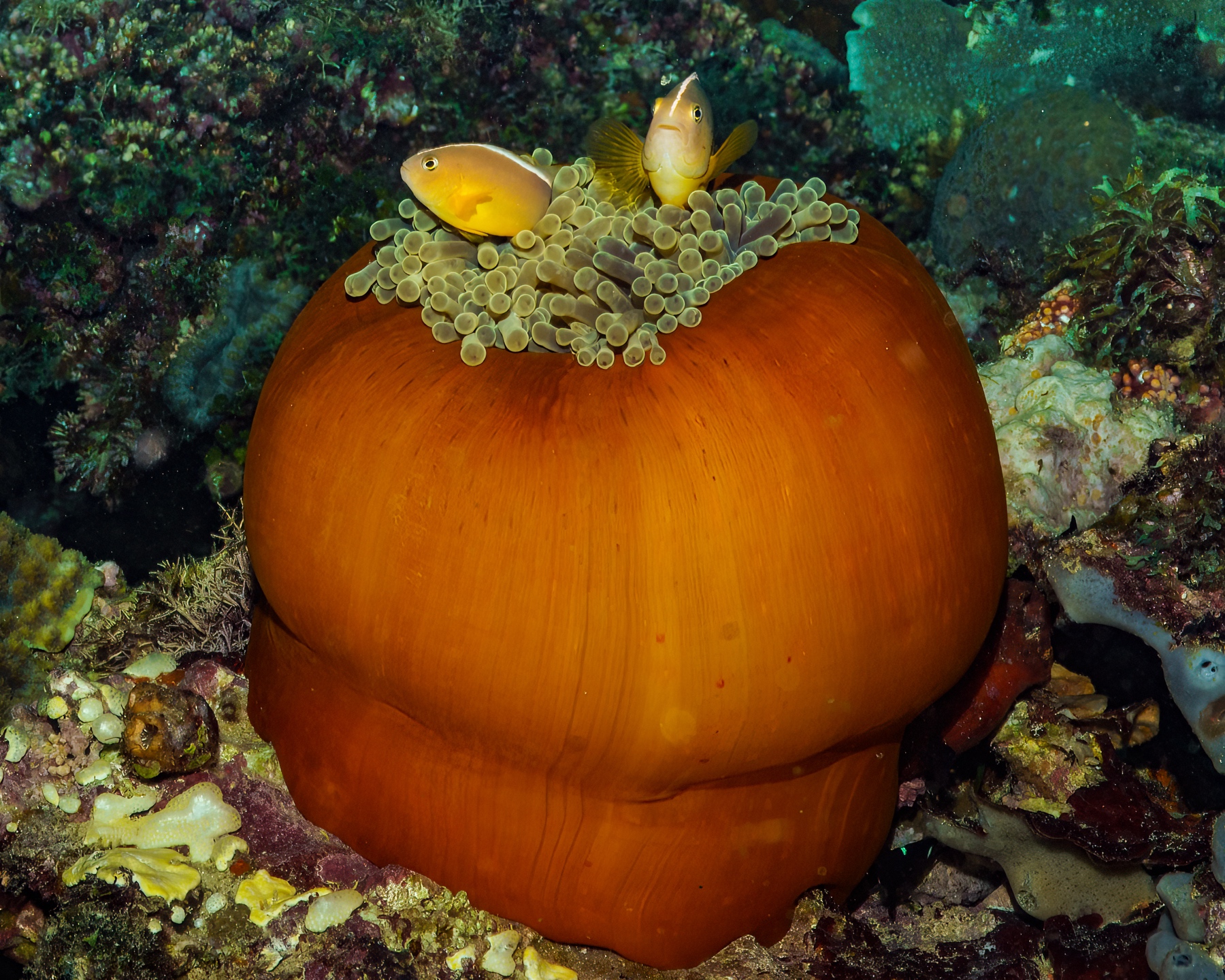
The experience was further enhanced by an abundance of fish life.
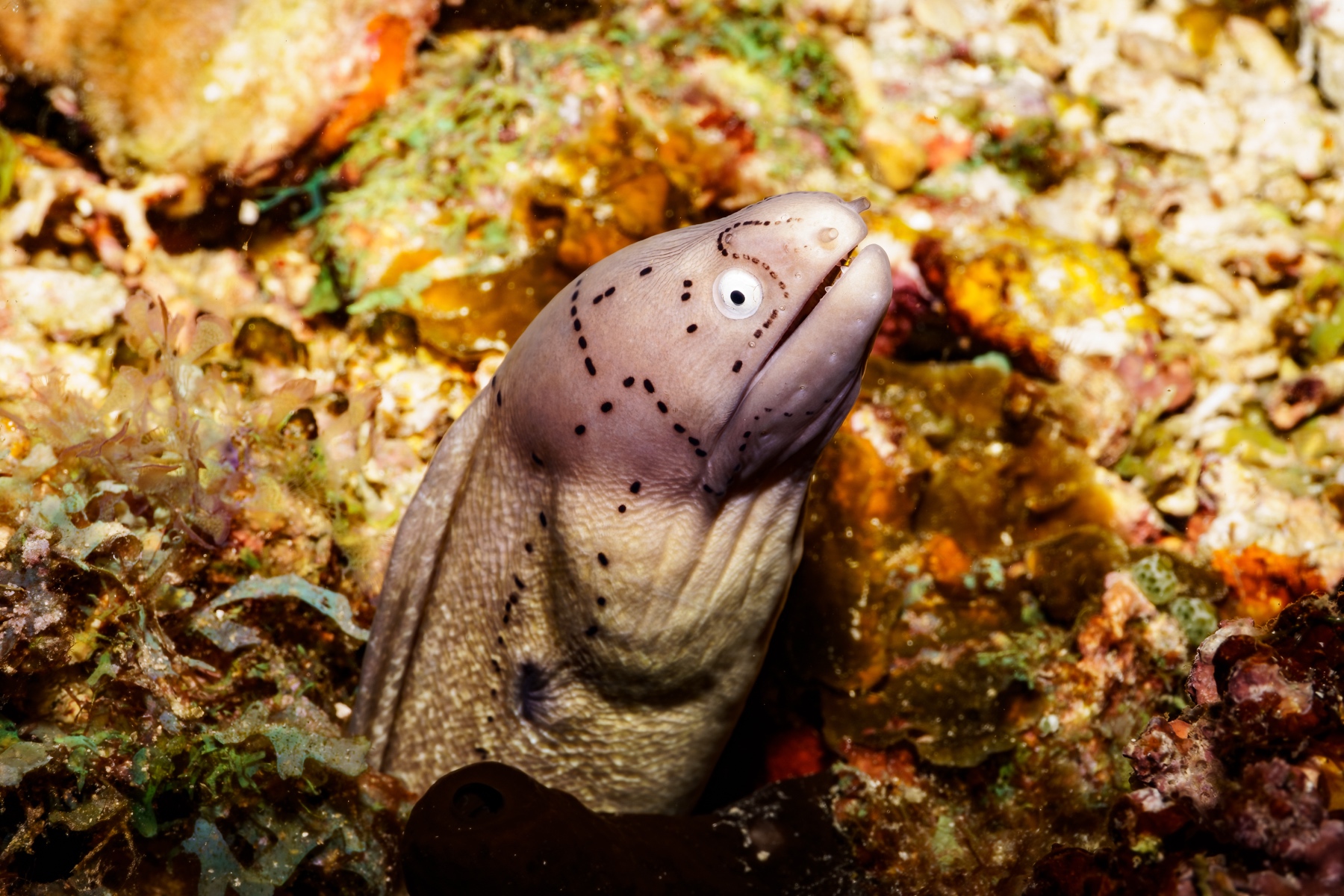
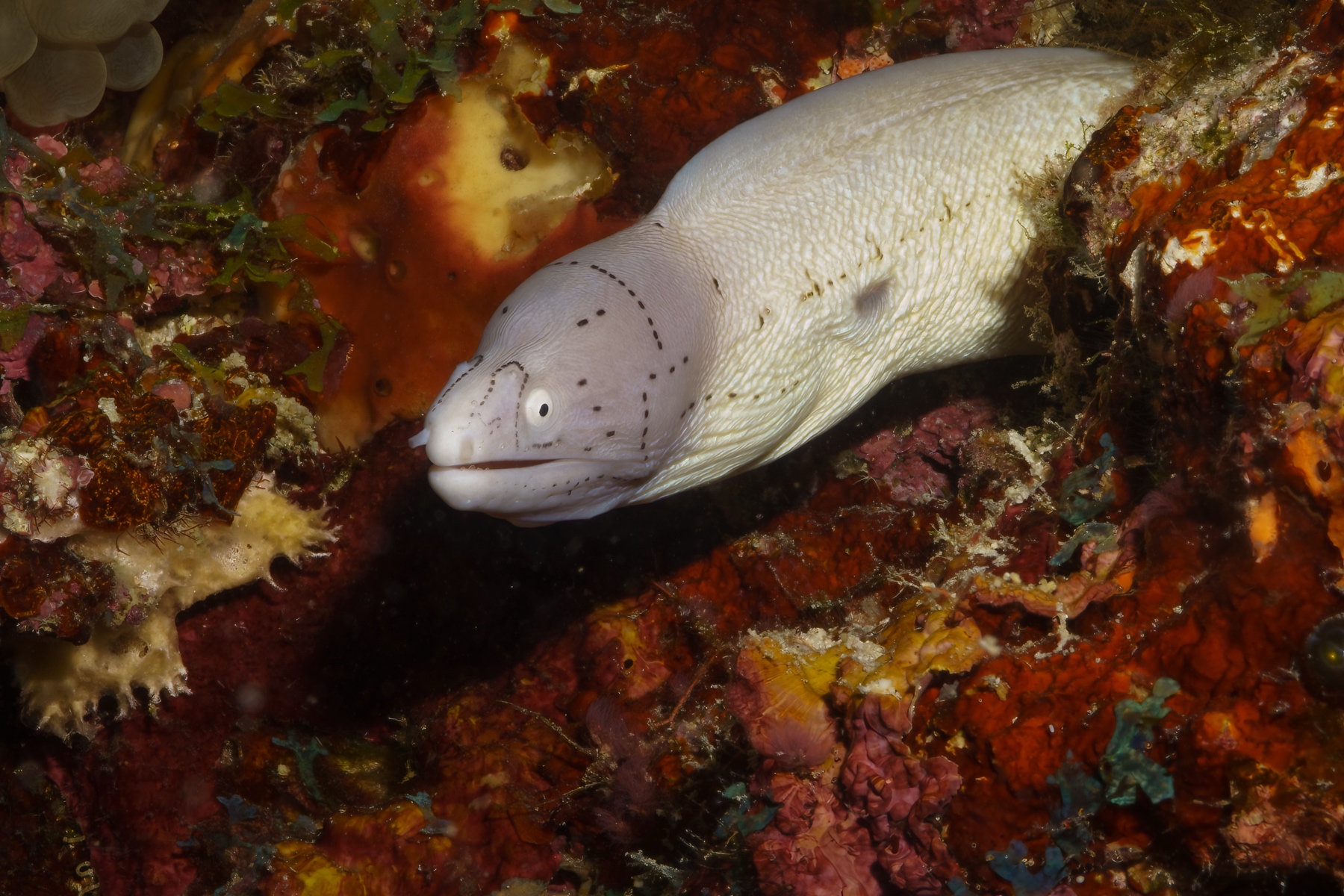
We saw several geometric moray eels, apparently very common, although I can’t remember having seen one before.
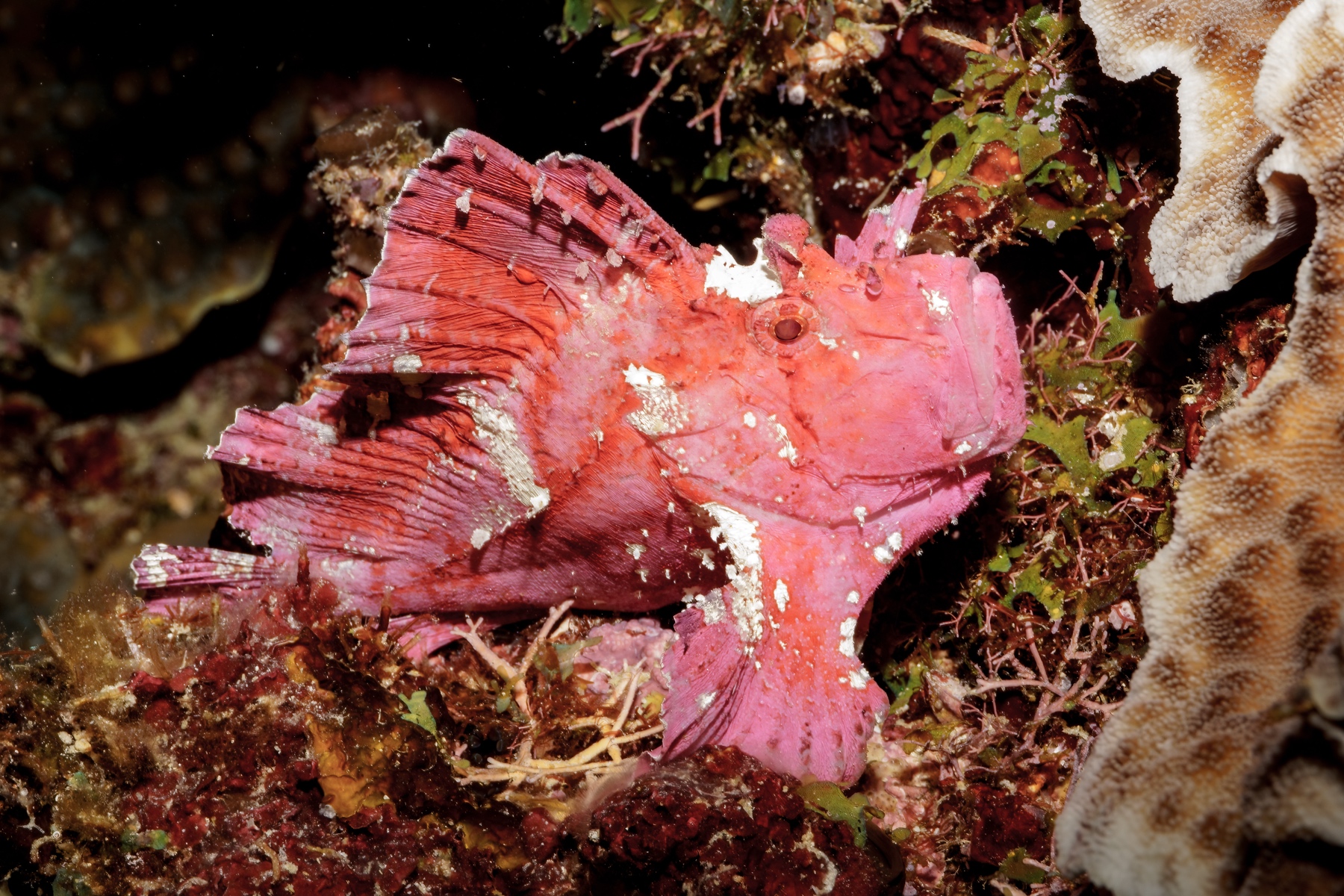
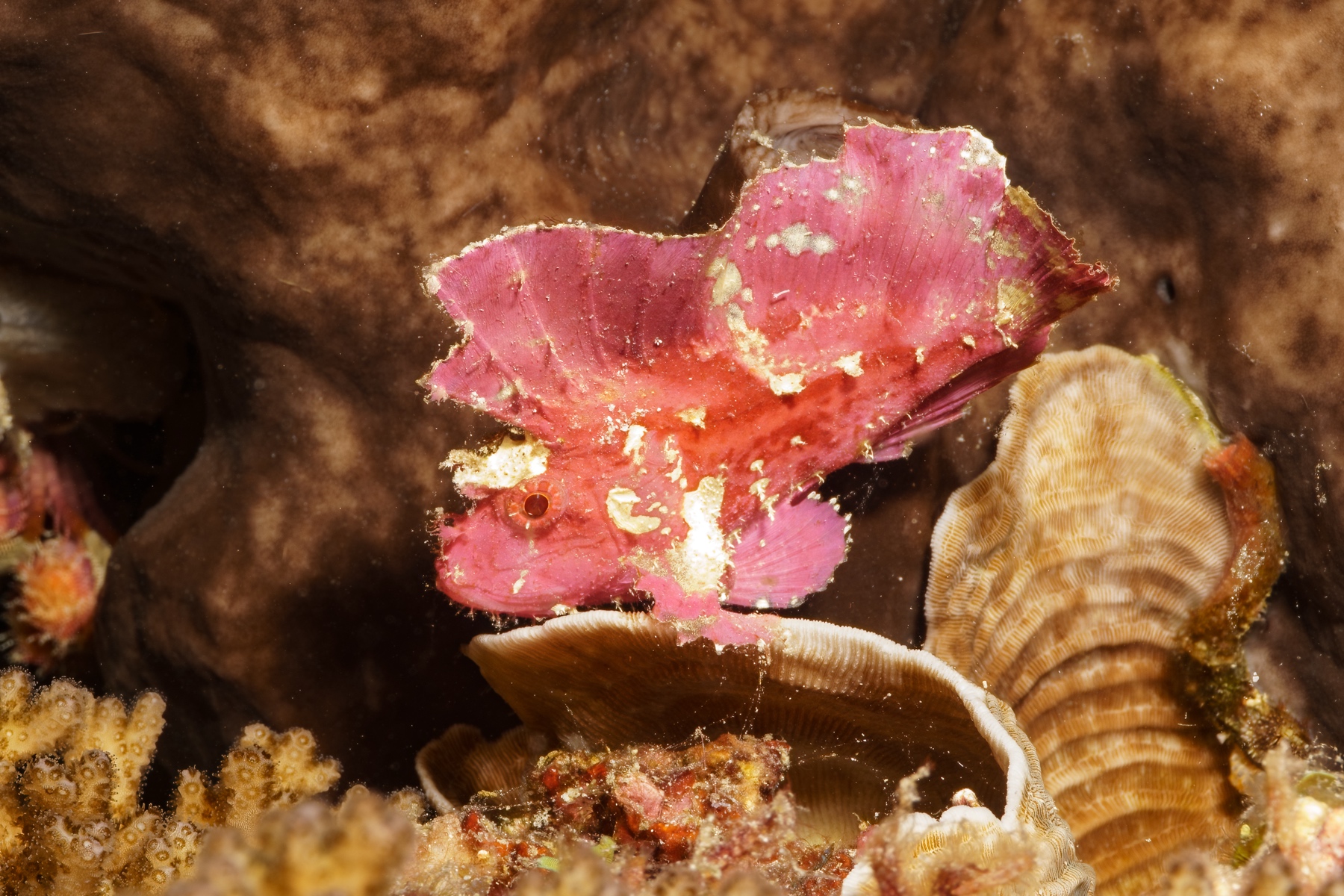
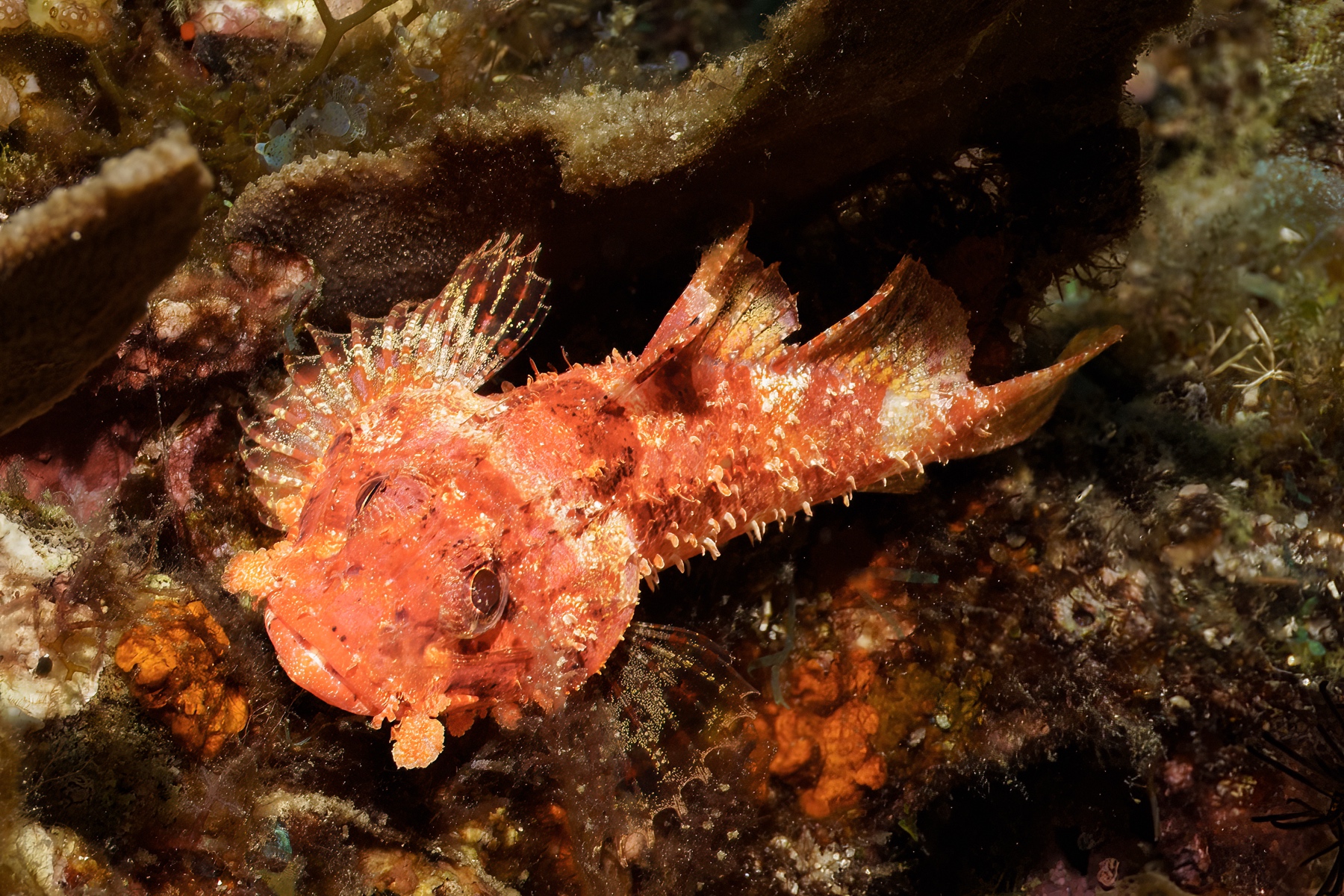
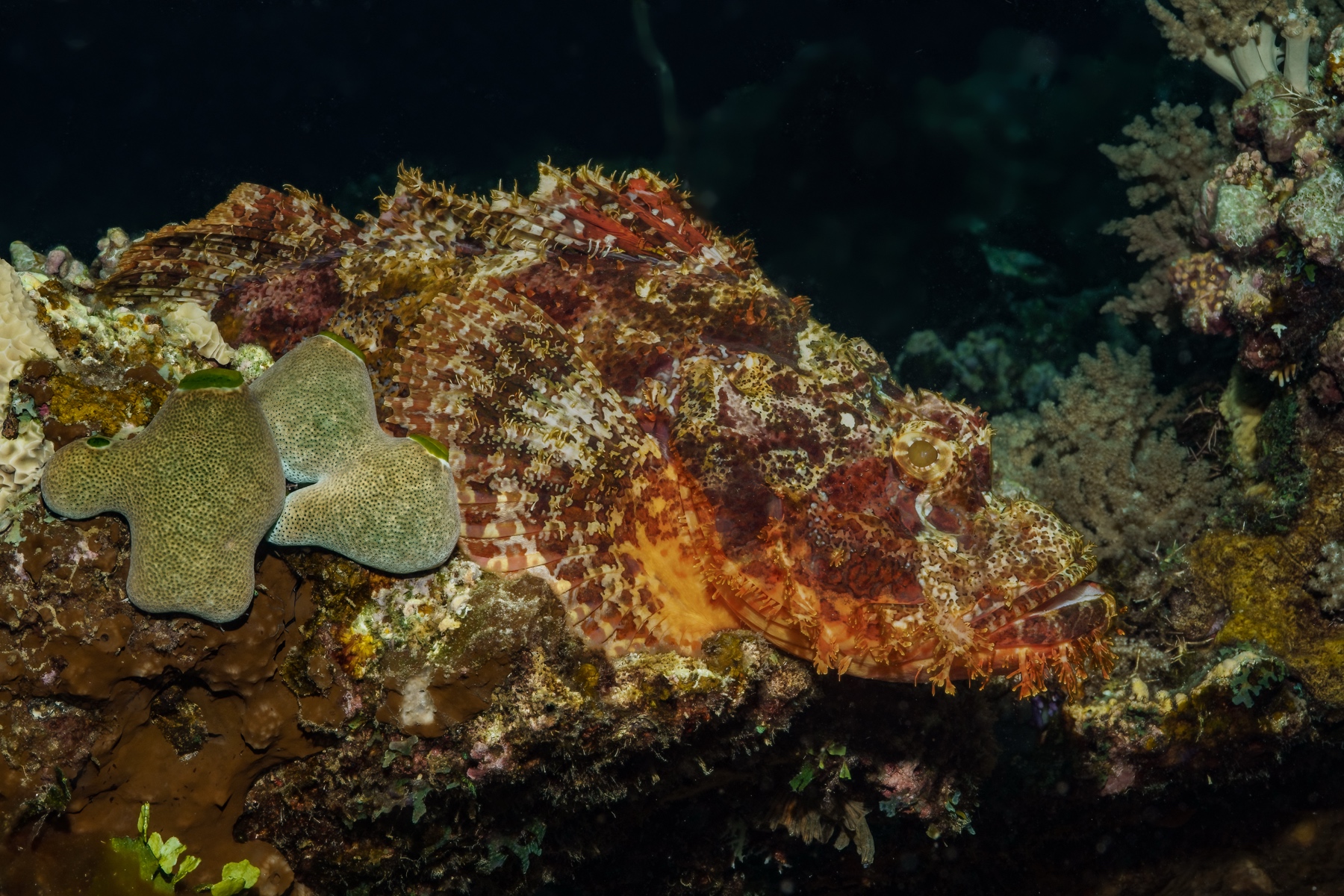
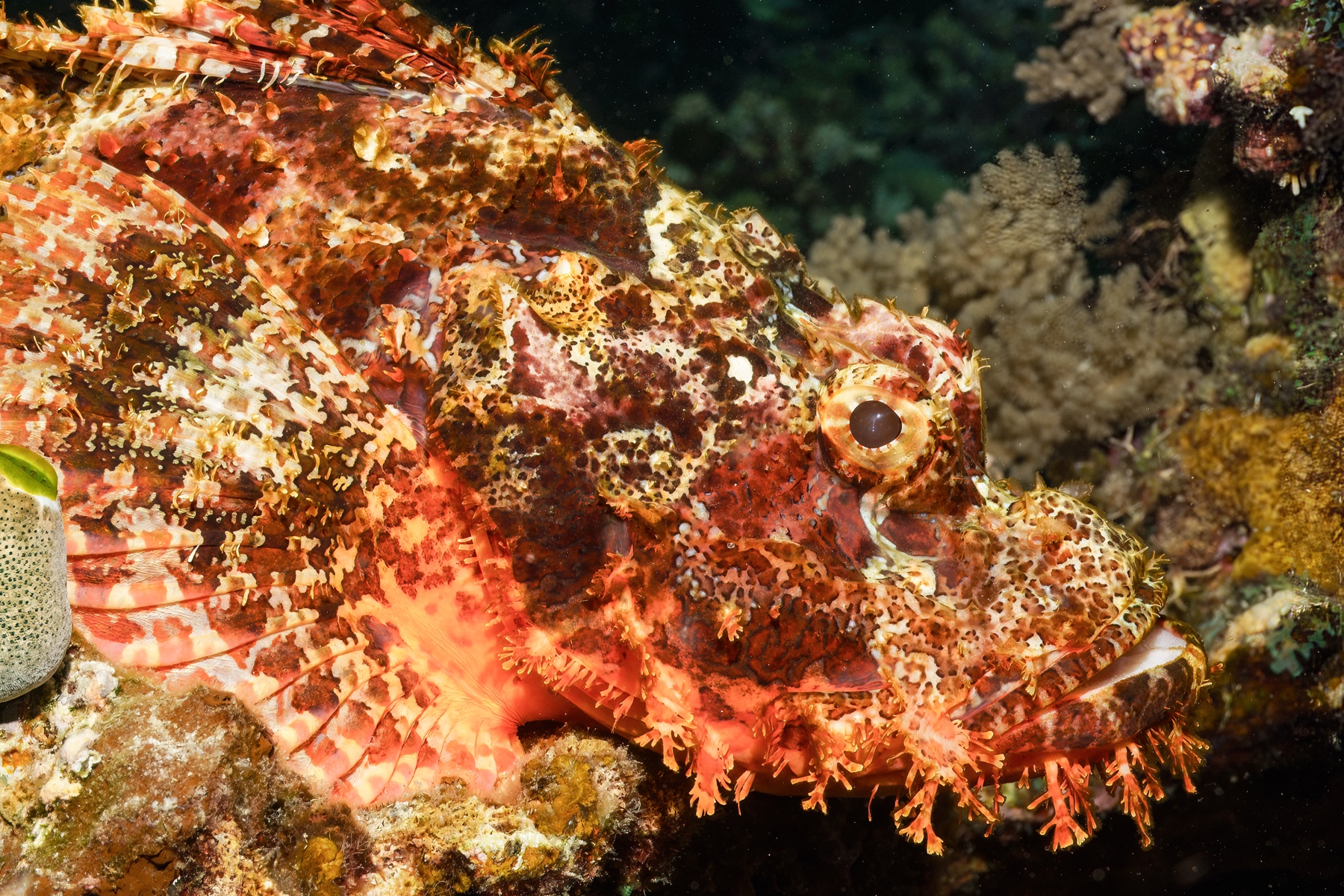
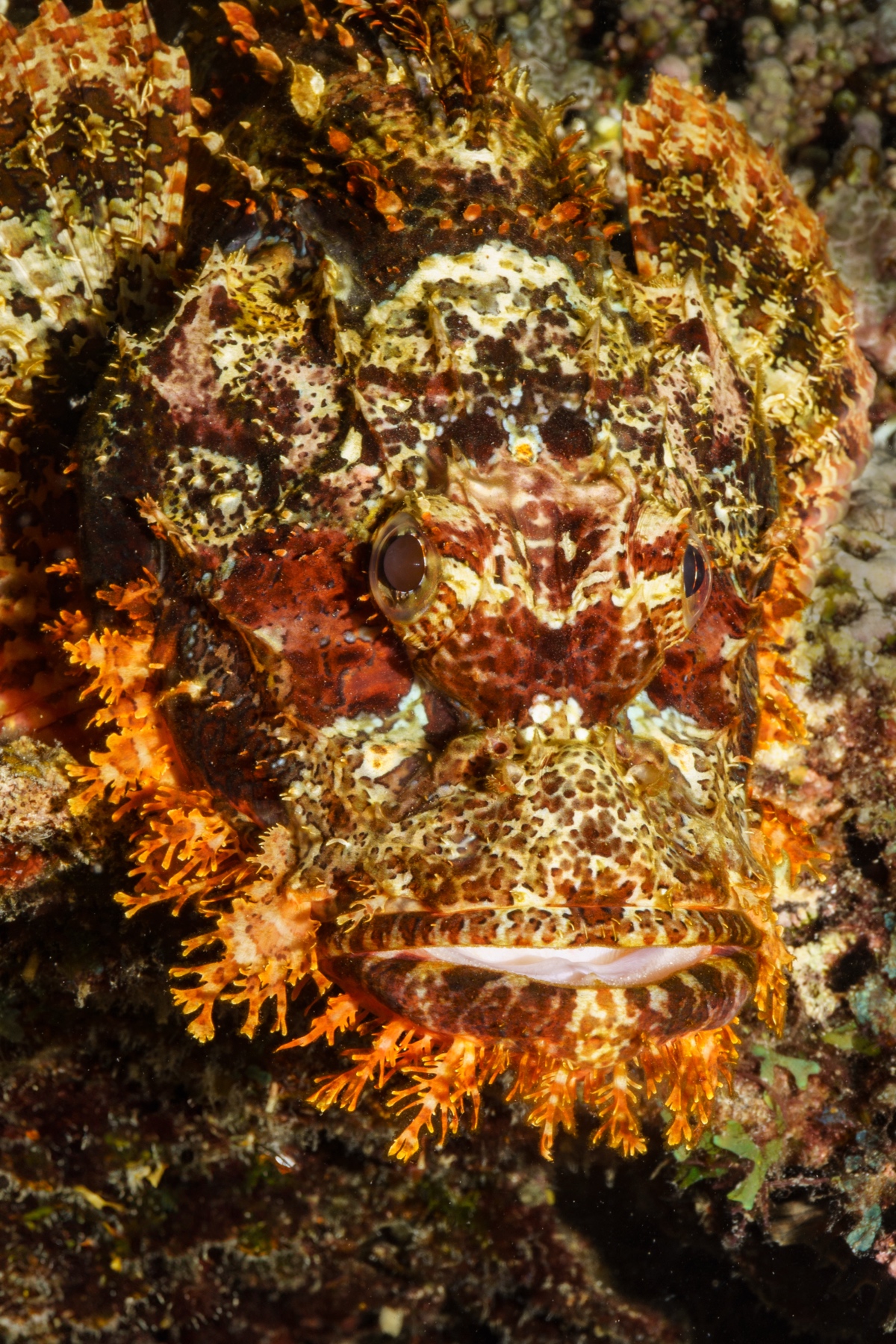
Another bright pink Leaf scorpionfish was lying in ambush, waiting for prey to appear.
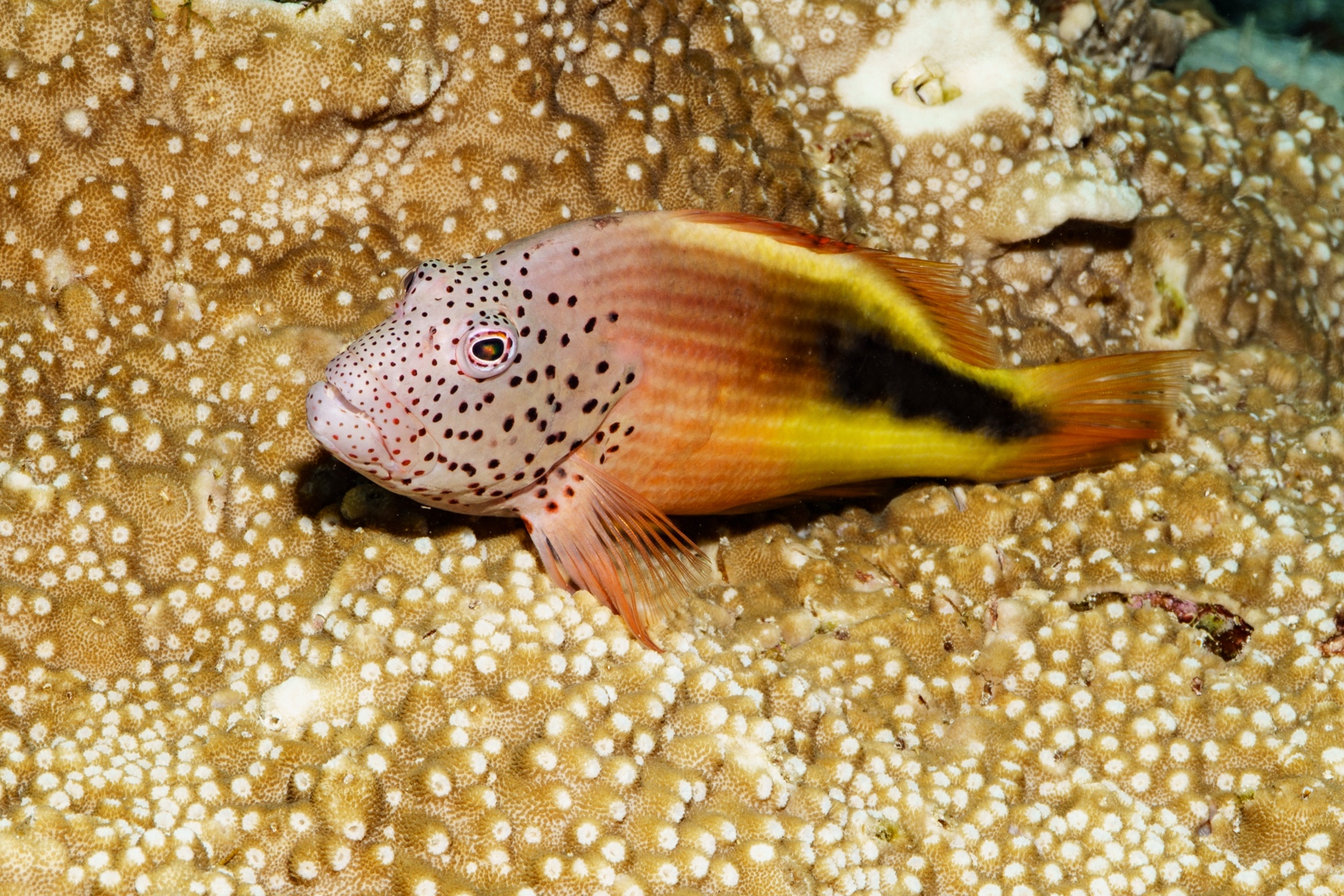
A Freckled Hawkfish and an Arc Eye Hawkfish were also perching on the corals, waiting to pounce on passing prey.

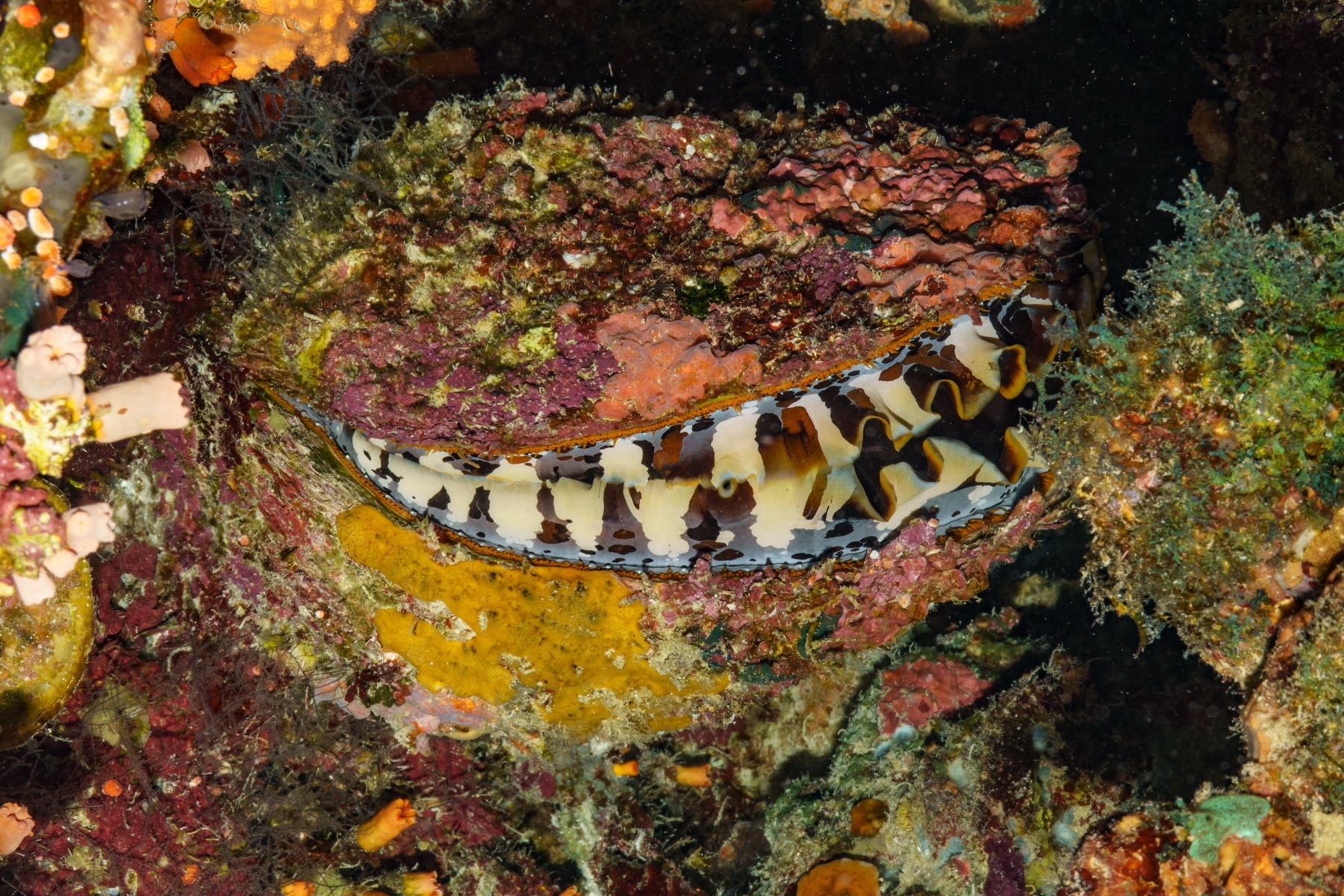
At a distance the Variable Thorny Oyster looked like some gap-toothed monster.
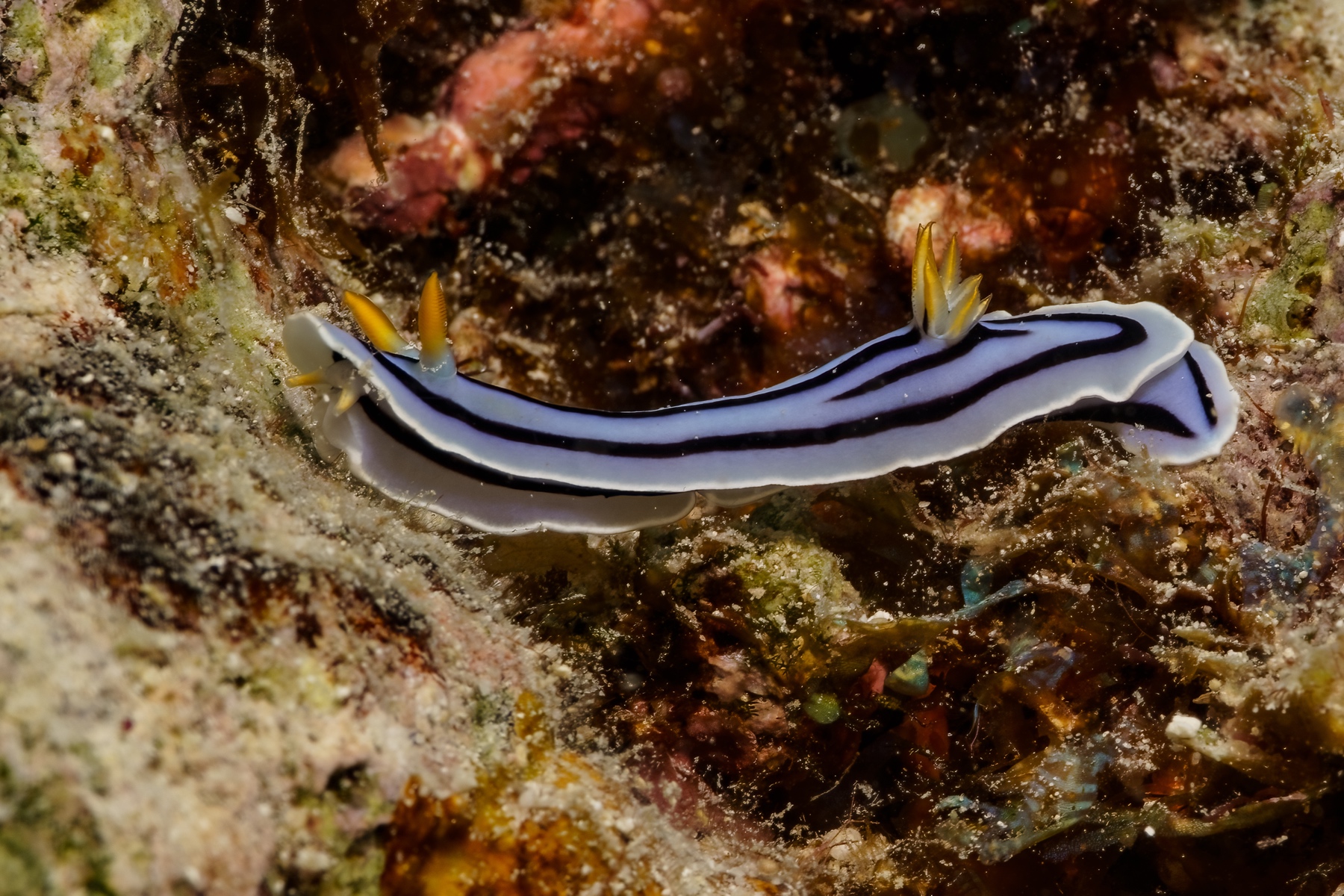
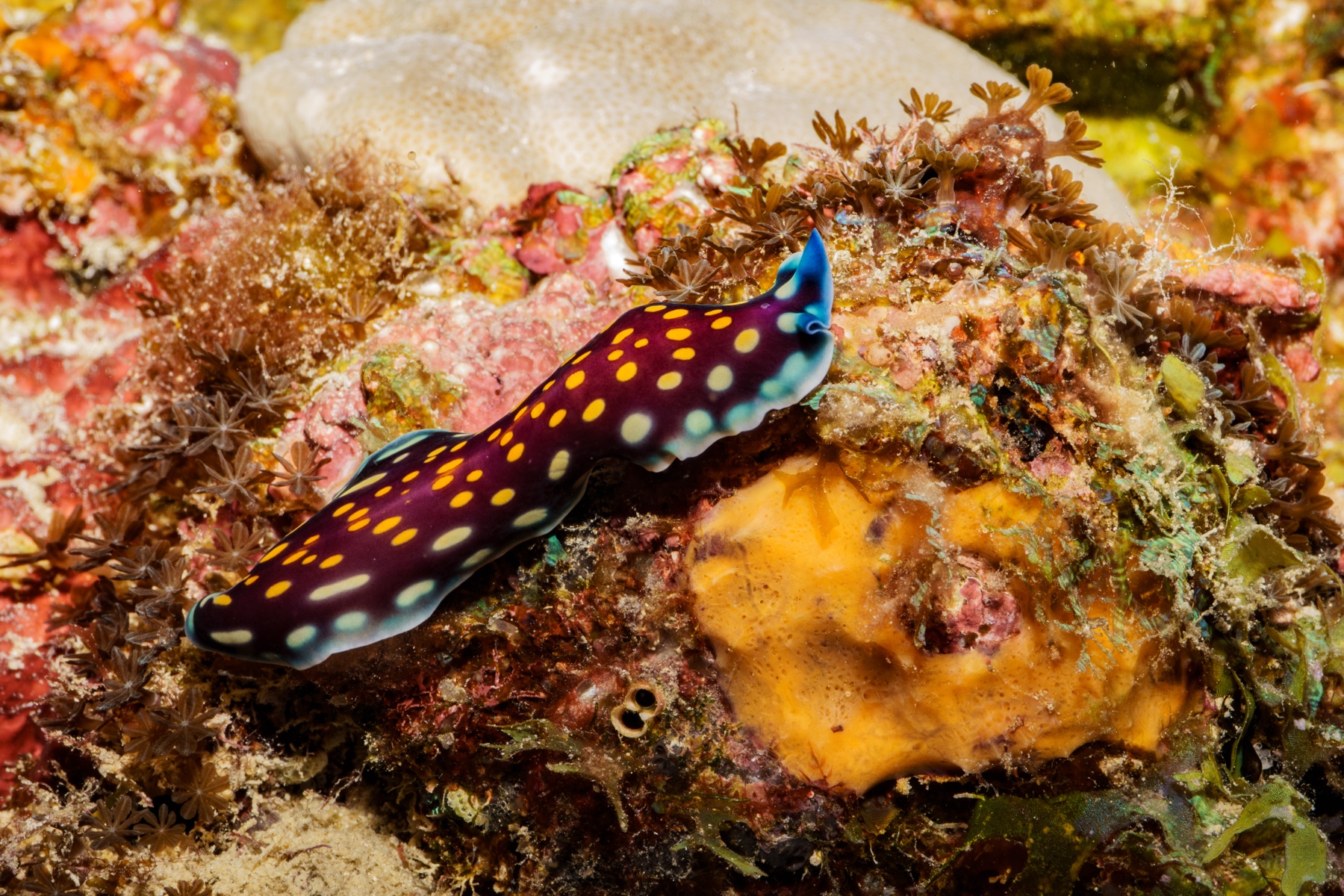
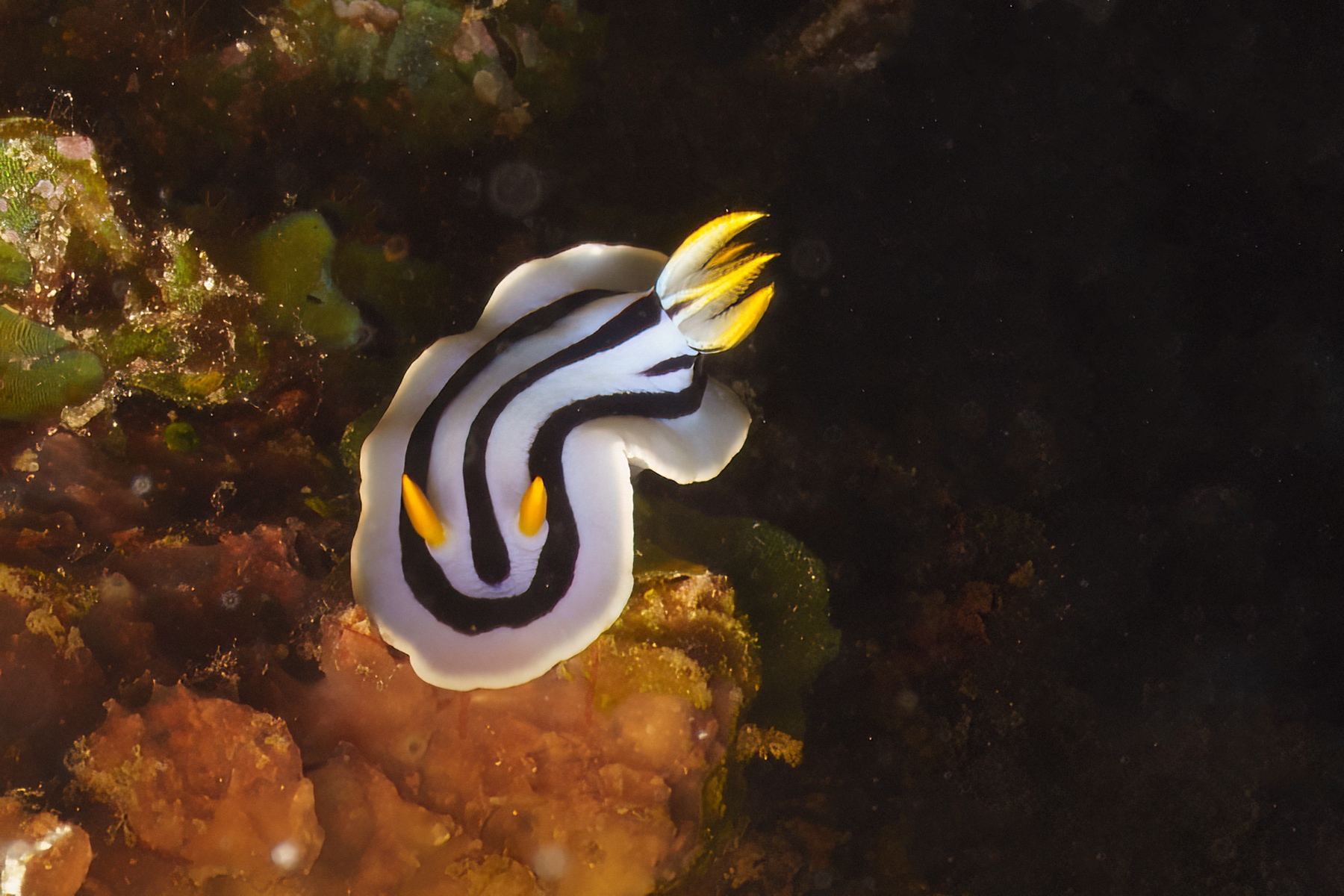
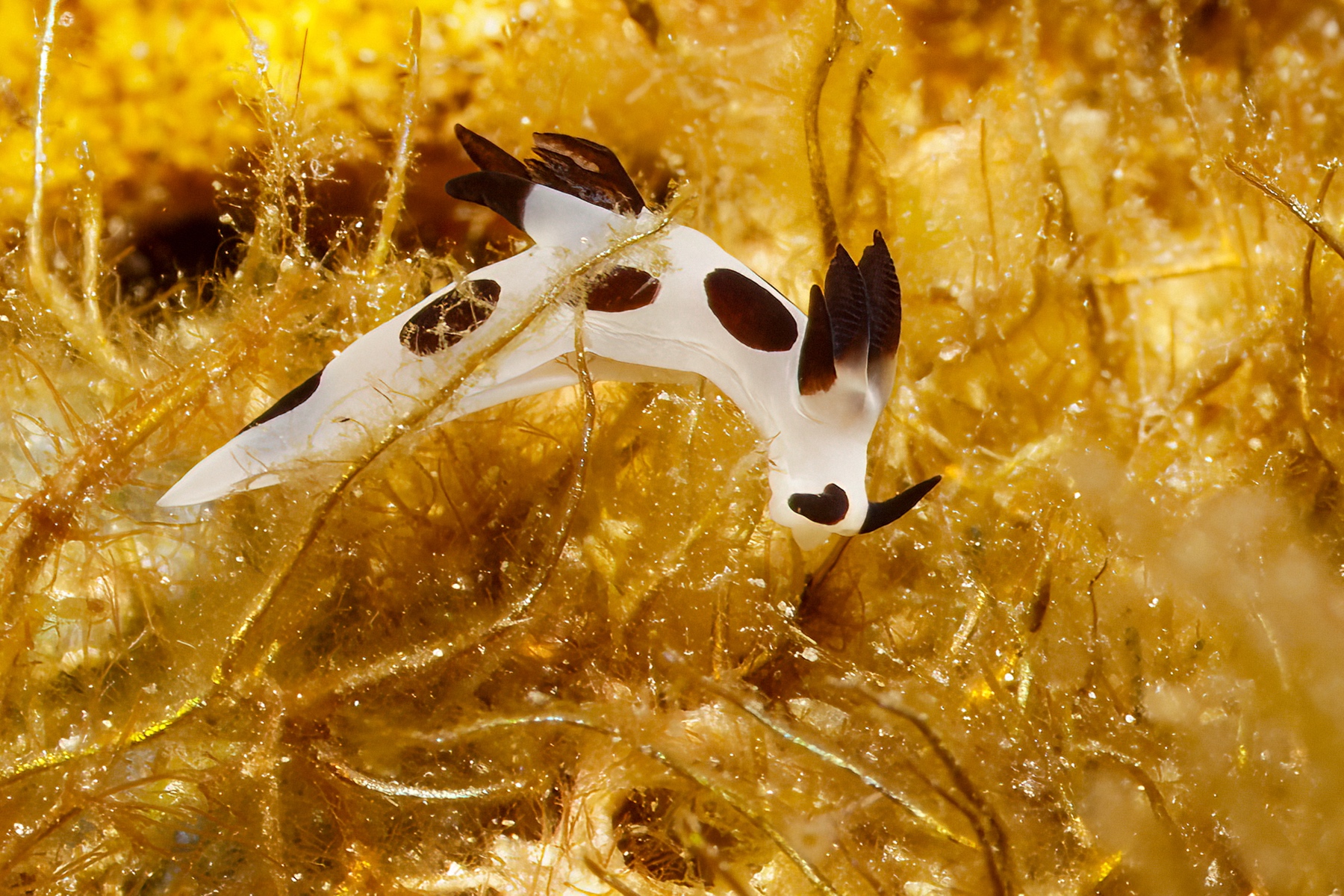
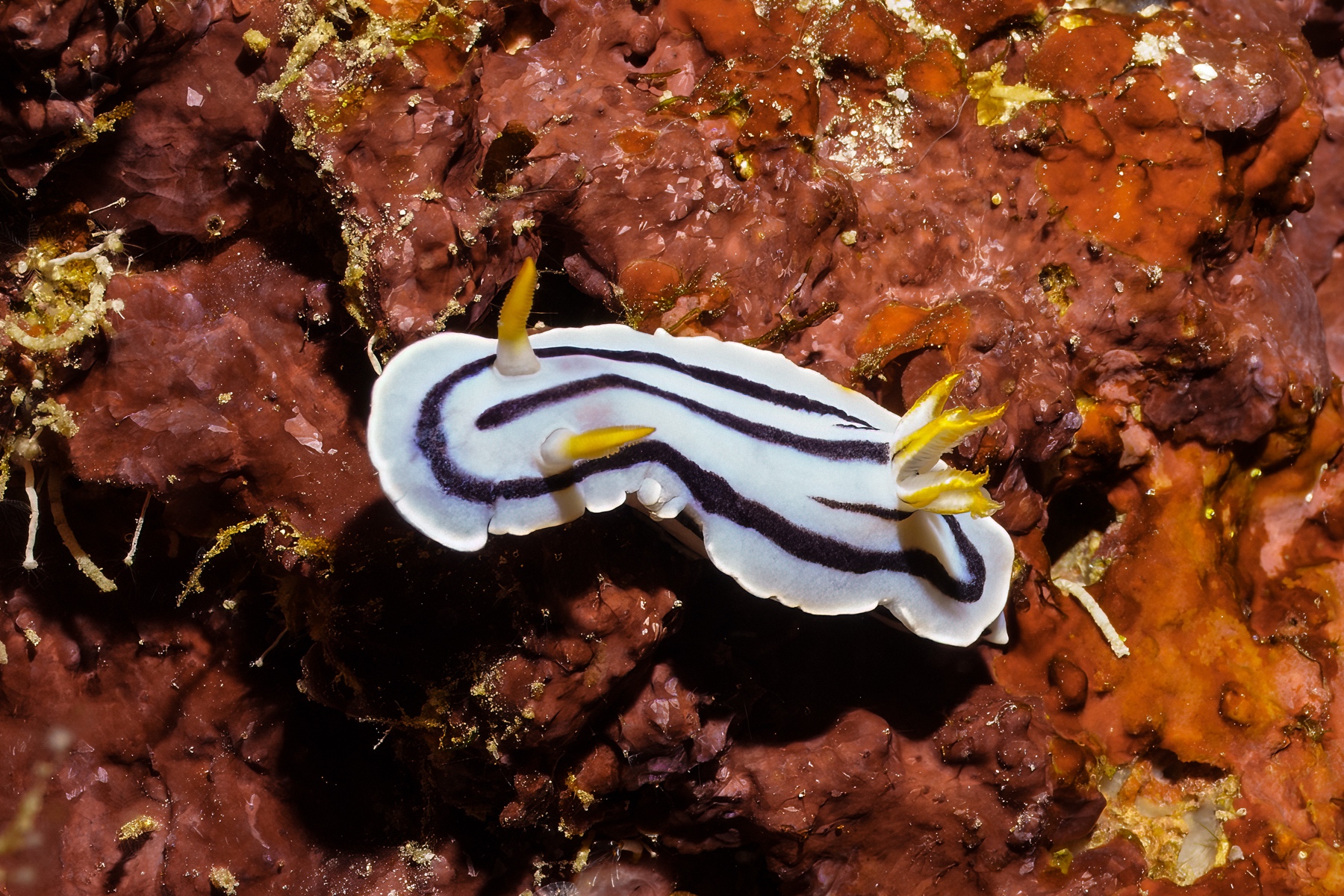
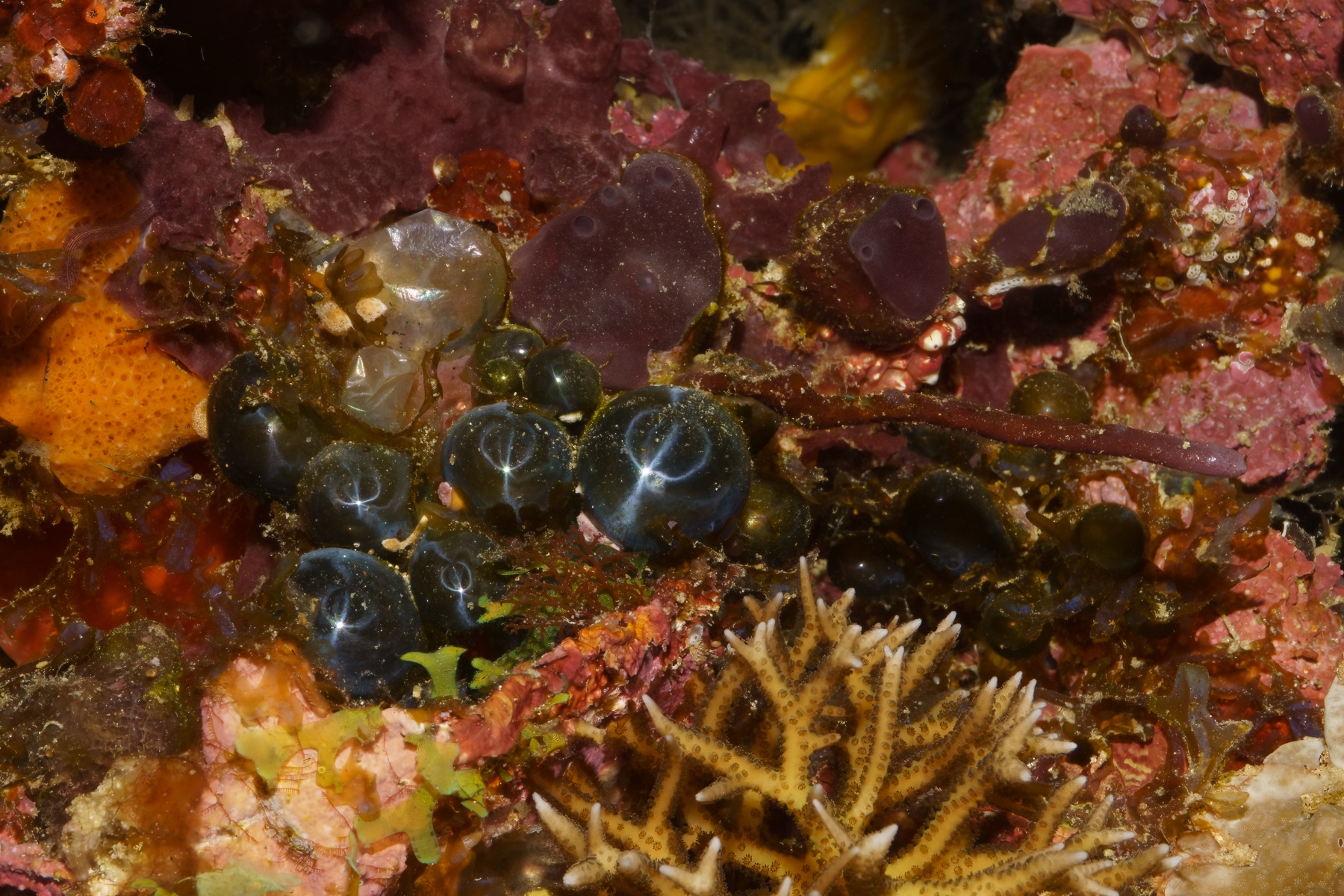
Nudibranchs and flatworms, despite their vibrant colours, can be difficult to spot due to their small size.
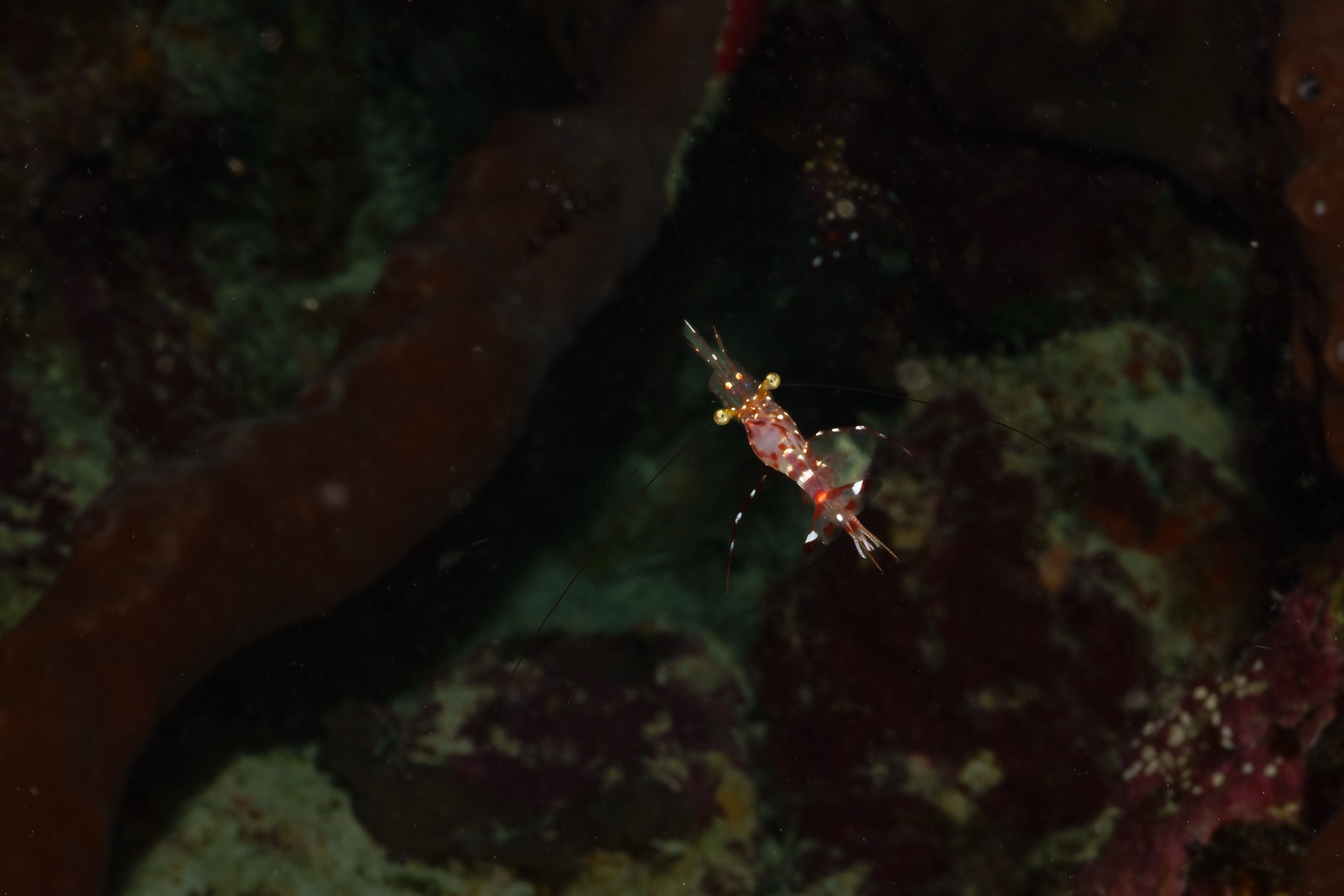
The shrimp seemed almost as curious about us as we were about them and I had do keep backing away to get one in focus.
After another afternoon of photo and video processing in the comfort of our air conditioned room, we sat down to another superb dinner to end our time at Afro Divers .
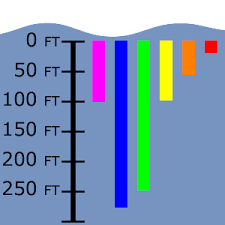
**Just a little footnote for the non-divers: colours disappear quickly as you dive deeper, red being first to go, until eventually only blue remains. The only way to see the true colours of the corals at depth, is to use a strong torch, video light, or for photos a strobe.
 Etienne's Camera